

Maddy summaryThe Smithsonian American Women’s History Museum Act authorizes the creation of a new Smithsonian museum dedicated to women’s history, to be located within the National Mall Reserve in Washington, D.C. If the site is managed by another federal agency, the bill requires that agency to transfer the land after notifying Congress and relevant committees. The museum must ensure exhibits and programs accurately represent diverse women’s experiences by consulting a broad range of experts and community voices. The Smithsonian will submit biennial reports to Congress detailing how the museum meets these representation standards.
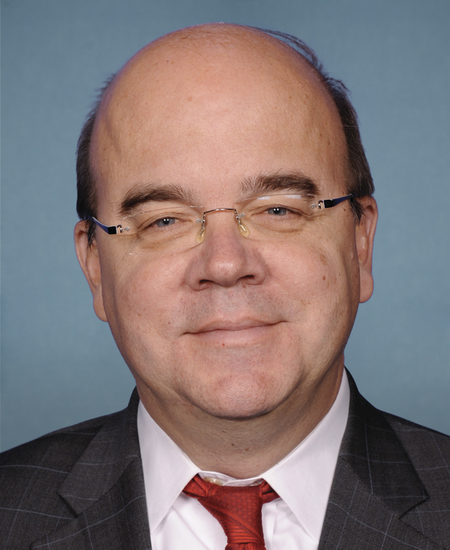
Rep. James P. McGovern
Sponsored bills
Maddy summaryThe No Taxpayer-Funded Settlement Slush Funds Act of 2026 prohibits the use of federal money to pay specific settlements involving high-ranking government officials and their close associates. It bars payments to the President, Vice President, their immediate families, cabinet members, senior executive staff, political appointees, and individuals connected to these roles, as well as any entity owned by the President or Vice President. Additionally, the bill restricts settlements related to claims about the January 6 Capitol attack, foreign election interference, or previously dismissed lawsuits, while requiring Treasury reports for large settlements and allowing the government to seek repayment if rules are broken.
Maddy summaryThe Resolution Act establishes a Veterans Affairs-Public Health Service Joint Scholarship Program, requiring Public Health Service officers to attend the Uniformed Services University of the Health Sciences with VA funding and serve full-time at VA medical facilities after graduation. It creates a $1 billion grant program for nonprofit theaters to support employment, facility improvements, and community arts development, with specific eligibility criteria including minimum compensation rates and a 3-year history of programming. The bill also includes provisions for reporting on terrorist acts, protecting Native American seeds, extending small business innovation programs, and prohibiting AI-based impersonation of federal officials. Additional sections address appropriations for various agencies and include procedural requirements for committee hearings.
Maddy summaryThe Governing for the People Act (HR 7007) includes several key policy changes: it extends film and television production tax deductions through 2030 with increased dollar limits ($30 million for most productions, $40 million for certain areas), creates grants for AI literacy programs targeting marginalized communities, and requires health insurers to cover annual lung cancer screenings without cost-sharing for eligible individuals aged 50-80 at increased risk. The bill also establishes new provisions to prevent fraud against veterans' benefits by making it a crime to defraud individuals of such benefits and modifies House of Representatives conduct rules to prohibit certain sexual relationships between members and employees. These changes directly affect film producers, AI education providers, health insurers, veterans, and House members.
Maddy summaryThis bill creates federal programs to advance alternative protein production through biomanufacturing and bioprocessing. It authorizes $15 million annually for research centers focused on protein diversification, $50 million for grants to companies building food biomanufacturing facilities, and $25 million for workforce development programs. The bill also requires a national strategy on protein security coordinated across multiple federal agencies. These provisions aim to strengthen food supply chains, create jobs in the growing protein sector, and reduce reliance on foreign commodities. The bill explicitly excludes insect-based food production from its scope.
Dental Care for Veterans Act This bill expands eligibility for veterans for dental care provided by the Department of Veterans Affairs (VA). Specifically, the bill makes all veterans who are enrolled in the VA health care system eligible for VA-provided dental services. Currently, only veterans who have a service-connected dental issue or meet other narrow criteria are eligible for certain dental services. The bill phases in eligibility over four years based upon existing eligibility, degree of service-connected disability or other disability, prisoner of war status, award of a Purple Heart, financial need, or VA health care eligibility.
Maddy summaryThis bill expands eligibility for federal workers' compensation to include specific Bureau of Alcohol, Tobacco, Firearms and Explosives employees who suffer illnesses linked to their fire protection duties. It achieves this by legally classifying Certified Fire Investigators and members of the National Response Team within the ATF as employees engaged in fire protection activities. Consequently, these designated personnel can now file claims for compensation if they develop diseases deemed to be directly caused by their work in fire protection. The changes apply only to compensation claims submitted on or after the date the law is enacted.
Maddy summaryThis resolution expresses the House of Representatives' preference for a trade policy that prioritizes American workers, consumers, independent farmers, small businesses, and the environment over corporate interests. It calls for trade agreements to include binding labor and environmental standards, fair wage guarantees, and strict rules of origin to prevent companies from moving jobs overseas. The measure also supports strengthening domestic manufacturing requirements, maintaining tariffs against unfair trade practices, and ensuring that public procurement favors American-made goods. Additionally, it urges the inclusion of provisions to protect data privacy, regulate artificial intelligence, and ensure affordable access to medicine while preventing monopolies.
Maddy summaryThis bill requires companies that list securities in the United States to disclose whether their supply chains involve goods produced using forced labor in China's Xinjiang region. To comply, issuers must obtain independent audits from third-party auditors and publicly report detailed information about their sourcing, including specific facility names, revenue generated from affected products, and steps taken to avoid human rights abuses. The legislation defines forced labor broadly to include work under state-sponsored programs targeting specific ethnic groups in Xinjiang and mandates that these disclosure rules remain in effect for eight years unless the President certifies that such abuses have ended.
Maddy summaryThe Universal School Meals Program Act of 2026 mandates that all public schools provide free breakfast and lunch to every enrolled student, regardless of income. It establishes specific funding rates for these meals, adjusts payments based on the use of locally sourced food, and eliminates the ability of schools to collect debt for unpaid charges. Additionally, the bill expands free meal access to summer programs, afterschool care, and incarcerated juveniles while updating poverty measurement standards across various federal education and nutrition laws.