

Maddy summaryThis resolution designates July 6, 2025, as "A Day of Compassion" to commemorate the 90th birthday of the Dalai Lama. It expresses congressional support for the Tibetan people's human rights, religious freedom, and cultural/linguistic protections. The resolution affirms that decisions about Tibetan Buddhist religious leadership - including the selection of a future Dalai Lama - must be made by Tibetan Buddhist authorities, not the Chinese government. It does not create new laws or policies but serves as a symbolic expression of support through congressional recognition.
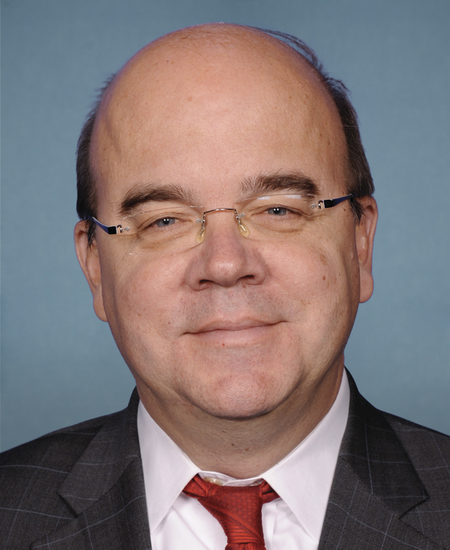
Rep. James P. McGovern
Sponsored bills
Maddy summaryHR 7145 defines "essential health systems" as hospitals serving large numbers of Medicaid and low-income patients, specifically targeting non-Federal, nonprofit, or government-run hospitals that meet one of three criteria for at least two of the past three years (e.g., high Medicaid patient percentage, high uncompensated care, or top 16th percentile in state rankings for low-income care). The bill requires MACPAC to annually publish an "essential health system index" ranking qualifying hospitals nationally, by state, and within local areas, using data from Medicare reporting. Hospitals designated as essential health systems receive a five-year designation, renewable if they maintain eligibility. This framework aims to identify facilities providing critical community care for vulnerable populations through standardized metrics.
Maddy summaryThe Find It Early Act requires most health insurance plans, Medicare, Medicaid, TRICARE, and VA benefits to cover certain breast cancer screenings without cost-sharing for specific at-risk groups. It affects individuals at increased breast cancer risk (as determined by medical guidelines), those with dense breast tissue (as defined by the American College of Radiology), and others requiring screening due to factors like age, race, ethnicity, or family history. The bill mandates coverage for various screening methods including mammograms, ultrasounds, MRI, and other technologies at frequencies recommended by the National Comprehensive Cancer Network. This requirement takes effect for plan years beginning January 1, 2026, removing financial barriers to early detection.
Maddy summaryHRES 996 is a resolution introduced by multiple House members to impeach Kristi Lynn Arnold Noem, the Secretary of Homeland Security, for alleged violations of law and the Constitution. It outlines three articles of impeachment: obstructing congressional oversight by denying access to detention facilities and withholding funds, violating public trust through warrantless arrests and excessive force (including tear gas on children), and self-dealing by awarding federal contracts to associates without competitive bidding. If approved by the House, this resolution would formally charge Noem, triggering a Senate trial to determine her removal from office. The resolution itself does not enact new policy but initiates the constitutional impeachment process against a sitting Cabinet official.
Maddy summaryHRES 999 is a procedural resolution that allows the U.S. House of Representatives to immediately consider H. Res. 997 without usual procedural delays. It removes standard rules that might block consideration (like points of order) and sets a one-hour debate limit equally split between party leaders. This resolution directly affects House leadership and committee procedures by streamlining the process for voting on H. Res. 997, which aims to make the House more responsive to its members. The bill itself does not change substantive policy but modifies how the House handles this specific resolution.
Maddy summaryHRES 997 is a procedural resolution modifying House rules to improve internal operations. It updates Rule XXIII to clarify that all House members and staff must follow the Rules of the House and committee rules, and revises Rule XV to require a two-thirds vote (instead of a simple majority) to suspend the rules, with specific timing limits for such motions. It also mandates the Clerk display real-time clocks for all U.S. time zones in the House chamber. These changes directly affect House members, staff, and committee procedures but do not alter substantive policy or impact the public. The resolution focuses solely on internal House governance, not legislative content.
Maddy summaryThe Returning Home Act establishes a federal grant program to provide rental assistance and housing support for individuals recently released from prison, jail, juvenile facilities, or halfway houses. It allocates $100 million annually to fund 24 months of rental assistance, family stipends for household support, and services like housing counseling, case management, and help with security deposits. The program prioritizes people at risk of homelessness after incarceration, requiring grantees to use at least 60% of funds for direct rental payments and 15% for landlord incentives. It explicitly replaces "offender" language with "individual" throughout to focus on people reentering communities, not criminal labels.
Maddy summaryThis symbolic House resolution expresses U.S. congressional support for Iranian protesters demanding democracy and human rights. It condemns the Iranian regime's violent suppression of protests, including killings, mass arrests, and internet restrictions, while urging the regime to release political prisoners and restore communication access. The resolution reaffirms the Iranian people's right to self-determination through free elections and echoes a 2023 resolution (HCR 7) that similarly praised protesters. As a non-binding expression of support, it does not impose new policies or alter U.S. government actions.
Maddy summaryThis bill prohibits large card issuers (with over $100 billion in assets) from requiring credit card transactions to process through only one payment network. It allows merchants to direct transactions to any available network and bans restrictions on security technologies that favor specific networks. The Federal Reserve must issue these rules within one year of the bill's enactment. The law applies broadly to credit card processing but excludes certain 3-party payment systems.
Maddy summaryHR 7046, the Qualified Immunity Abolition Act of 2026, removes qualified immunity as a defense in civil rights lawsuits against law enforcement officers. It directly affects federal, state, and local law enforcement officers by eliminating their ability to avoid liability in cases where they allegedly violated constitutional rights. The bill amends Section 1983 of federal law to prohibit using four specific defenses: claiming good faith, believing conduct was lawful, arguing rights weren't clearly established, or asserting the law was unclear at the time. This change means officers can no longer dismiss lawsuits based on these arguments after the bill's enactment. The law applies to all civil actions pending or filed after the effective date.