

George Floyd Justice in Policing Act of 2021 This bill addresses a wide range of policies and issues regarding policing practices and law enforcement accountability. It increases accountability for law enforcement misconduct, restricts the use of certain policing practices, enhances transparency and data collection, and establishes best practices and training requirements. The bill enhances existing enforcement mechanisms to remedy violations by law enforcement. Among other things, it does the following: lowers the criminal intent standard—from willful to knowing or reckless—to convict a law enforcement officer for misconduct in a federal prosecution, limits qualified immunity as a defense to liability in a private civil action against a law enforcement officer, and grants administrative subpoena power to the Department of Justice (DOJ) in pattern-or-practice investigations. It establishes a framework to prevent and remedy racial profiling by law enforcement at the federal, state, and local levels. It also limits the unnecessary use of force and restricts the use of no-knock warrants, chokeholds, and carotid holds. The bill creates a national registry—the National Police Misconduct Registry—to compile data on complaints and records of police misconduct. It also establishes new reporting requirements, including on the use of force, officer misconduct, and routine policing practices (e.g., stops and searches). Finally, it directs DOJ to create uniform accreditation standards for law enforcement agencies and requires law enforcement officers to complete training on racial profiling, implicit bias, and the duty to intervene when another officer uses excessive force.
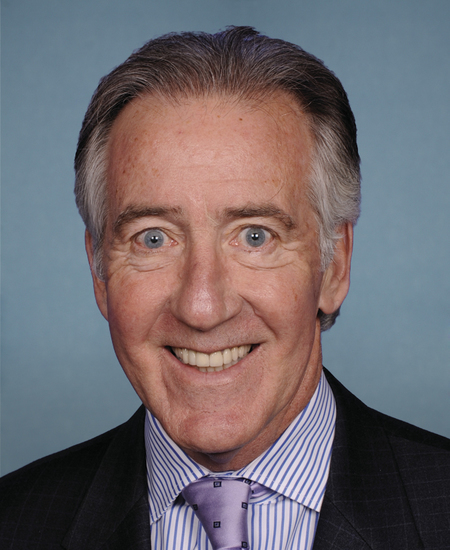
Rep. Richard E. Neal
Sponsored bills
This resolution expresses support for the designation of COVID-19 Victims and Survivors Memorial Day to memorialize the lives lost to COVID-19 (i.e., coronavirus disease 2019).
This bill provides for the presentation of a Congressional Gold Medal to the Freedom Riders, in recognition of their contribution to civil rights by fighting for equality in interstate travel.
Protecting LGBTQ Youth Act This bill expands programs that prevent and treat child abuse and neglect to address issues facing lesbian, gay, bisexual, and transgender youth. Specifically, these programs include (1) research and reporting requirements, (2) providing technical assistance, (3) grants to states and local agencies to train child-welfare personnel, and (4) community-based prevention-service grants, among others.
Iran Hostages Congressional Gold Medal Act This bill requires the Speaker of the House of Representatives and the President pro tempore of the Senate to arrange for the award of a Congressional Gold Medal commemorating the bravery and endurance of the 53 hostages of the Iran Hostage Crisis. Following its award, the medal shall be given to the National Museum of American History of the Smithsonian Institution for display and research. The Department of the Treasury must strike duplicate medals in silver for presentation to a hostage (or the personal representative of a deceased hostage), and Treasury may also strike and sell duplicate medals in bronze.
This resolution impeaches President Donald John Trump for high crimes and misdemeanors. Specifically, the resolution sets forth an article of impeachment stating that President Trump incited an insurrection against the government of the United States. The article states that prior to the joint session of Congress held on January 6, 2021, to count the votes of the electoral college, President Trump repeatedly issued false statements asserting that the presidential election results were fraudulent and should not be accepted by the American people or certified by state or federal officials; shortly before the joint session commenced, President Trump reiterated false claims to a crowd near the White House and willfully made statements to the crowd that encouraged and foreseeably resulted in lawless action at the Capitol; members of the crowd, incited by President Trump, unlawfully breached and vandalized the Capitol and engaged in other violent, destructive, and seditious acts, including the killing of a law enforcement officer; President Trump's conduct on January 6, 2021, followed his prior efforts to subvert and obstruct the certification of the presidential election, which included a threatening phone call to the Secretary of State of Georgia on January 2, 2021; President Trump gravely endangered the security of the United States and its institutions of government, threatened the integrity of the democratic system, interfered with the peaceful transition of power, and imperiled a coequal branch of government; and by such conduct, President Trump warrants impeachment and trial, removal from office, and disqualification to hold U.S. office.
"Six Triple Eight" Congressional Gold Medal Act of 2021 This bill directs the Speaker of the House of Representatives and the President pro tempore of the Senate to arrange for the award of a Congressional Gold Medal in honor of the women of the 6888th Central Postal Directory Battalion (commonly known as the Six Triple Eight) in recognition of their pioneering military service, devotion to duty, and contributions to increase the morale of personnel stationed in the European theater of operations during World War II. The medal shall be given to the Smithsonian Institution and made available for display and research.
Horse Transportation Safety Act of 20 21 This bill prohibits a person from transporting a horse in interstate commerce in a motor vehicle (except a vehicle operated exclusively on rail or rails) containing two or more levels stacked on top of one another. The bill prescribes civil penalties for knowing violations of such prohibition.
Growing Renewable Energy and Efficiency Now Act of 2021 or the GREEN Act of 202 1 This bill provides tax incentives for investment in renewable energy resources and energy efficiency programs. Among other provisions, the bill extends for five years the tax credit for production of electricity from certain renewable resources (e.g., wind facilities, biomass, landfill trash facilities), allows an election to treat certain tangible property as energy property for purposes of the energy tax credit, and modifies certain provisions of the energy tax credit and expands the credit for four years; expands the 30% energy tax credit to include energy storage technology or qualified biogas property; extends for one year the tax credit for carbon oxide sequestration; allows elective payments in lieu of certain energy-related tax credits; modifies the phaseout provisions of the income and excise tax credits for biodiesel and renewable diesel and alternative fuels and extends the termination date for such credits; extends and increases the tax credits for nonbusiness energy property and the new energy efficient home tax credit; extends for five years the residential energy efficient property tax credit; increases the tax deduction for energy efficient commercial buildings; modifies the limitations on new qualified plug-in electric drive motor vehicles tax credit and allows a new credit for such vehicles that are previously-owned; allows a new tax credit for zero emission heavy vehicles (vehicles with a gross weight rating of not less than 14,000 pounds and not powered by an internal combustion engine); extends for five years the tax credits for qualified fuel cell motor vehicles and alternative fuel cell refueling property; provides for additional allocations of the advanced energy project tax credit; allows a new tax credit for the labor costs of installing mechanical insulation property; allows a new tax credit to promote environmental justice programs (programs to improve health and economic outcomes of individuals residing in low-income areas or areas populated disproportionately by racial or ethnic minorities); and requires the Department of the Treasury to report on the utility of data from the Greenhouse Gas Reporting Program for determining the amount of greenhouse gases emitted by taxpayers for purposes of imposing a fee on them for such emissions.
Restoring Communities Left Behind Act This bill directs the Department of Housing and Urban Development to establish a grant program for local partnerships to carry out neighborhood revitalization support activities in economically distressed areas. Eligible activities include weatherization and energy efficiency improvements; housing accessibility improvements for seniors and persons with disabilities; purchasing delinquent mortgages; purchasing and developing vacant or distressed properties to create affordable rental housing and for other purposes; and improving parks, sidewalks, and street lighting.