

Maddy summaryThe Department of Homeland Security Accountability Act of 2026 requires the Secretary of Homeland Security to report any serious injury or death occurring in DHS custody or resulting from DHS actions within 72 hours to Congress and local representatives. These notifications must include detailed information such as the date and location of the incident, the nationality of the individual involved, specific use of force tactics, and whether medical assistance was provided. The bill also mandates that the Department conduct independent investigations for these incidents, which must include reviewing video footage, placing involved employees on administrative leave, and ensuring autopsies and medical reviews are performed. All investigation reports must be submitted to Congress within seven days of completion, and video recordings of the individuals involved must be preserved for at least five years.
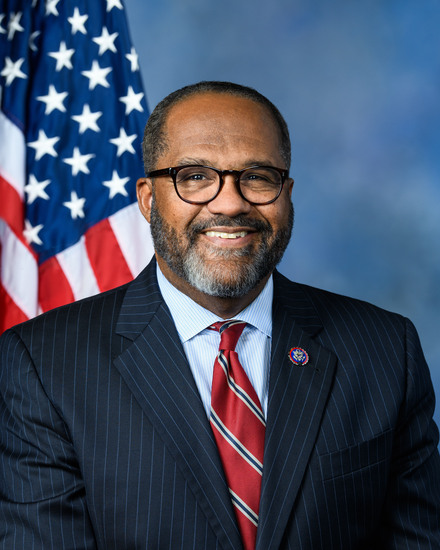
Rep. Troy A. Carter
Sponsored bills
Maddy summaryThe DHS Release Transparency Act requires the Department of Homeland Security to inform a designated contact person when a detained individual is released from Customs and Border Protection or Immigration and Customs Enforcement custody, provided the person was held for more than 12 hours. Under this bill, individuals in custody can choose to name a contact and provide their information, with the government obligated to attempt notification at least twice. The law also mandates that translation services be available in the detainee's preferred language for both selecting a contact and receiving release notifications. Additionally, the act specifies that any information gathered under this process cannot be used for law enforcement purposes.
Maddy summaryThis bill establishes a new Office for Civil Rights and Civil Liberties within the Department of Homeland Security, led by an Officer who reports directly to the department head. The Office is tasked with overseeing compliance with civil rights laws, reviewing potential abuses or profiling by employees, and integrating these protections into all department policies and programs. It grants the Officer authority to investigate complaints, issue public reports on findings, and coordinate with other officials to ensure diverse communities are engaged effectively. Additionally, the legislation requires each major department unit to have its own civil rights officer and mandates annual reporting to Congress on the Office's activities and progress.
Maddy summaryHRES 1405 is a non-binding resolution that encourages the U.S. House of Representatives to recognize June as LGBTQIA+ Pride Month. The document acknowledges the historical significance of events like the Stonewall Inn uprising and highlights the ongoing struggle for equality faced by lesbian, gay, bisexual, transgender, queer, intersex, and asexual individuals. It includes a detailed list of historical milestones and legislative achievements related to LGBTQIA+ rights to provide context for the celebration. Because this measure is a resolution of recognition rather than a law, it does not create new legal obligations or change federal policy.
Maddy summaryThis bill, known as the NFIP Premium Transparency Act, requires the Federal Emergency Management Agency to provide homeowners with flood insurance policies with more detailed information about their premiums and risk factors. Under the new rules, insurance declaration pages will list current rates, explain any discounts, show claim history, and estimate how long it will take for premiums to reach full-risk levels. Additionally, the agency must create an online tool that allows the public and property owners to view specific rating factors, such as elevation and building type, and to simulate how changes like mitigation projects might lower future costs. The legislation also mandates annual reports on flood insurance rates by region and asks an independent government official to study ways to further improve the transparency and functionality of these insurance tools.
Maddy summaryThis resolution expresses the House of Representatives' support for designating the fourth Sunday in June as "National Learn to Swim Week" to raise awareness about water safety. The bill highlights statistics from the CDC showing that drowning is a leading cause of unintentional injury death for children and notes that formal swimming lessons can significantly reduce drowning risks. It emphasizes the need to address disparities in swimming skills across different communities and encourages governments and schools to promote access to swimming lessons and integrate water safety education. While the measure does not create new laws or funding, it serves as a formal statement of intent to encourage action on drowning prevention and aquatic safety.
Maddy summaryThe Home Internet Accessibility Act requires the Comptroller General to produce a detailed report within a year on which federally assisted housing units currently have or lack the infrastructure to support high-speed internet. This report will analyze specific challenges, costs, and timelines for upgrading these properties, broken down by location and demographic data, while also reviewing past retrofitting efforts and pilot programs. Following this analysis, the Department of Housing and Urban Development must create a formal plan to upgrade necessary housing to support broadband service and submit it to Congress within 18 months. The legislation directly affects residents of government-subsidized housing by aiming to ensure their living spaces can accommodate modern internet connectivity.
Maddy summaryThe Next Generation Shipping Act establishes a $10 billion funding program over ten years to support the development and deployment of zero-emission vessels and clean alternative fuel technologies. Administered by the Department of Transportation, the program provides grants, low-interest loans, and loan guarantees to eligible entities such as shipowners, manufacturers, and port authorities, while explicitly prohibiting the use of funds for automated vessel systems. To guide these efforts, the bill creates an advisory committee representing diverse stakeholders including labor groups, environmental organizations, and industry leaders to evaluate technologies and identify gaps. Additionally, the legislation mandates that funded projects prioritize workforce training, community benefits, and environmental justice, ensuring that laborers receive prevailing wages and that local communities are engaged throughout the project lifecycle.
Maddy summaryThis resolution expresses the House of Representatives' sense that Congress must urgently restore the Voting Rights Act of 1965 to protect against racial discrimination in voting and ensure fair political representation for all Americans. It specifically calls for ending the 60-vote threshold in the Senate to allow for easier passage of legislation and proposes structural changes to the Supreme Court, including term limits for justices, a binding code of ethics, and potentially expanding the court's size. The text argues that recent Supreme Court decisions have weakened voting protections and enabled partisan gerrymandering, threatening the political power of communities of color and undermining democratic institutions. By outlining these specific legislative and structural goals, the bill aims to rebuild public trust in the judiciary and strengthen the mechanisms that guarantee equal access to the ballot box.
Maddy summaryHR 5109 requires the Transportation Security Administration (TSA) to create guidelines helping individuals in federal, state, and local prisons prepare for and apply for Transportation Worker Identification Credential (TWIC) cards *before* their release. The bill directs TSA to develop specific procedures for prison staff to assist inmates in pre-applying for TWIC cards and navigating appeals or waivers if initially denied. This aims to streamline access to TWIC cards - required for many port and maritime jobs - allowing returning citizens to secure employment faster after release. The bill cites that 525,000 jobs in Louisiana alone depend on TWIC access, and faster credential acquisition supports reintegration efforts.