

Veterans First Act of 2022 This bill prohibits the Department of Veterans Affairs from obligating or expending any amounts to provide emergency assistance in response to an emergency at the southern border directly resulting from the repeal of certain public health orders from the Centers for Disease Control and Prevention. Specifically, the bill prohibits such emergency assistance in response to the repeal of the order issued on August 2, 2021, titled Public Health Reassessment and Order Suspending the Right To Introduce Certain Persons From Countries Where a Quarantinable Communicable Disease Exists ; the order issued on April 1, 2022, titled Public Health Determination and Order Regarding Suspending the Right To Introduce Certain Persons From Countries Where a Quarantinable Communicable Disease Exists ; and an order relating to the same public health concerns as the listed orders.
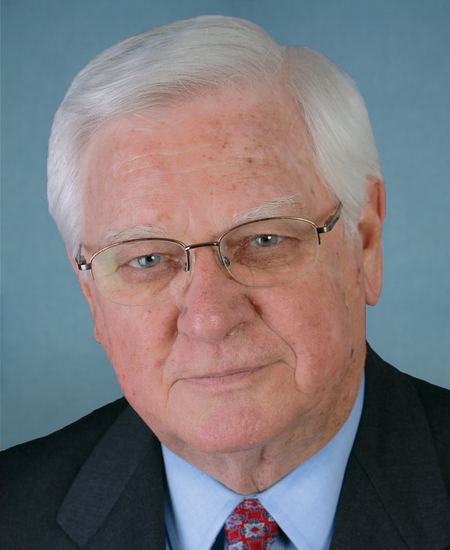
Rep. Harold Rogers
Sponsored bills
No Timber From Tyrants Act This bill prohibits the importation of wood and related articles from Russia and Belarus. It also directs the Department of the Interior and the Department of Agriculture (USDA) to replace these prohibited imports with timber production on certain lands. Specifically, the bill directs the President to prohibit the importation of all wood and related articles from Russia and Belarus. The President may terminate this prohibition upon certification to Congress that certain conditions have been met, including that Russia or Belarus (or both, as applicable) reached an agreement to withdraw forces in Ukraine. Additionally, the bill directs Interior and USDA to authorize timber harvest in an amount sufficient to equal the volume, with respect to calendar year 2021, of imports of wood and related articles from Russia and Belarus. Interior may authorize timber harvest only on public lands and USDA may authorize timber harvest only on National Forest System lands. The bill generally prohibits Interior and USDA from approving a plan that reduces the allowable sale quantity of timber.
This resolution condemns the terrorist attack on Congregation Beth Israel in Colleyville, Texas, on January 15, 2022. It also expresses support for the affected community, commends the actions of law enforcement and emergency responders, and reaffirms a commitment to combat hate, bigotry, anti-Semitism, and violence against Jewish Americans.
Prohibition on Imports of Russian Oil Act This bill requires the President to prohibit the importation of petroleum products from Russia. Petroleum product means crude oil, residual fuel oil, or any refined petroleum product, including natural gas liquid product. Further, the bill authorizes the President to (1) modify or remove the prohibition for some or all petroleum products if the President notifies Congress that such modification or removal is appropriate given the situation in Ukraine, and (2) use appropriate authorities to impose civil or criminal penalties as necessary to enforce the prohibition.
This joint resolution nullifies the rule titled Medicare and Medicaid Programs; Omnibus COVID-19 Health Care Staff Vaccination , which was issued by the Centers for Medicare & Medicaid Services on November 5, 2021. The rule requires health care providers, as a condition of Medicare and Medicaid participation, to ensure that staff are fully vaccinated against COVID-19.
Duty Drawback Clarification Act This bill provides for drawback (refund of certain duties, taxes, and fees) on whiskies imported into the United States when the same or similar products are later exported or destroyed. Further, the bill prohibits a proprietor of a distilled spirits plant from voluntarily destroying distilled spirits as a basis for claiming a drawback.
John White Ensuring Timely Black Lung Benefits Act This bill requires payment of black lung benefits to eligible individuals within 60 days of their eligibility determination. Black lung disease (or pneumoconiosis) is a lung disease caused by the inhalation of coal dust. Coal miners and certain other workers (and their survivors) are eligible for benefits for disability or death caused by black lung disease arising out of coal mine employment. Generally, operators of underground coal mines are responsible for the payment of black lung benefits for their workers. Under this bill, if operator liability has not been determined within 60 days of a worker's eligibility determination, the Department of Labor must pay the worker's benefits from the Black Lung Disability Trust Fund. (Typically, that fund pays benefits in cases where the responsible operator either no longer exists and has no successor operator or is unable to pay benefits.) Operators that are subsequently found liable for the benefits must reimburse the fund.
Steel Upgrading Partnerships and Emissions Reduction Act or the SUPER Act of 2021 This bill requires the Department of Energy (DOE) to establish programs to reduce greenhouse gas emissions from the production of iron, steel, and steel mill products. Specifically, DOE must establish a program of research, development, demonstration, and commercial application of advanced tools, technologies, and methods for low-emissions steel manufacturing. DOE, in collaboration with industry partners, institutions of higher education, and DOE's national laboratories, must also support an initiative for the demonstration of low-emissions steel manufacturing.
Protecting Horses from Soring Act of 2021 This bill revises requirements concerning the inspection of horse shows, exhibitions, sales, and actions for sored horses (e.g., horses suffering from pain when moving due to substances or devices placed on their limbs). Specifically, this bill replaces a requirement for the Department of Agriculture to prescribe regulations governing the appointment of inspectors with a requirement for the Horse Industry Organization, which is established by this bill, to appoint inspectors.
Reforming Broadband Connectivity Act of 2021 This bill requires the Federal Communications Commission (FCC) to make changes to the financing of the Universal Service Fund. This fund, which is financed by fees contributed by telecommunications carriers, supports programs to expand the availability of and access to telecommunications services. Specifically, the bill directs the FCC to (1) study the need for expanding the fund's contribution base to ensure fairness and equity in applicable contribution requirements, and (2) reform the fund's contribution system through rulemaking. In carrying out the rulemaking, the FCC must consider the findings and recommendations of its study and the impact of changes on consumers, businesses, and seniors.