Close Biden's Open Border Act This bill provides $15 billion for the Department of Homeland Security to construct a border wall along the southern border of the United States. It also imposes a two-year moratorium on funding for U.S. contributions to the United Nations (U.N.). During the two-year period, funds may not be authorized or otherwise made available for contributions to the U.N.
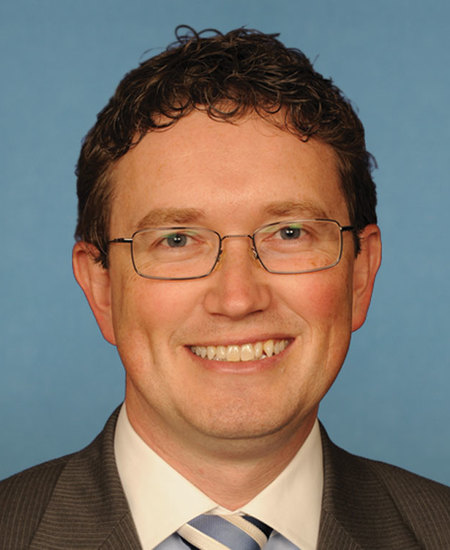
Rep. Thomas Massie
Sponsored bills
Senior Citizens Tax Elimination Act This bill repeals the inclusion of any Social Security or tier I railroad retirement benefits in gross income for income tax purposes. The bill also (1) appropriates funds to cover reductions in transfers to the Social Security and Railroad Retirement Trust Funds resulting from the enactment of this bill, and (2) expresses the sense of Congress against using tax increases to provide revenue necessary to carry out this bill.
Responsible Path to Full Obamacare Repeal Act This bill repeals the Patient Protection and Affordable Care Act and the Health Care and Education Reconciliation Act of 2010, effective at the beginning of FY2023. Provisions of law amended by those acts are restored.
No Mandates Act This bill prohibits federal agencies and certain entities that receive federal funding from requiring COVID-19 vaccinations. Specifically, federal agencies may not issue rules, regulations, or guidance that require an individual to receive a COVID-19 vaccination. The bill also prohibits requiring a COVID-19 vaccination to access federal property and services or congressional grounds and services. Additionally, an entity that received federal COVID-19 relief funds or receives other federal funds after this bill's enactment may not require a COVID-19 vaccination as a condition of providing any service to an individual.
This bill nullifies Order 2021-148 of the Mayor of the District of Columbia (December 22, 2021) and any successor or substantially similar order of the Mayor of the District of Columbia that imposes a COVID-19 vaccine requirement for entry to certain establishments and facilities in the District.
This bill requires the Food and Drug Administration (FDA) to make publicly available all records of information submitted to the FDA in conjunction with the emergency use authorization or licensing of a COVID-19 vaccine.
Maddy summaryHR 6105 terminates the federal public health emergency declaration for COVID-19, ending the status effective December 25, 2021. This bill directly affects federal programs and authorities operating under the emergency declaration, such as expanded telehealth services and pandemic-related funding. The key provision is a specific termination date for the emergency status declared under Section 319 of the Public Health Service Act. It does not create new policies but ends the legal authority for emergency measures. The bill is procedural, focusing solely on ending the declared emergency.
Conscience Protection Act of 2021 This bill provides statutory authority for certain protections for health care providers that refuse to participate in abortions based on religious beliefs or other convictions. Health care providers include individual professionals, medical facilities, health insurance organizations, and social services providers that refer clients to health care services. The federal government and entities that receive federal funding for health-related activities, including state and local governments, may not discriminate against a health care provider that refuses to be involved in, or provide coverage for, abortions. Currently, similar requirements apply to various related activities, including certain employment or personnel decisions (the Church Amendments), abortion services training (the Coats-Snowe Amendment), qualified health plans offered through health insurance exchanges, and annual appropriations bills for the Department of Health and Human Services (HHS) and other federal agencies (the Weldon Amendment). The HHS Office for Civil Rights must investigate complaints of this kind of discrimination. Furthermore, HHS may terminate or reduce HHS funding for health-related activities if a person or entity fails to comply with nondiscrimination requirements. Additionally, the Department of Justice or any entity adversely affected by such discrimination may bring a civil action to obtain appropriate relief. A plaintiff does not need to seek or exhaust administrative remedies before bringing the action. A plaintiff may also bring an action, including one for money damages, against a governmental entity. In many cases, principles of sovereign immunity shield states and some localities from these kinds of actions.

Natural Immunity Transparency Act This bill requires the Department of Health and Human Services to report within 30 days of the bill's enactment to Congress concerning natural immunity to COVID-19. In particular, the report must compare certain outcomes for individuals who recovered from a COVID-19 infection without having received the vaccination and individuals who received the vaccination.
This joint resolution nullifies a Department of Labor emergency temporary standard for preventing the transmission of COVID-19 in employment settings. Under the standard issued on November 5, 2021, employers with 100 or more employees must require their onsite employees to either be fully vaccinated against COVID-19 or undergo weekly COVID-19 testing.