

Maddy summaryHJRES 133 is a congressional resolution seeking to block an Environmental Protection Agency (EPA) rule titled "Greenhouse Gas Emissions Standards for Heavy-Duty Vehicles-Phase 3." This rule, published in the Federal Register on April 22, 2024, established new emissions requirements for large trucks and commercial vehicles. The resolution, if passed, would prevent the EPA rule from taking effect by formally disapproving it under standard congressional review procedures. The measure directly affects the EPA’s regulatory authority and vehicle manufacturers who would have been required to comply with the proposed standards.
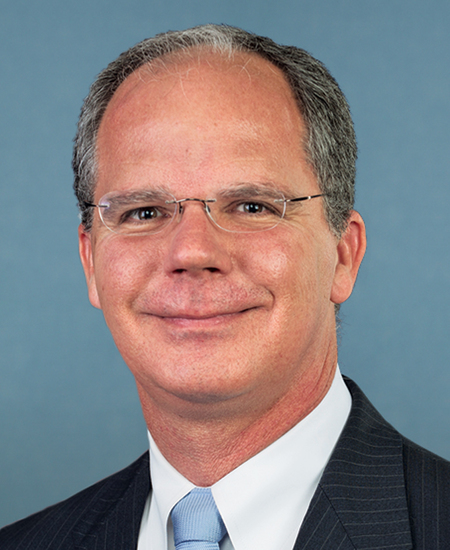
Rep. Brett Guthrie
Sponsored bills
Maddy summaryH.J. Res. 117 is a joint resolution that would disapprove an Environmental Protection Agency (EPA) rule concerning the reconsideration of National Ambient Air Quality Standards for particulate matter. The EPA rule, published on March 6, 2024, was part of the agency’s process to review these standards, which set limits for harmful air pollutants. This resolution invokes a congressional disapproval procedure under federal law to block the rule from taking effect. If enacted, the rule would have no force or effect, preserving the existing air quality standards for particulate matter.
Maddy summaryHJRES 204 is a congressional disapproval resolution targeting an EPA rule that would have reclassified certain large pollution sources (like industrial facilities) as smaller, less-regulated "area sources" under the Clean Air Act. If passed, this resolution would block the EPA's September 10, 2024, rule (published in the Federal Register) from taking effect, preventing the regulatory change. The resolution directly affects the EPA's authority to implement this specific reclassification, which would have altered how certain facilities are regulated under Section 112 of the Clean Air Act. It does not create new policy but halts an existing EPA rule through a procedural congressional action.
Maddy summaryHRES 1453 is a symbolic resolution designating September 2024 as "National Workforce Development Month." It expresses the House of Representatives' support for recognizing efforts to strengthen workforce skills and career opportunities across the U.S. The resolution highlights workforce challenges (like unfilled jobs and unemployment disparities) but does not create new laws, allocate funds, or change existing programs. It serves only to acknowledge the importance of workforce development for economic growth and worker stability.
Maddy summaryHR 705, the Veterans 2nd Amendment Protection Act, prohibits the Department of Veterans Affairs (VA) from automatically sending veterans' personal information to the national background check system solely because a fiduciary (like a guardian) manages their benefits. It specifically blocks the VA from sharing this data with the Justice Department without a court order finding the veteran a danger to themselves or others. This directly affects veterans who have a fiduciary appointed due to incapacity but are not deemed dangerous, preventing automatic barriers to firearm purchases based only on their fiduciary status. The bill amends 38 U.S.C. § 5501B to require judicial authorization before such data can be transmitted.
Maddy summaryHRES 1447 is a non-binding resolution expressing support for designating the week of September 22-28, 2024, as "Gold Star Families Remembrance Week." It directly honors families who lost loved ones while serving in the U.S. military (referred to as "Gold Star Families") and families of veterans. The resolution encourages Americans to observe the week by performing community service and celebrating the sacrifices of fallen service members, without creating new laws or obligations. It aligns with existing recognition of Gold Star Mother’s Day (the last Sunday in September) but expands the focus to all affected families.
Maddy summaryThis bill adds the Secretary of Agriculture to the Committee on Foreign Investment in the U.S. (CFIUS) for transactions involving agricultural land, biotechnology, or agriculture-related infrastructure (like transportation, storage, or processing). It requires the Secretary to notify CFIUS about transactions where a foreign person from China, North Korea, Russia, or Iran acquires U.S. agricultural assets, as defined by existing law. CFIUS then decides whether to review such transactions or take other action. The provisions apply only to transactions involving those four countries and sunset once they are removed from the official list of "foreign adversaries" in federal regulations.
Maddy summaryHR 2864, the Countering CCP Drones Act, adds DJI Technologies (Shenzhen Da-Jiang Innovations Sciences and Technologies Company Limited) and its equipment/services to the list of prohibited communications products under the Secure and Trusted Communications Networks Act. The bill directly affects U.S. federal agencies and entities receiving federal funds by prohibiting them from using DJI's telecommunications or video surveillance equipment or services. Its key mechanism requires federal agencies to remove DJI equipment from their networks and bans future procurement or use of such equipment. This policy change aims to address security concerns related to Chinese-owned drone technology in U.S. communications infrastructure.
Maddy summaryHRES 1420 is a disapproval resolution that stops a rule issued by the Department of Homeland Security regarding the "Keeping Families Together process." The resolution directs Congress to reject the rule, meaning it will have no legal effect and cannot be enforced. This resolution specifically targets a procedural rule related to immigration procedures, not new policy. It does not change immigration law or directly affect individuals but prevents the rule from being implemented. As a disapproval resolution, it is procedural and focuses solely on blocking the rule's enforcement.
Maddy summaryHR 8230, the FOREST Act, exempts certain telecommunications projects on National Forest System lands from standard environmental review requirements under the National Environmental Policy Act (NEPA). It specifically applies to projects using existing infrastructure (like power lines) or located on areas where the Forest Service has already completed environmental and historical reviews for prior communications use authorizations. The bill prevents the need for re-initiating these reviews if new information about a previously analyzed area becomes available. This directly affects telecom companies seeking permits for new facilities on National Forest lands, streamlining the approval process for projects in already reviewed locations. The policy change focuses on reducing regulatory duplication for infrastructure already vetted by the Forest Service.