

Maddy summaryHR 2103, the Protect Postal Performance Act, requires the U.S. Postal Service to hold public hearings and wait 180 days before closing or consolidating any post office, ensuring community input and transparency. It directly affects communities by preventing closures if a post office is the only one within 15 miles or serves 15,000+ residents, and blocks closures of processing centers that would leave entire non-contiguous state regions (with over 100,000 residents) without service. The bill also mandates that the Postal Regulatory Commission review proposed facility changes before implementation and prohibits reducing mail pickup/drop-off frequency through transportation optimization plans without prior approval. These provisions aim to stabilize postal services and maintain access for residents in underserved areas.
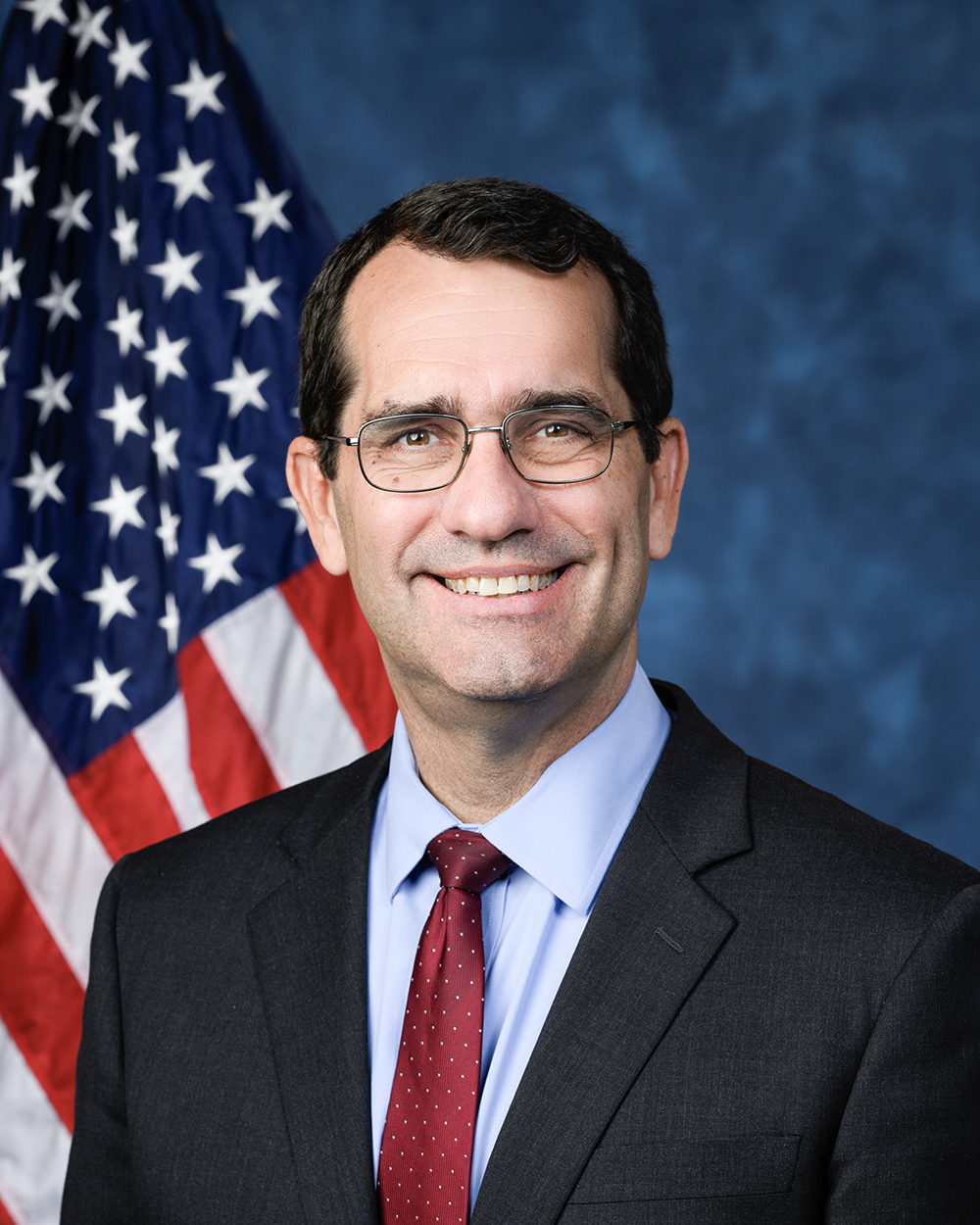
Rep. Derek Schmidt
Sponsored bills
Maddy summaryThis resolution urges the U.S. Secretary of State to designate Nigeria as a Country of Particular Concern (CPC) under the International Religious Freedom Act of 1998, citing ongoing violence against religious minorities. It specifically calls for Nigeria to protect religious minorities, prosecute perpetrators of attacks, and address displacement of millions caused by religiously motivated violence. The resolution also recommends increased U.S. diplomatic engagement with Nigeria and targeted sanctions against those responsible for religious freedom violations. This follows the State Department's omission of Nigeria from its CPC list in 2021-2023 and its 2024 failure to release an annual report.
Maddy summaryThe Credit for Caring Act of 2025 creates a federal tax credit for family caregivers of elderly or disabled relatives. It allows eligible caregivers (with over $7,500 in earned income) to claim a credit equal to 30% of qualified caregiving expenses exceeding $2,000, capped at $5,000 per year. Qualified expenses include human assistance, home modifications, respite care, counseling, lost wages for unpaid time off, and transportation, all requiring certification from a licensed healthcare provider that the care recipient has long-term needs. The credit phases out for higher earners (over $75,000 single/$150,000 joint) and requires documentation of expenses and care recipient certification.
Resident Education Deferred Interest Act or the REDI Act This bill allows borrowers in medical or dental internships or residency programs to defer student loan payments until the completion of their programs.
Maddy summaryThis bill prohibits federal funding, support, or approval for research using human fetal tissue obtained from induced abortions. It allows research on tissue from miscarriages (under 20 weeks) or stillbirths (20+ weeks) under existing Public Health Service Act rules, and permits development of new cell lines for vaccines or genetic vectors if not derived from abortion tissue. The bill amends the Public Health Service Act to restrict federal research to tissue from miscarriages or stillbirths and clarifies definitions for terms like "miscarriage" and "stillbirth." It directly affects federal agencies like the NIH and researchers relying on federal grants for biomedical studies.
Maddy summaryHR 2039, the Protecting the Right to Keep and Bear Arms Act of 2025, prevents the President and Health Secretary from using emergency declarations (under the National Emergencies Act or Public Health Service Act) to implement gun control measures. It amends disaster relief law to explicitly prohibit future rules that would ban firearm possession, sales, or accessories during emergencies. The bill directly affects federal agencies and future emergency declarations, blocking them from being used as a tool for gun regulation. It does not change existing gun laws but restricts how emergency powers can be applied to firearms policy.
Maddy summaryThis is a non-binding resolution (HRES 206), not a legislative bill. It expresses the House's support for preserving the "stepped-up basis" tax provision (Section 1014 of the Internal Revenue Code), which allows heirs to reset the tax cost basis of inherited assets like farmland or business equipment to their current market value. The resolution cites that 98% of farms and 19% of businesses are family-owned, noting that eliminating this provision could increase taxes for 66% of midsized farms. It specifically urges opposition to new taxes on family farms and small businesses but does not change any tax law or policy.
Farm Credit Administration Independent Authority Act This bill specifies that the Farm Credit Administration (FCA) is the sole regulator of the Farm Credit System (FCS) and establishes reporting requirements for FCS institutions (i.e., lenders). Specifically, the bill states that the FCA is the sole and independent regulator of the FCS and exempts entities that are supervised by the FCA from the Equal Credit Opportunity Act (ECOA). As background, the bill addresses a rule issued by the Consumer Financial Protection Bureau (CFPB) that implements provisions of the ECOA by requiring covered financial institutions, including FCS institutions, to collect and report to the CFPB data on credit applications for small businesses, including the principal owner's race, sex, and ethnicity. This 2023 rule has been challenged in court. The bill also requires FCS institutions to (1) request that loan applicants and borrowers that are small farmers disclose information identifying their race, sex, and ethnicity; and (2) annually report the collected information to the FCA. The FCA must make the collected information available to the public on annual basis. If an FCS institution customer does not voluntarily report the requested information, the FCA may not require the institution to use other means to deduce the information. In addition, the bill specifies that FCS institutions shall not be required to comply with the bill's requirements if financial institutions are not required to comply with the CFPB rule due to a court invalidating the rule or a repeal of the rule.
Maddy summaryThis bill amends the Clean Air Act to update the definition of fossil fuel, explicitly including "fuel for ocean-going vessels" alongside home heating oil and jet fuel. It directly affects the shipping industry by requiring the Environmental Protection Agency (EPA) to issue regulations within one year of enactment to implement this updated definition. The key mechanism is changing the statutory definition to ensure ocean vessel fuels are covered under existing fossil fuel regulations, potentially influencing future clean fuel standards for ships. The EPA must also submit a report to Congress on implementation within one year of finalizing these regulations.
Maddy summaryHR 1873, the Broadband Grant Tax Treatment Act, excludes certain federal broadband grants from taxable income for recipients. It directly affects entities (like internet providers or local governments) receiving qualifying grants under specific programs, including the Broadband Equity, Access, and Deployment Program and State Digital Equity Capacity Grants established by the Infrastructure Investment and Jobs Act. The bill prevents double tax benefits by disallowing deductions for expenses covered by these excluded grants and reduces the adjusted basis of related property. This change applies to grants received in taxable years ending after March 11, 2023.