Maddy summaryThis bill reaffirms that certain lands taken into trust by the U.S. for federally recognized tribes under the 1934 Indian Reorganization Act remain in trust status. It specifically applies to land taken into trust before the bill's enactment for tribes that were federally recognized at the time the land was acquired. The bill does not create new policy but formally confirms existing trust status for these specific parcels. It directly affects tribes that held federal recognition when their land was taken into trust under the 1934 Act.
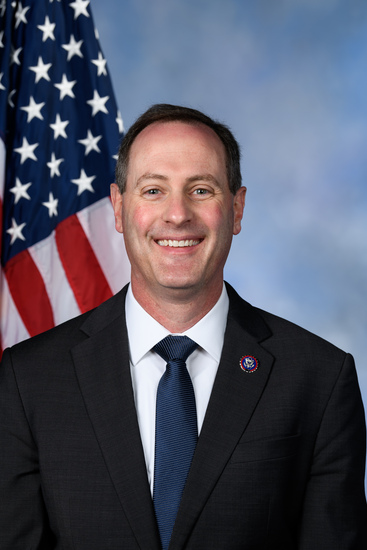
Rep. Tracey Mann
Sponsored bills
Maddy summaryThe Mental Health in Aviation Act of 2025 requires the Federal Aviation Administration (FAA) to update regulations within two years to encourage pilots and air traffic controllers to seek mental health care and disclose conditions without fear of losing medical clearance. It mandates annual reviews to improve the medical clearance process for mental health conditions - such as approving additional safe medications, enhancing examiner training, and reducing backlogs - and allocates $13.74 million yearly (2026-2029) to hire more aviation medical examiners. The bill also directs the FAA to implement recommendations from a mental health rulemaking committee and fund a public campaign to reduce stigma around mental health care in aviation. These provisions aim to support aviation workers' well-being while streamlining safety-related medical evaluations.
Maddy summaryThis bill amends the Social Security Act to remove an exclusion for rural facilities primarily treating mental health conditions from Medicare coverage. It specifically changes Section 1861(aa)(2) by deleting the phrase "or a facility which is primarily for the care and treatment of mental diseases," allowing these facilities to qualify for Medicare reimbursement. The change directly affects rural behavioral health centers specializing in mental health care that were previously excluded. The amendment takes effect on January 1, 2027, enabling these facilities to access federal Medicare funding for services.
Maddy summaryThis bill changes federal rules for rural healthcare facilities that employ physician assistants (PAs) and nurse practitioners (NPs). It requires these facilities (not run by a physician) to have arrangements consistent with state laws governing PA/NP practice, ensuring services follow state regulations. The policy directly affects rural clinics and hospitals seeking federal reimbursement for PA/NP services. The changes take effect January 1, 2027, aligning federal requirements with existing state oversight of these healthcare providers.
Maddy summaryHR 5198, the Rural Health Clinic Location Modernization Act of 2025, changes Medicare eligibility rules for rural health clinics by updating the definition of "urban area" used to determine clinic qualification. It replaces the current "urbanized area" standard with a clearer definition: any urban area (per Census Bureau data) having a population of 50,000 or more. This adjustment directly affects clinics seeking Medicare certification, ensuring they meet consistent geographic criteria for rural designation. The change takes effect January 1, 2027, aiming to simplify qualification rules without altering Medicare coverage or benefits.
Maddy summaryHR 2808, the Homebuyers Privacy Protection Act, restricts how consumer reporting agencies share credit reports during mortgage applications. It prevents agencies from sending these reports to third parties unless the request is tied to a firm credit offer and the recipient has either the homebuyer’s explicit written consent or is directly involved in the mortgage (like the lender, loan servicer, or the homebuyer’s bank holding an active account). This directly affects homebuyers applying for residential mortgages by limiting unsolicited sharing of their credit information. The law amends the Fair Credit Reporting Act to strengthen privacy protections around mortgage-related credit data.
Maddy summaryHR 5142, the Home Health Stabilization Act of 2025, prevents payment cuts to Medicare home health providers for 2026 and 2027. It requires the Medicare Secretary to adjust payment rates to fully offset two planned negative adjustments (-4.059% and -5.0%) that would have reduced payments under the 2026 rate update rule. This ensures home health agencies receive full reimbursement for services during those years without further reductions based on prior payment formulas. The bill directly affects home health providers who rely on Medicare payments for patient care.
Maddy summary# Summary of Proposed FEMA Reform Legislation (FEMA Act of 2025) This comprehensive legislative document proposes significant reforms to the Robert T. Stafford Disaster Relief and Emergency Assistance Act, with four main sections addressing: ## 1. Disaster Assistance Reforms - **Expanded eligibility** for assistance, including clarifying that absence of a fixed address doesn't disqualify individuals from sheltering assistance - **Improved rental assistance** with consideration of local post-disaster rent increases - **Direct assistance** for those unable to use financial assistance, with no requirement to show other assistance can cover costs (except insurance) - **Enhanced notices** for applicants, including documentation of denial decisions - **Clarification of displacement assistance** eligibility, stating insurance shouldn't be considered a duplication of benefits ## 2. Mitigation Program Enhancements - **Preapproved project mitigation plans** requiring states to develop plans with peer review processes - **Improved allocation of funds** with formulas prioritizing vulnerable communities, high-risk areas, and rural/economically distressed communities - **Resilient buildings** requirements for housing retrofits using the latest building codes - **Streamlined application processes** for hazard mitigation funds across multiple programs - **Study on mitigation benefits** to evaluate cost savings and effectiveness ## 3. Transparency and Accountability Measures - **Public dashboards** for both individual assistance (431) and public assistance (432) showing application status, approvals, denials, and funding - **Transparency requirements** for disaster declarations with detailed justifications for approvals/denials - **GAO studies** on numerous topics including: - Identity theft in disaster assistance (409) - Insurance utilization for public assistance facilities (410) - Wildfire management plans (411) - Effectiveness of alerting systems (412) - Cost savings of repair/rebuilding reforms (415) - **Prohibition on political discrimination** in assistance distribution ## 4. Workforce and Operational Improvements - **Study on workforce retention** in noncontiguous communities - **Pilot program** for preliminary damage assessments in remote communities - **Fast-moving disasters working group** to develop best practices for rapid response The legislation focuses on improving efficiency, transparency, and effectiveness of disaster relief programs while prioritizing vulnerable populations and communities with higher risk of disasters. It also emphasizes data-driven decision making through required studies and reports to continuously improve disaster management policies.

Maddy summaryThis bill establishes a permanent Rural Housing Preservation and Revitalization Program to help maintain affordable housing in rural areas. It provides mechanisms for loan restructuring, extends rental assistance contracts for up to 20 years, and streamlines application processing for housing assistance. The bill also adjusts rural housing voucher programs to better respond to tenant needs, including allowing for interim and annual reviews of voucher amounts based on income changes. These changes directly affect low-income rural residents living in federally assisted housing and the housing providers who manage these properties.
Maddy summaryThe TRAPS Act establishes a federal Task Force on Payment Scams, chaired by the Treasury Secretary, to coordinate efforts across agencies like the FTC, Federal Reserve, and consumer groups. The Task Force will study current scam tactics (such as fake text messages or fraudulent payment platforms), evaluate prevention strategies, and develop recommendations to help consumers avoid and report scams. It must submit an initial report within one year and annual updates, focusing on improving federal-state coordination and education programs. This bill directly affects government agencies and stakeholders participating in the Task Force, with the goal of protecting consumers from evolving payment scams.