

Maddy summaryThis bill establishes a federal program to create at least two bioindustrial technology maturation facilities by 2030, which will serve as shared research and testing centers for developing biotechnology products that enhance energy security. These facilities will provide precommercial-scale testing, pilot production, and workforce training for companies and researchers working with biological systems to manufacture materials and products, with locations chosen to support diverse regional needs and supply chains. The legislation defines key terms related to biomanufacturing and waste streams, mandates collaboration with industry and academic partners, and authorizes $225.5 million in funding from 2026 through 2030 to support these efforts.
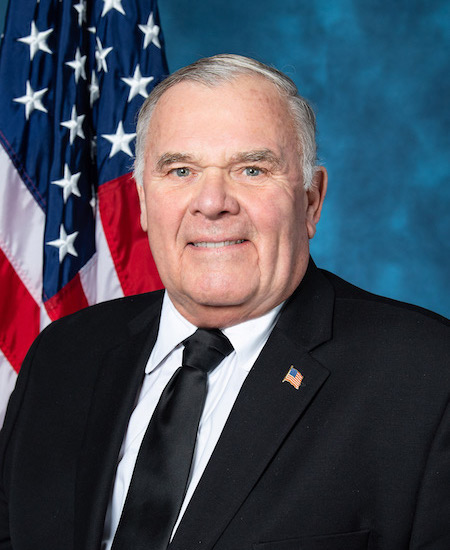
Rep. James R. Baird
Sponsored bills
Protection of Women in Olympic and Amateur Sports Act This bill requires certified national governing bodies (NGBs) of amateur sports (e.g., USA Gymnastics) to prohibit a person whose sex is male from participating in an amateur athletic competition that is designated for females, women, or girls. Under the bill, male means an individual who has, had, will have—or would have, but for a developmental or genetic anomaly or historical accident—the reproductive system that at some point produces, transports, and utilizes sperm for fertilization.
Maddy summaryThis bill amends the tax code to allow first-time homebuyers to use funds from 529 college savings plans for home purchases without tax penalties, under specific conditions. It permits tax-free withdrawals of the original contributions (plus earnings) if the account was maintained for 15 years, the funds are used within 60 days for a first home purchase, and the total lifetime withdrawals do not exceed $35,000. If the home is sold within 5 years, a recapture tax may apply based on the time held. It directly affects first-time homebuyers who have maintained 529 plans for 15 years and use the funds for qualifying home purchases.
Maddy summaryThe PART Act requires new vehicles to have catalytic converters marked with a unique identification number that links directly to the vehicle's identification number, stored in a law enforcement-accessible database. It establishes a $7 million grant program to help repair shops, dealers, law enforcement, and fleet owners purchase equipment for marking converters with visible, durable identifiers (using die or pin stamping and high-visibility paint). The bill also mandates that businesses buying catalytic converters keep detailed seller records (including vehicle information) for two years and use traceable payments, banning cash or cryptocurrency transactions. Additionally, it creates new federal criminal penalties for stealing or trafficking in catalytic converters, with potential sentences of up to five years in prison.
Maddy summaryThe No Tax Dollars for Terrorists Act requires the U.S. State Department to identify foreign countries and organizations receiving U.S. foreign aid that have provided financial or material support to the Taliban, including the amounts of aid they receive and the support they give to the Taliban. It mandates a strategy to use U.S. aid to discourage such support, with initial and follow-up reports to Congress on the strategy and its implementation. The bill also demands detailed reports on U.S. cash assistance programs in Afghanistan and the Afghan Fund, explaining how funds are transferred (including traditional money transfer systems) and how safeguards prevent Taliban access.
Maddy summaryThis bill, known as the BASICS Act, creates a new $5.5 billion federal funding program over five years to repair and replace bridges in poor condition across the United States. The program prioritizes projects based on the cost of bridge rehabilitation in each state and guarantees a minimum funding allocation of $45 million per state annually. It also expands funding for regional transportation planning in rural areas and increases flexibility for local governments to select and manage transportation projects through enhanced consultation requirements. Additionally, the legislation removes local matching fund requirements for metropolitan planning activities and allows 100 percent federal funding for off-system bridge projects owned by local governments or tribes.
Maddy summaryThis bill prohibits foreign governments and entities from providing any financial or in-kind benefits related to student athletes' name, image, and likeness (NIL) agreements. It directly affects colleges, athletic conferences, media distributors, and student athletes by banning foreign investment in college sports revenue streams - including media rights, sponsorships, and facility naming. Institutions must report foreign solicitations to federal agencies and face penalties under the International Emergency Economic Powers Act for violations. The law also requires schools to bar athletes who violate these rules from competing for one year and to annually inform athletes about the restrictions.
Maddy summaryThis bill amends the Passport Act of 1920 to exempt Purple Heart and Medal of Honor recipients from standard U.S. passport application and renewal fees. It directly affects veterans who have received these specific military decorations. The key provision adds a new fee exemption category (subparagraph D) for these individuals in the passport fee structure. The bill also requires the State Department to create a verification process with the Defense Department to confirm eligibility using military service records. This is a straightforward administrative change to reduce costs for honored veterans.
Maddy summaryThis bill modifies federal budget rules for unspent agency funds. It requires federal agencies to allocate 49% of unused funds to the next fiscal year, 49% toward paying the national debt, and 2% for retention bonuses (capped at 10% of an employee's base pay). Agencies must also limit future budget requests to the previous year's amount adjusted for inflation. The bill directly affects all executive branch agencies (excluding the Red Cross), altering how they manage leftover budget authority. It does not create new savings programs for individuals but changes government fiscal management procedures.
Maddy summaryHRES 1034 modifies House rules for "questions of privilege" resolutions during the 119th Congress. It requires that any privilege resolution offered by the Majority Leader or Minority Leader must have at least one-fifth of all House members as cosponsors when introduced. Additionally, Members must maintain this one-fifth cosponsorship threshold for at least one legislative day after a resolution's introduction before making an oral announcement about it. This procedural change affects how Members can formally raise conduct issues involving other Members, Delegates, or Resident Commissioners.