

Maddy summaryThe Equal Treatment for Farmers Act removes references to 'socially disadvantaged farmers and ranchers' from multiple federal agricultural laws and programs. This bill amends various statutes including the Federal Crop Insurance Act, Consolidated Farm and Rural Development Act, and other agricultural legislation to eliminate special preferences or categories based on social disadvantage status. The legislation also prohibits the USDA from providing any preference, priority consideration, or enhanced benefits based on race or gender in its programs. These changes affect how federal agricultural assistance, loans, and benefits are categorized and distributed to farmers and ranchers.
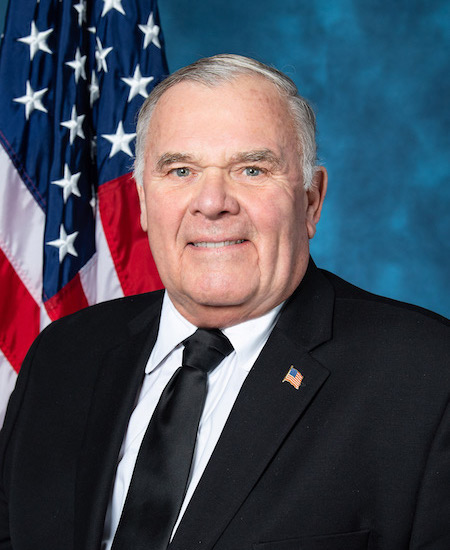
Rep. James R. Baird
Sponsored bills
Maddy summaryThe "Taxpayer Protection and Somalia Accountability Act of 2026" aims to prevent the misuse of U.S. funds and foreign assistance in Somalia. It recommends that the President restrict certain money transfers from the U.S. to Somalia, particularly if they originate from government support programs or benefit the Somali government or terrorist organizations. The bill also suspends direct U.S. foreign assistance to the national Government of Somalia unless safeguards are established to prevent diversion. Additionally, it mandates visa restrictions and allows for sanctions against Somali officials and their families involved in corruption or aid diversion, while also authorizing rewards for information on fraud. These provisions primarily affect individuals sending money to Somalia, the national Government of Somalia, and specific Somali officials.
Maddy summaryThis bill, the Artemis Accords Authorization Act, aims to strengthen United States leadership in international civil space exploration and cooperation. It authorizes the Department of State to establish a "Special Coordinator for the Artemis Accords" to lead diplomatic efforts in expanding participation and coordinating U.S. engagement with foreign governments and industry partners. The legislation also requires annual reports to Congress on the progress of the Artemis Accords and international space cooperation. Additionally, it mandates the development of a strategy to integrate U.S. low-earth orbit satellite technologies into foreign policy, including promoting their export and offering financial support to other countries. This bill directly affects the Department of State, NASA, other federal agencies involved in space and foreign policy, and the U.S. space industry.
Maddy summaryThis bill amends the National Quantum Initiative Act to create a new funding program for upgrading quantum research facilities and improving access to specialized equipment. The National Science Foundation would award grants to universities, nonprofit organizations, and industry partners to enhance research resources needed for quantum information science and technology development. These funds specifically support upgrading research capabilities, improving equipment access through better coordination and training programs, and enabling professional staff to maintain research resources. The program aims to address implementation challenges and meet the needs of the scientific community and quantum supply chain.
Maddy summaryThis bill amends Title VII of the Civil Rights Act of 1964 to clarify that protections against sex discrimination do not extend to gender identity. It directly affects employers, employees, and individuals involved in workplace discrimination claims by explicitly excluding gender identity from the definition of sex-based discrimination. The key provision is a rule of construction that interprets existing federal law in a specific way, rather than creating new protections or restrictions. This change would limit the scope of federal sex discrimination claims to biological sex rather than including gender identity as a protected category.
Maddy summaryThe Tech Diplomacy Training Act requires all U.S. Foreign Service officers to complete mandatory training on science, technology, engineering, and mathematics topics, including artificial intelligence and emerging communications technologies. This training will be administered through the George P. Shultz National Foreign Affairs Training Center and must cover how these technologies impact diplomacy, how adversaries use them, and how the United States can leverage them as diplomatic tools. New officers must complete the full curriculum during their initial training, while existing officers have 18 months to finish the comprehensive program or 270 days to complete a condensed version. The requirement applies to all Foreign Service officers and operates alongside existing training requirements without replacing them.
Maddy summaryThis bill creates two new tax incentives to encourage the production and investment in renewable materials derived from biomass. The first provision offers a production credit of 10 cents per pound for qualified renewable materials sold or used in business, while the second provides an investment credit equal to 30 percent of qualified property costs used in renewable material facilities. Both credits are limited to facilities located in the United States or its possessions and exclude products intended for fuel, heat, electricity, food, or feed. The bill also allows these tax credits to be transferred to other taxpayers and requires the Treasury Department to issue implementing regulations within 180 days of enactment.
Maddy summaryThis bill creates a publicly accessible database to track private vendors that supply, support, or maintain components of election systems used in federal elections. It requires states and local election officials to submit information about these vendors within 30 days after each federal election, including vendor identity, contract terms, and ownership details such as parent companies and foreign interests. The legislation prohibits federal funding for election administration in any state that fails to comply with these reporting requirements. The database aims to increase transparency by making vendor information available to the public, with provisions to withhold certain details for security reasons. These changes would take effect for federal elections held in 2026 and subsequent years.
Maddy summaryHR 7675, the Securing Partner Supply Chains Act, establishes a 3-year U.S. initiative to help allied and partner countries strengthen their screening of foreign investments for national security risks. The initiative, led by the Secretary of State, will provide technical assistance, training, and advisory services to partner countries - defined as those with U.S. trade or defense agreements - to improve their ability to assess risks to critical infrastructure, sensitive technology, and supply chains. It requires annual reports to Congress detailing the assistance provided, partner countries' progress, and emerging security risks. The bill does not directly affect U.S. citizens or businesses but focuses on building international capacity to address shared security concerns through cooperation.
Maddy summaryHR 7649, the Humanitarian Theft Enforcement Act, holds foreign individuals or entities liable for unauthorized diversion or destruction of U.S. humanitarian aid, including aid provided through international organizations. The Secretary of State determines responsibility and can recover the aid's value from the responsible party, with recovered funds credited to the State Department or transferred to other agencies if the aid was originally funded by them. The Secretary may also waive liability if deemed in the national interest. This bill creates a direct mechanism for the U.S. government to seek reimbursement for diverted humanitarian assistance.