

Maddy summaryThis bill authorizes Congress to award a Congressional Gold Medal to individuals who fought for or with the United States in the Pacific theater during World War II and subsequently became prisoners of war. The legislation specifically recognizes the service and sacrifice of those who defended locations such as Bataan and Corregidor, including Filipino soldiers and civilians who served alongside U.S. forces. To implement this award, the Speaker of the House and the President pro tempore of the Senate will arrange for the creation of a gold medal by the Secretary of the Treasury, which will be presented to the Smithsonian Institution for display. The act also allows for the production of duplicate bronze medals to cover the costs of the original gold medals, with any proceeds from these sales deposited into the United States Mint Public Enterprise Fund.
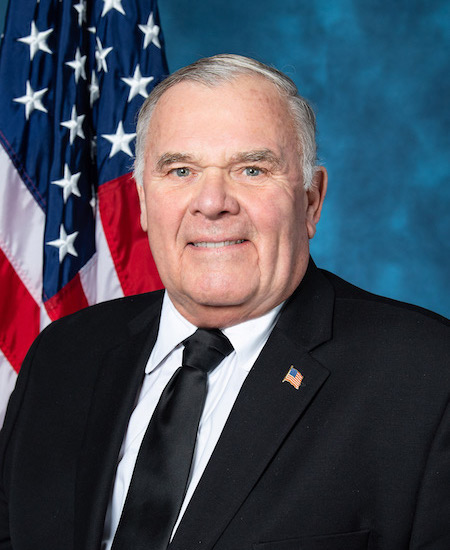
Rep. James R. Baird
Sponsored bills
Maddy summaryHR 5351, the NSF AI Education Act of 2025, creates new funding mechanisms to expand artificial intelligence education. It authorizes scholarships and fellowships covering tuition, fees, and stipends for undergraduate and graduate students in AI-related fields, with priority for programs teaching AI in K-12 schools, advanced manufacturing, and agriculture. The bill also establishes up to eight regional "Centers of AI Excellence" at community colleges and career schools to develop AI curricula, build industry partnerships, and create student job pathways. Additionally, it funds research grants to develop K-12 AI teaching materials and supports professional development for educators and industry professionals to integrate AI into classrooms.
Maddy summaryThis bill authorizes the presentation of Congressional Gold Medals to the four crew members of the Artemis II mission to recognize their historic achievement in advancing human space exploration. The legislation directs the Speaker of the House and the President pro tempore of the Senate to arrange for the medals, which will feature the faces of the astronauts and be struck by the Secretary of the Treasury. In addition to the gold medals, the bill permits the minting and sale of duplicate bronze versions to help cover production costs, with any proceeds returned to the United States Mint Public Enterprise Fund.
Maddy summaryThis bill redesignates the existing National Parks and Public Land Legacy Restoration Fund as the America's Legacy Restoration Fund to address deferred maintenance on federal lands. It directs revenue from recreation fees and a portion of energy development income into the fund, which must be used primarily for repairing critical infrastructure like roads, trails, and buildings managed by agencies such as the National Park Service and the Forest Service. The legislation establishes strict rules requiring that most funds go toward non-transportation projects, mandates transparency through public dashboards tracking project status, and sets aside a small percentage for matching private donations. Additionally, the bill increases entrance fees for foreign visitors to ensure they contribute to the fund, while prohibiting the use of these specific funds for land acquisition or employee bonuses.
Maddy summaryThe GHOSTRUCK Act modifies federal regulations to allow motor carriers to add edits or annotations to electronic logging device records under specific conditions. This change permits employees or authorized agents to make these adjustments only if they are physically located in North America and the driver subsequently approves the changes. The bill directly affects trucking companies and drivers by establishing new rules for how digital driving logs can be modified after the fact.
Repealing Big Brother Overreach Act This bill repeals the Corporate Transparency Act. The act requires existing companies and newly created companies to report beneficial ownership information to the Department of the Treasury’s Financial Crimes Enforcement Network for purposes of addressing the financing of terrorism and money laundering.
Maddy summaryThe Web of Biological Data Act of 2026 directs the Department of Energy to create a centralized online platform called the Web of Biological Data to help researchers access and analyze biological information using advanced tools like artificial intelligence. This system will serve as a single entry point for federally funded data, featuring strict cybersecurity measures and tiered access controls to protect sensitive information. The bill establishes a phased rollout, beginning with a pilot version within two years that focuses on specific data types and user-friendly design, followed by a full expansion five years later that includes broader data compatibility and bioinformatic tools. To ensure the project's success, the legislation creates an advisory board with members from industry, academia, and government, and mandates regular reports to Congress on progress and security assessments. Funding is authorized to support the initial development, testing, and long-term maintenance of the platform while preserving existing privacy and ethical protections for biological data.
Maddy summaryThe HAILEY Act of 2026 amends the PROTECT Act to update the criteria for issuing AMBER Alerts. It allows law enforcement to request these alerts for any missing person under 18 who is considered a high-risk individual, expanding the program beyond its previous focus on child abduction cases. This change applies to police agencies and the national AMBER Alert communication network, ensuring that alerts can be triggered for a broader range of endangered youth. The legislation does not alter the core requirements for issuing an alert but clarifies that the system covers all high-risk missing minors.
Maddy summaryThe Never Fight Alone Act expands the Veterans Community Care Program to allow veterans who cannot access VA mental health or substance-use residential treatment programs to receive these services from qualified community providers. This expansion includes specific requirements for community facilities to be state-licensed and accredited by recognized behavioral health standards, with provisions for waivers if no suitable options exist. The bill also mandates that veterans be permitted to choose their preferred care option when multiple providers are available and prohibits denying care solely because a provider cannot meet standard wait times. Additionally, the legislation requires the VA to collect detailed data on care requests and approvals, specifically highlighting mental health cases, and restricts the VA from changing community care access rules without congressional approval.
Maddy summaryThe American Manufacturing Revitalization Exchange Program Act of 2026 establishes a new international exchange program designed to address skilled labor shortages in the U.S. manufacturing sector by sending American workers to allied nations for training. Administered by the Assistant Secretary for Educational and Cultural Affairs within the Department of State, the program will select up to 10 participants annually who must be U.S. citizens with prior apprenticeship or higher education experience in manufacturing fields. These selected individuals will travel to allied countries for up to 12 months to gain hands-on expertise in strategic industries such as robotics, semiconductors, and aerospace, while also serving as cultural ambassadors. Upon returning to the United States, participants are expected to share their newly acquired skills and knowledge with domestic employers and training institutions, and the program will conclude two years after its enactment.