National Law Enforcement Officers Remembrance, Support and Community Outreach Act. [ sic ] This bill temporarily directs the Department of the Interior to award a grant to the National Law Enforcement Officers Memorial Fund for the expenses associated with operating and enhancing the community outreach, public education, and officer safety and wellness programs of the National Law Enforcement Museum.
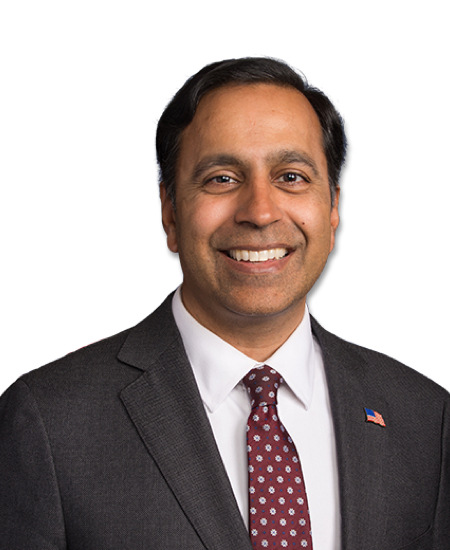
Rep. Raja Krishnamoorthi
Sponsored bills
Maddy summaryThe Critically Endangered Animals Conservation Act of 2026 establishes a dedicated fund within the existing Multinational Species Conservation Fund to provide competitive grants for the protection of animal species classified as endangered or critically endangered by the International Union for Conservation of Nature. The Secretary of the Interior will manage this program, awarding financial assistance to foreign wildlife authorities and qualified organizations to support projects such as habitat restoration, illegal trade enforcement, and scientific research aimed at recovering wild populations outside the United States. To ensure accountability and effectiveness, grant recipients must submit periodic progress reports that are generally made available to the public, while specific restrictions prohibit the use of funds for captive breeding unless it is strictly necessary for releasing animals back into the wild. The legislation authorizes $5 million per year in appropriations from fiscal years 2027 through 2032 and requires the Secretary to report on the program's results to Congress every two years.

Maddy summaryThe PROTECT Act directs the Centers for Disease Control and Prevention to launch a five-year initiative aimed at reducing youth and young adult use of e-cigarettes and other emerging tobacco products. The bill authorizes $500 million in funding over five years to support research on usage patterns, health impacts, and cessation behaviors, as well as the development of new prevention strategies and public education campaigns. It also requires the creation of guidance for healthcare providers and schools on how to intervene with young users and improve access to quitting services. Additionally, the legislation mandates continued funding for state and local health departments to implement these prevention and cessation efforts.
Maddy summaryThe Protect American Values Act prohibits the use of federal funds to implement, administer, or enforce a specific Department of Homeland Security rule regarding the "Public Charge" ground of inadmissibility. This legislation directly affects immigrants and mixed-status families by preventing the government from using public benefits as a factor in determining eligibility for lawful permanent resident status. The bill includes a statement of congressional intent arguing that the targeted rule would restrict access to essential services like food, medical care, and housing, while also negatively impacting state and local economies. By cutting off funding for this specific policy, the act aims to maintain current immigration standards and prevent what Congress describes as an unauthorized reversal of long-standing law.
Maddy summaryThis bill designates the U.S. Postal Service facility at 14855 South Van Dyke Road in Plainfield, Illinois, as the "Staff Sergeant Jose Dueñez Jr. Post Office Building." It directly affects the postal facility and all official references to it. The key provision requires that any future law, document, or record referring to the location must use the new name. This is a purely procedural renaming with no funding, policy changes, or impact beyond official nomenclature.
Maddy summaryThis bill names a U.S. Postal Service facility at 1300 East Northwest Highway in Palatine, Illinois, as the "Bernie Bluestein Post Office Building." It updates all official references in federal laws, documents, and records to reflect this new name for the location. The change is purely administrative and affects how the building is identified in government materials. No new policies or funding are involved; it is a ceremonial designation.
Skills-Based Federal Contracting Act This bill prohibits federal contract bid solicitations for contractor personnel from including minimum educational requirements unless the contracting officer justifies the requirements. The prohibition applies to educational requirements that may be met through education alone, education or experience, or a combination of education and experience. The bill also requires the Office of Management and Budget to issue implementing guidance to federal agencies, including instructions for contracting officers that encourage using alternatives to education requirements.
Maddy summaryHR 2466 designates the U.S. Postal Service facility at 5225 Harrison Avenue in Rockford, Illinois, as the "Jay P. Larson Post Office Building." The bill updates all federal references - including laws, maps, and official documents - to use this new name for the building. It does not create new policies or affect residents, businesses, or postal services. This is a ceremonial naming bill with no financial or operational changes.
Maddy summaryThis bill, titled the No TSA Data for ICE Act, prohibits the Transportation Security Administration from sharing passenger data with U.S. Customs and Border Protection or U.S. Immigration and Customs Enforcement. It specifically bars these agencies from using TSA information or data from private brokers to perform immigration enforcement functions. Additionally, the legislation prevents the denial, suspension, or early termination of Trusted Traveler programs like PreCheck and Global Entry if an individual's participation in First Amendment-protected activities is the reason. The law defines the restricted data as personally identifiable information about flight passengers obtained from the TSA or private sector entities.
Maddy summaryThis resolution expresses support for designating July 2026 as "Plastic Pollution Action Month" to raise awareness about the environmental and health risks of plastic waste. It highlights statistics on plastic production, low recycling rates, and the impact of microplastics on marine life and human health to underscore the need for action. The bill encourages individuals across the United States to participate in activities that reduce plastic use and pollution throughout the year, rather than implementing new laws or regulations.