Officer Brian D. Sicknick Congressional Gold Medal Act This bill requires the Speaker of the House of Representatives and the President pro tempore of the Senate to arrange for the presentation of a Congressional Gold Medal commemorating Officer Brian D. Sicknick for giving his life to protect the Capitol and Members and staff of Congress on January 6, 2021. Following its award, the medal shall be given to Officer Sicknick's parents, Charles and Gladys Sicknick.
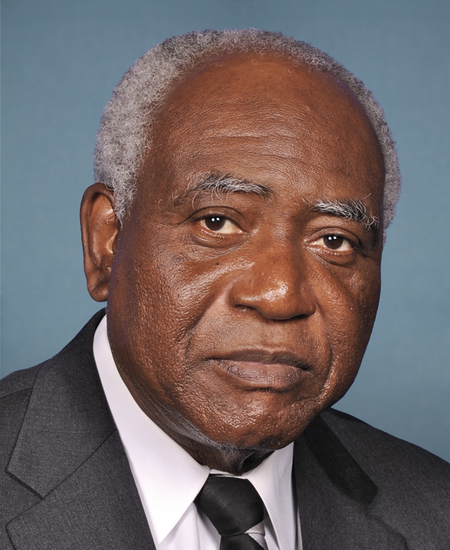
Rep. Danny K. Davis
Sponsored bills
Raise the Wage Act of 2021 This bill increases the federal minimum wage for regular employees over a 5-year period, for tipped employees, and for newly hired employees who are less than 20 years old. The bill sets forth a schedule of annual increases in the federal minimum wage for individuals with disabilities. The Department of Labor shall no longer issue special certificates for the payment of subminimum wages to such individuals after the final wage increase under this bill for such individuals takes effect. Labor shall provide, upon request, technical assistance and information to employers to (1) help them transition their practices to comply with wage increases and other requirements under this bill for individuals with disabilities, and (2) ensure continuing employment opportunities for such individuals. The bill eliminates the separate minimum wage requirements for tipped, newly hired, and disabled employees. After a specified period, these employees shall be paid the same minimum wage as regular employees. Labor must publish any increase in the minimum wage in the Federal Register and on its website 60 days before it takes effect.
Earned Income and Child Tax Credits Outreach Act of 2021 This bill directs the Department of the Treasury, not later than March 1, 2021, to carry out a public outreach program to inform certain individual taxpayers of their potential eligibility for the earned income and child tax credits. The Inspector General for Tax Administration of Treasury must study the outreach program and make recommendations for improving it.
Emergency Pension Plan Relief Act of 2021 This bill modifies the funding rules and provides financial assistance for certain pension plans that are underfunded or insolvent. First, the bill expands the authority of, and provides funding for, the Pension Benefit Guaranty Corporation (PBGC) to provide special partition assistance to a multiemployer pension plan that is insolvent or at risk of insolvency. The bill expands eligibility for partition assistance, provides funding for a plan to reach a projected funded ratio of 80% over a 30-year period, and does not require a plan to repay such assistance. The bill further permits a multiemployer pension plan to elect to retain its funding zone status from the previous year for either (1) the first plan year beginning during the period from March 1, 2020, through February 28, 2021; or (2) the next succeeding plan year, as designated by the plan sponsor. A plan may also extend by five years the funding improvement or rehabilitation period if the plan is designated as in endangered or critical status for a plan year beginning in 2020 or 2021. A plan in critical and declining status may not suspend payment of plan benefits. Additionally, the bill adjusts the minimum funding standards for a multiemployer pension plan to account for investment losses and other losses related to the COVID-19 pandemic and modifies the PBGC guarantee formula to increase the maximum potential benefits under a multiemployer pension plan. Finally, the bill makes changes with respect to single employer pension plans, including revising the amortization rules and extending and modifying the pension funding stabilization percentages.

Access Technology Affordability Act of 2021 This bill allows a refundable tax credit equal to the amounts paid for qualified access technology for use by a blind individual who is the taxpayer, the taxpayer's spouse, or a dependent of the taxpayer. Qualified access technology is hardware, software, or other information technology with the primary function of converting or adapting information that is visually represented into forms or formats useable by blind individuals. The credit is limited to (1) costs that are not compensated by insurance or otherwise, and (2) an aggregate amount of $2,000 per blind individual in any period of three consecutive taxable years. The credit must be adjusted for inflation after 2021 and terminates after 2026.
This resolution expresses the sense of the House of Representatives that Congress should ensure that the U.S. Postal Service is not privatized and remains an independent establishment of the federal government.
This resolution supports teaching climate change in schools and programs to increase public knowledge on the impacts that humans have on the climate.
Vote at Home Act of 2021 This bill expands voting by mail in federal elections and provides for automatic voter registration through state motor vehicle authorities. Specifically, the bill prohibits states from imposing additional conditions or requirements on the eligibility of individuals to cast ballots by mail in federal elections, except states may impose a deadline for requesting and returning a ballot. Further, states must mail ballots to individuals registered to vote in a federal election not later than two weeks before the election. In addition, the U.S. Postal Service must carry ballots for federal elections expeditiously and free of postage. Finally, the bill provides for automatic voter registration of individuals through state motor vehicle authorities.
Repeal of the Authorization for Use of Military Force This bill repeals the Authorization for Use of Military Force signed into law September 18, 2001.
Incentives for our Nation's Veterans in Energy Sustainability Technologies or the INVEST Act This bill allows the work opportunity tax credit to be used for the hiring of a specified veteran who works in a field of renewable energy. A specified veteran means any veteran who is certified as (1) having received a credential or certification from the Department of Defense of a military occupational specialty or skill in a field of renewable energy or with respect to advanced manufacturing, machinist or welding, or engineering; (2) having completed a vocational degree in a field of renewable energy; or (3) having completed a LEED (Leadership in Energy & Environmental Design) certification with the United States Green Building Council. The Department of the Treasury shall compensate specified U.S. possessions for their losses resulting from this bill.