

Maddy summaryThis joint resolution expresses Congress's disapproval of a specific federal rule issued by the Centers for Medicare & Medicaid Services regarding the Affordable Care Act and the Basic Health Program for 2027. If passed, the measure would legally nullify the rule, preventing it from taking effect. The bill directly impacts the administration of healthcare benefits and payment parameters for the upcoming year by rejecting the proposed guidelines.
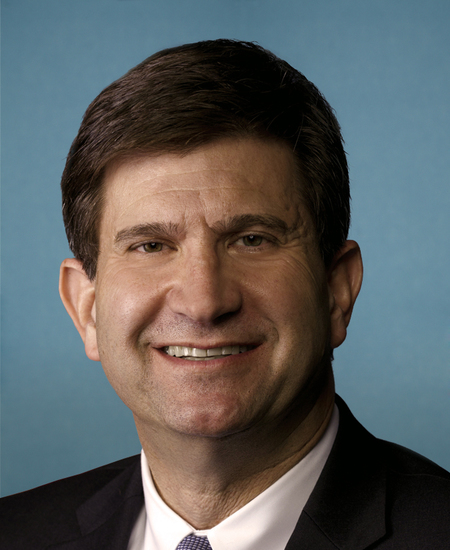
Rep. Bradley Scott Schneider
Sponsored bills
Maddy summaryThis bill establishes a new defense cooperation program between the United States and countries that have normalized relations with Israel since 2020. The initiative aims to strengthen military ties by focusing on specific capabilities such as air defense, missile systems, and joint training exercises. It requires the Secretary of Defense to submit a strategy and funding plan to Congress within 60 days of the law's passage. Additionally, the legislation expresses a congressional preference for participating nations to contribute their own matching funds to the program.
Maddy summaryThe Concrete Pump Tax Fairness Act introduces a new mileage-based fee for owners of mobile concrete boom pump vehicles that travel within the United States. This tax charges $0.05 per mile for vehicles weighing 60,000 pounds or less and $0.07 per mile for heavier vehicles, with payments due quarterly. The bill requires the government to create a system that uses existing vehicle technology to track mileage while protecting operator privacy and minimizing administrative burdens. Additionally, the law allows these vehicles to use existing fuel tax credits to offset the new fee and excludes them from certain existing highway use requirements. All collected fees will be deposited into the Highway Trust Fund to support road infrastructure.
Maddy summaryThe Artificial Intelligence Environmental Impacts Act of 2026 directs the Environmental Protection Agency to study and report on the environmental effects of artificial intelligence, including energy and water use, pollution, and electronic waste. This bill requires large data centers to annually submit detailed public reports on their resource consumption and environmental footprint, with penalties for non-compliance. Additionally, it establishes a stakeholder consortium to develop standardized methods for measuring these impacts and to identify ways to promote beneficial uses of AI while reducing negative effects. The legislation aims to increase transparency and accountability regarding the growing environmental costs associated with AI infrastructure and operations.
Maddy summaryThis resolution expresses support for designating June 5, 2026, as National Gun Violence Awareness Day and June 2026 as National Gun Violence Awareness Month. The bill calls on the public to wear orange on the designated day to honor victims and promote awareness of gun safety. It highlights statistics on gun-related deaths and injuries to underscore the need for community discussions on making neighborhoods safer.
Maddy summaryThis resolution expresses the House of Representatives' opposition to foreign countries imposing digital services taxes that discriminate against U.S. companies. It highlights that these taxes unfairly target gross revenues rather than actual profits and penalize businesses that do not have a physical presence in the taxing country. The bill calls on other nations to repeal such measures and engage in fair trade negotiations based on international tax principles. Additionally, it supports the use of trade tools like Section 301 investigations to protect American businesses from these discriminatory practices.
Maddy summaryThe Abraham Accords Expansion Act of 2026 updates the legal framework for the Special Envoy to include Central Asia and the Caucasus in normalization efforts alongside existing regions. This change formally recognizes Kazakhstan as the first Central Asian nation to join the Abraham Accords and defines specific countries within the Caucasus and Central Asia regions. The bill requires the Special Envoy to coordinate with other federal agencies like Defense and Commerce while implementing these goals using existing authorities without requesting new funding. Additionally, the act allows the Special Envoy to appoint a Deputy Special Envoy with relevant regional expertise to assist in these expanded diplomatic activities.
Maddy summaryThis bill, known as the Arlington National Cemetery Viewshed Protection Act, restricts the construction of large triumphal arches in the Washington, D.C. area to preserve visual sightlines. It specifically bans the building of any such arches within Lady Bird Johnson Park and prohibits the use of federal funds for these structures there. Additionally, the law prevents the erection of triumphal arches taller than 50 feet on any land managed by the National Park Service unless Congress explicitly approves them. These measures aim to limit new monumental structures that could obstruct views of the Arlington National Cemetery from the capital region.
Maddy summaryThis bill, titled the Assuring the Future of Tibet Act of 2026, expresses the sense of Congress that the Tibetan people should be recognized as a distinct group with rights to self-determination and cultural preservation. It formally acknowledges the Central Tibetan Administration as the legitimate representative of Tibetans and asserts that the Gaden Phodrang Trust holds the sole authority to recognize future Dalai Lamas. To support these positions, the legislation directs the President and Secretary of State to advocate for the Central Tibetan Administration's observer status at the United Nations and to extend appropriate diplomatic courtesies to its leaders during visits to the United States. Additionally, the bill mandates that the Secretary of State lead efforts to engage with Tibetan officials at senior levels and requires annual reports to Congress on the implementation of these diplomatic and advocacy measures.
Maddy summaryThis bill, the Provider Reimbursement Stability Act of 2026, aims to create more predictable payment adjustments for physicians and other healthcare providers under the Medicare program. It directly affects medical practices and providers who receive reimbursement for services through the physician fee schedule. The legislation increases a threshold for certain budget neutrality calculations from $20 million to $54.3 million in 2027, with automatic increases every five years thereafter. It also requires the government to correct payment estimates when actual service usage differs significantly from projections, mandates regular updates to cost calculations for practice expenses, and limits how much Medicare payment rates can change from year to year to a maximum of 2.5 percent.