

This bill establishes programs and requires research to diversify the perinatal workforce and advance respectful maternal care delivery models. Specifically, the Department of Health and Human Services (HHS) must award grants to education and training programs to grow and diversify the professions that make up the perinatal workforce. HHS must also disseminate guidance on respectful maternal care delivery. This guidance must cover, among other topics, recruiting and retaining maternity care providers from diverse backgrounds and incorporating trained midwives and other perinatal health workers into maternity care teams. In addition, the National Institutes of Health must study best practices for culturally congruent maternity care. This is care that is in agreement with the preferred cultural values, beliefs, languages, worldview, and practices of health care consumers and other stakeholders. The Government Accountability Office must also report on certain aspects of perinatal health care professions. The report must focus on barriers to entering those professions for low-income and minority women.
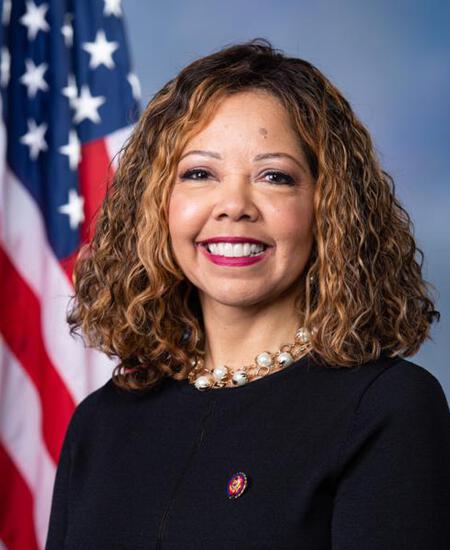
Rep. Lucy McBath
Sponsored bills
Protecting Moms and Babies Against Climate Change Act This bill establishes grants and directs other activities to address health risks associated with climate change, particularly for members of racial and ethnic minority groups, pregnant or postpartum individuals, and children younger than age three. Specifically, the Department of Health and Human Services (HHS) must establish a program to award grants to partnerships of community-based organizations and other entities to identify and address climate-change-related risks to these individuals at a county level. HHS must also establish a program to award grants to health professional schools and training programs to integrate training on identifying risks associated with climate change for patients, with a focus on those intending to become pregnant, in curricula and continuing education programs. In addition, the National Institutes of Health (NIH) must establish the Consortium on Birth and Climate Change Research. The consortium must coordinate research on climate-change-related risks conducted and supported by various NIH institutes and offices. The Centers for Disease Control and Prevention must also develop a strategy to identify areas where there is a high risk of adverse maternal and infant health outcomes due to climate change.
Moms Matter Act This bill establishes two grant programs to address maternal mental health conditions and substance use disorders, with a focus on racial and ethnic minority groups. First, the Substance Abuse and Mental Health Services Administration must award grants for maternal behavioral health services. Eligible grantees include state, tribal, and local governments; health care providers; and organizations that serve pregnant and postpartum individuals. Second, the Department of Health and Human Services may award grants to grow and diversify the maternal mental and behavioral health workforce by establishing or expanding schools and training programs.
Horse Transportation Safety Act of 20 21 This bill prohibits a person from transporting a horse in interstate commerce in a motor vehicle (except a vehicle operated exclusively on rail or rails) containing two or more levels stacked on top of one another. The bill prescribes civil penalties for knowing violations of such prohibition.
Tech to Save Moms Act This bill supports the use of technology to improve, and address disparities in, maternal health outcomes. Specifically, the Center for Medicare and Medicaid Innovation may test telehealth models to screen and treat common pregnancy-related complications for Medicaid enrollees. In addition, the Department of Health and Human Services must award grants to evaluate and expand the use of technology-enabled collaborative learning models by entities that provide services to pregnant and postpartum individuals in medically underserved areas or from certain populations, and reduce racial and ethnic disparities in maternal health outcomes by increasing access to digital tools. The National Academies of Sciences, Engineering, and Medicine must also study the use of technology in maternal health care.
Innovative Maternal Payment And Coverage To Save Moms Act or the IMPACT to Save Moms Act This bill requires the Centers for Medicare & Medicaid Services to establish the Perinatal Care Alternative Payment Model Demonstration Project to allow states to test payment models for maternity care, including postpartum care, under Medicaid and the Children's Health Insurance Program (CHIP). Additionally, the Medicaid and CHIP Payment and Access Commission must report on specified information relating to the continuity of coverage for pregnant and postpartum women under Medicaid and CHIP.
This bill makes individual taxpayers who receive unemployment compensation during 2021 eligible for the refundable tax credit for coverage under a qualified health plan.
This bill requires the Surgeon General to report annually to Congress on the public health effects of gun violence and the status of actions taken to address those effects.
Gym Mitigation and Survival Act of 2021 or the GYMS Act of 2021 This bill establishes a grant program to provide economic support to eligible fitness facilities in response to the COVID-19 (i.e., coronavirus disease 2019) pandemic. Specifically, the bill authorizes the Small Business Administration to make initial and supplemental grants to privately owned fitness facilities that primarily provide health or fitness services and that do not offer golf, hunting, sailing, or riding facilities. The total amount of grant funds for a recipient may not exceed $25 million, and the recipient must use these funds for payroll costs, rent or mortgage obligations, and other ordinary and necessary business expenses.
Expanding Medical Education Act This bill authorizes the Health Resources and Services Administration (HRSA) to award grants to institutions of higher education, or consortia of such institutions, to establish or expand medical schools. In awarding these grants, HRSA must prioritize minority-serving institutions or those that propose to establish or expand schools in medically underserved communities or areas with shortages of health professionals where no such schools exist.