

Maddy summaryThe PERMIT Act (HR 3898) amends the definition of "navigable waters" under the Clean Water Act to exclude specific water features from federal regulation. It explicitly removes waste treatment systems, ephemeral streams (flowing only after rain), prior converted cropland, groundwater, and other features designated by regulators. This change directly affects federal agencies like the EPA and Army Corps of Engineers, reducing their jurisdiction over these excluded water bodies. The bill aims to streamline permitting by clarifying which waters fall under federal Clean Water Act oversight.
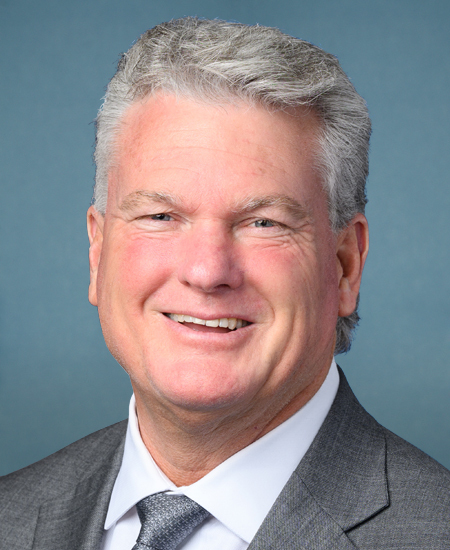
Rep. Mike Collins
Sponsored bills
Maddy summaryHRES 932 is a symbolic resolution passed by the House of Representatives that condemns six specific members of Congress (including Senators Kelly and Slotkin and Representatives Crow, Deluzio, Goodlander, and Houlahan) for allegedly making statements that encouraged military and intelligence personnel to disobey orders from the President. The resolution claims these lawmakers falsely suggested the administration issued "illegal orders" and undermined the military chain of command, violating the Uniform Code of Military Justice (UCMJ). It does not create new laws or policies but formally denounces the lawmakers' statements as "dangerous and seditious rhetoric." As a procedural resolution, it has no binding effect on military conduct or policy.
Maddy summaryThis bill would amend the Anti-Terrorism Act of 1987 to designate the Muslim Brotherhood as a terrorist organization and prohibit its operations within the United States. It would require the President to designate the Muslim Brotherhood as a foreign terrorist organization under immigration law and impose new visa restrictions, including immediate revocation of current visas, for individuals identified as members. The bill mandates annual reports from the Secretary of State identifying Muslim Brotherhood branches worldwide and determining which should be designated as terrorist organizations under existing laws. These provisions would directly affect Muslim Brotherhood members, branches, and affiliated organizations seeking entry to or operating within the United States.
Maddy summaryThis bill authorizes Congress to award two gold medals in honor of Charlie Kirk, a conservative activist and founder of Turning Point USA, who was tragically killed in 2025. One medal will go to his family, and the other will be displayed at the Smithsonian Institution to preserve his legacy. The bill does not create new policy or affect any laws - it is purely commemorative, following standard procedures for Congressional Gold Medals. It includes provisions for striking the medals and selling bronze duplicates to cover costs, but contains no substantive legislative changes.
Maddy summaryHR 6019 repeals a requirement that Senate offices must be notified when legal requests seek Senate data. Specifically, it removes Section 213 of the 2026 appropriations act, which mandated that Senate offices be informed about legal processes requesting disclosure of Senate data. This change directly affects Senate offices by eliminating a procedural notification step for legal requests involving their data. The bill makes no other policy changes, solely removing this specific administrative requirement.
Maddy summaryHR 1109, the Litigation Transparency Act of 2025, requires parties and their lawyers in civil lawsuits to disclose to the court and other parties the identity of any person or group that could receive payment if the case succeeds (like investors or lenders), and to provide copies of related agreements. Exceptions apply for simple loan repayments (with interest limits) or attorney fee reimbursements. Disclosures must be made within 10 days of signing such agreements or when filing the case, and must be updated if inaccurate. This applies to all civil cases filed after the law takes effect, aiming to increase transparency in litigation funding arrangements.
Maddy summaryHR 6035, the Second Amendment Restoration Act of 2025, would repeal specific firearm-related provisions from the Bipartisan Safer Communities Act (2022), including rules on background checks and gun sales, and restore federal gun laws as they existed before that law was enacted. It also reverses an education-related provision affecting school safety grants under the Elementary and Secondary Education Act. The bill directly affects federal regulations governing gun ownership and school safety funding by reverting to pre-2022 legal standards. It does not create new gun laws but undoes specific changes made by the 2022 law.
Maddy summaryThis bill requires all new passenger vehicles manufactured for sale in the U.S. to include AM radio as standard equipment (not an optional add-on) by 2027-2028, depending on manufacturer size. It mandates that AM radio receivers must be easily accessible to drivers and allows compliance through digital AM broadcast technology. During a transition period, manufacturers must clearly label vehicles without AM radio but cannot charge extra for this feature. The bill also mandates a GAO study on AM radio's role in emergency alerts and includes a 10-year sunset provision for the rule. It preempts state laws regarding AM radio access in vehicles.
Maddy summaryHR 5968, the Promoting Classical Learning Act of 2025, requires military service academies to accept scores from the Classic Learning Test (CLT) alongside the SAT or ACT for applicant admissions. It also mandates that Department of Defense Education Activity (DODEA) schools administer the CLT to all 11th graders. Additionally, the bill requires tribally controlled schools and Bureau of Indian Education (BIE)-operated schools to give the CLT to 11th graders. The bill directly affects applicants to military service academies and 11th-grade students in these specific federal school systems.
Maddy summaryHRES 858 is a resolution by the U.S. House of Representatives to impeach Chief Judge James E. Boasberg of the U.S. District Court for the District of Columbia. It alleges he abused his authority by issuing "frivolous" nondisclosure orders that prevented Members of Congress from being notified of legal process and covered conservative organizations and individuals. These orders, the resolution claims, violated constitutional protections for Congress and a federal law (2 U.S.C. § 6628) safeguarding Senate communications. The resolution would send the impeachment charge to the U.S. Senate for trial, seeking removal from office.