

Maddy summaryThis bill redesignates the existing National Parks and Public Land Legacy Restoration Fund as the America's Legacy Restoration Fund to address deferred maintenance on federal lands. It directs revenue from recreation fees and a portion of energy development income into the fund, which must be used primarily for repairing critical infrastructure like roads, trails, and buildings managed by agencies such as the National Park Service and the Forest Service. The legislation establishes strict rules requiring that most funds go toward non-transportation projects, mandates transparency through public dashboards tracking project status, and sets aside a small percentage for matching private donations. Additionally, the bill increases entrance fees for foreign visitors to ensure they contribute to the fund, while prohibiting the use of these specific funds for land acquisition or employee bonuses.
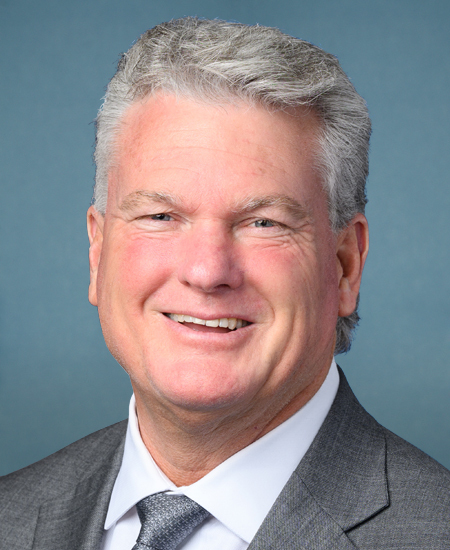
Rep. Mike Collins
Sponsored bills
Maddy summaryThe GHOSTRUCK Act modifies federal regulations to allow motor carriers to add edits or annotations to electronic logging device records under specific conditions. This change permits employees or authorized agents to make these adjustments only if they are physically located in North America and the driver subsequently approves the changes. The bill directly affects trucking companies and drivers by establishing new rules for how digital driving logs can be modified after the fact.
Repealing Big Brother Overreach Act This bill repeals the Corporate Transparency Act. The act requires existing companies and newly created companies to report beneficial ownership information to the Department of the Treasury’s Financial Crimes Enforcement Network for purposes of addressing the financing of terrorism and money laundering.
Maddy summaryThis bill establishes two key initiatives for the District of Columbia. First, it creates a federal program (to end in 2029) requiring the Secretary of the Interior to develop a plan coordinating Federal and local efforts to clean public spaces, remove graffiti, and restore monuments - directly affecting DC's parks, streets, and landmarks. Second, it forms a "Safe and Beautiful Commission" (also ending in 2029) with representatives from federal agencies like the FBI, DHS, and DOJ, tasked with monitoring immigration law enforcement compliance, supporting DC police recruitment, improving transit security, and enhancing coordination on crime reduction. The Commission must submit annual reports to Congress on its activities. The bill focuses on concrete administrative coordination, not new funding or penalties.
Maddy summaryThis resolution introduces articles of impeachment against U.S. District Court Judge Eleanor Louise Ross, targeting her for three specific allegations of misconduct. The first article charges her with engaging in an undisclosed extramarital affair with a law enforcement officer while on the job, which created a conflict of interest and violated judicial conduct codes. The second article accuses her of attending a partisan political event sponsored by a district attorney's campaign and admitting to drinking alcohol before presiding over a criminal case. The third article alleges that she knowingly made false statements to federal judges during an investigation into her behavior, thereby obstructing an official proceeding and violating federal law.
Maddy summaryThis resolution formally impeaches Judge Eleanor L. Ross of the U.S. District Court for the Northern District of Georgia for high crimes and misdemeanors. The bill alleges that between October 2023 and October 2025, Judge Ross engaged in sexual intercourse in her federal courthouse chambers during business hours and lied to judicial officials about these acts. An internal investigation confirmed the misconduct and the judge's false statements, leading to a recommendation that she be removed from office. The House of Representatives is using this resolution to initiate the process of trying the judge before the Senate.
Maddy summaryThis bill designates a specific section of International Place Northwest in Washington, D.C., as Tiananmen Square Memorial Boulevard and officially changes the address of 3505 International Place Northwest to 1 Tiananmen Square Memorial Boulevard. It requires the Administrator of General Services to install street signs with this new name at designated locations, including the nearest federal property and specific street corners. The legislation updates all federal records, maps, and documents to reflect these new names and addresses, ensuring consistent official usage.
Maddy summaryThe Millstone Act amends federal criminal laws to increase penalties for specific sexual offenses involving violence, exploitation, or minors. Directly affecting individuals charged with these crimes, the bill mandates that they face the possibility of the death penalty or life imprisonment alongside fines. Key provisions include expanding the death penalty for acts such as female genital mutilation, civil rights offenses involving sexual misconduct, sex trafficking of children, and the production or distribution of child pornography. By removing previous caps on sentencing, the legislation ensures that these serious violations can result in the most severe punishments allowed under federal law.
Maddy summaryHR 1041, the Veterans 2nd Amendment Protection Act, prevents the Department of Veterans Affairs (VA) from automatically sending veterans' personal information to the national background check system (NICS) solely because a court has appointed a fiduciary (like a guardian) to manage their benefits. This directly affects veterans who have a fiduciary appointed due to mental health or cognitive challenges but are not deemed a danger to themselves or others. The bill requires a court order finding the veteran poses a danger before any such information can be shared with the NICS. It changes VA procedures to block unnecessary barriers to firearm ownership for veterans who qualify for fiduciary support without a judicial determination of danger.
Maddy summaryHRES 1314, the America 250 Commemorative Flag Act, designates a special flag featuring the number 250 within the circle of stars as an official United States flag for the 250th anniversary of the Declaration of Independence. This resolution authorizes the America 250 flag to be flown alongside the national flag and POW/MIA flags at all government buildings, embassies, and official U.S. locations worldwide during the commemoration year. The bill serves as a ceremonial measure to honor the nation's history and the sacrifices made by patriots, without altering any existing laws or policies.