

Maddy summaryThe Recycling Infrastructure and Accessibility Act of 2025 establishes a competitive federal grant program to fund projects improving recycling access in underserved communities. It authorizes $30 million annually (2025-2029) for grants to states, local governments, tribes, or public-private partnerships to build infrastructure like transfer stations, expand curbside collection, or reduce transport costs. Grants must be $500,000-$15 million, with 70% reserved for projects in communities lacking a materials recovery facility within 75 miles. The program requires grantees to report on implementation and outcomes, excluding funding for recycling education.
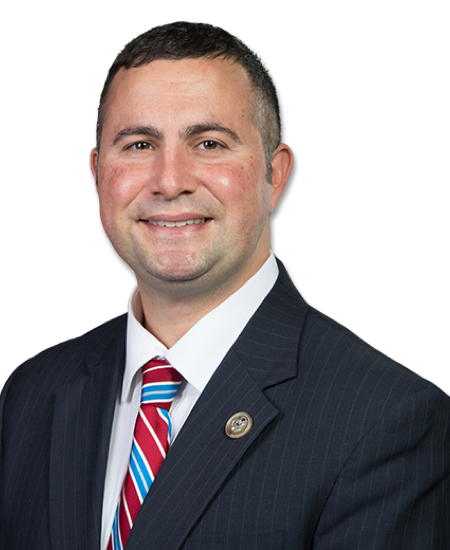
Rep. Darren Soto
Sponsored bills
Maddy summaryThis bill authorizes the U.S. Mint to produce commemorative $5 gold and $1 silver coins marking the 25th anniversary of the September 11, 2001, terrorist attacks. The coins must feature designs honoring victims and first responders (including the inscription "Never Forget") and will be sold only during 2027-2028. All surcharges ($35 per gold coin, $10 per silver coin) collected from sales will fund the National September 11 Memorial and Museum at the World Trade Center, with no net cost to the federal government. The coins are legal tender but primarily intended for collectors, not circulation.
Maddy summaryThe Smithsonian American Women’s History Museum Act authorizes the creation of a new Smithsonian museum dedicated to women’s history, to be located within the National Mall Reserve in Washington, D.C. If the site is managed by another federal agency, the bill requires that agency to transfer the land after notifying Congress and relevant committees. The museum must ensure exhibits and programs accurately represent diverse women’s experiences by consulting a broad range of experts and community voices. The Smithsonian will submit biennial reports to Congress detailing how the museum meets these representation standards.
Maddy summaryThe REPORTS Act requires federal agencies to analyze how new major rules affect people living in poverty and issues of racial inequity before publishing them. Additionally, it mandates the Government Accountability Office to produce annual reports examining the economic impacts of specific government programs on these same groups. The legislation allows these analyses to optionally include an assessment of the racial wealth gap, with definitions for key terms set by the Office of Management and Budget or the Comptroller General.
Maddy summaryThis bill nullifies a specific decision made by the Endangered Species Committee regarding oil and gas operations in the Gulf of America. It immediately cancels any exemptions previously granted to these activities under the Endangered Species Act and bars federal agencies from using funds to enforce the canceled order. For a three-year period starting when the bill is enacted, the committee is prohibited from issuing any new exemptions for Gulf oil and gas projects. Consequently, all standard environmental protections required by the Endangered Species Act will continue to apply fully to these activities.
Dental Care for Veterans Act This bill expands eligibility for veterans for dental care provided by the Department of Veterans Affairs (VA). Specifically, the bill makes all veterans who are enrolled in the VA health care system eligible for VA-provided dental services. Currently, only veterans who have a service-connected dental issue or meet other narrow criteria are eligible for certain dental services. The bill phases in eligibility over four years based upon existing eligibility, degree of service-connected disability or other disability, prisoner of war status, award of a Purple Heart, financial need, or VA health care eligibility.
Maddy summaryThe IMPACT to Save Moms Act directs the Centers for Medicare & Medicaid Services to run a five-year demonstration project from 2027 to 2031, allowing states to test new payment models for maternity care under Medicaid and state child health plans. This initiative aims to improve health outcomes for pregnant and postpartum individuals, with a specific focus on reducing disparities among groups that experience higher rates of maternal mortality and severe complications. To achieve these goals, the project requires states to consider alternative payment structures that account for pregnancy risk levels, include diverse care teams with training on bias, and address social factors affecting health. The bill also mandates that the federal government evaluate the project's impact on health outcomes and spending, and submit a final report to Congress with recommendations on whether to expand the program nationwide.
Maddy summaryThe Extinction Prevention Act of 2026 establishes four separate conservation funds to provide financial assistance for protecting threatened and endangered species in specific regions. The bill creates funds for butterflies in North America, plants in the Pacific Islands, freshwater mussels in the United States, and desert fish in the Southwest, with each fund managed by the Secretary of the Interior. Eligible applicants, such as state agencies, nonprofits, and research institutions, can apply for competitive grants to support habitat protection, research, and management plans, while federal agencies are restricted to partnering roles rather than leading projects. Each fund is authorized to receive $5 million annually from 2027 through 2032, and the Secretary must submit annual reports to Congress detailing project outcomes and the status of the species.
Maddy summaryThe Moms Matter Act directs the Department of Health and Human Services to create two main grant programs aimed at improving maternal mental health and reducing health disparities among pregnant and postpartum individuals. The first program provides funding to community organizations and healthcare providers to expand services that integrate mental health care into prenatal and postpartum settings, with a specific focus on groups facing higher risks of mortality and morbidity. The second program offers grants to educational institutions to train and recruit a diverse workforce of mental health professionals who specialize in caring for pregnant and postpartum patients. Both initiatives require recipients to submit annual reports on their activities and outcomes, while the legislation authorizes $25 million and $15 million respectively for each program from fiscal years 2027 through 2031.
Maddy summaryThe Maternal Health Pandemic Response Act allocates $200 million to the Centers for Disease Control and Prevention to improve data collection, surveillance, and research on how public health emergencies affect pregnant and postpartum individuals. This funding supports efforts to gather detailed demographic information on maternal health outcomes, establish regional centers of excellence, and expand surveys to better reach underrepresented communities. The legislation also requires the CDC to make this data publicly available in a disaggregated format while protecting patient privacy, and mandates public education campaigns to ensure accurate information reaches families and healthcare providers. Additionally, the bill creates a diverse task force to develop federal recommendations for respectful maternity care during emergencies, addressing issues such as telehealth access, doula coverage, and the treatment of mental health and substance use disorders. These measures aim to reduce health disparities and improve care quality for pregnant people from racial and ethnic minority groups during public health crises.