

Maddy summaryHR 647, the Ensuring Veterans’ Final Resting Place Act of 2025, amends a provision in U.S. Code (38 U.S.C. § 2306(h)) to change how burial benefits are provided for veterans. It removes the requirement that a veteran’s family must provide an urn or plaque for the Department of Veterans Affairs (VA) to offer additional burial benefits; the VA will now automatically provide these benefits regardless of whether the family supplies such items. This change directly affects veterans’ families arranging burial services, making it easier to access burial benefits without needing to procure specific items first. The amendment applies to veterans who die on or after January 5, 2021, updating existing eligibility rules.
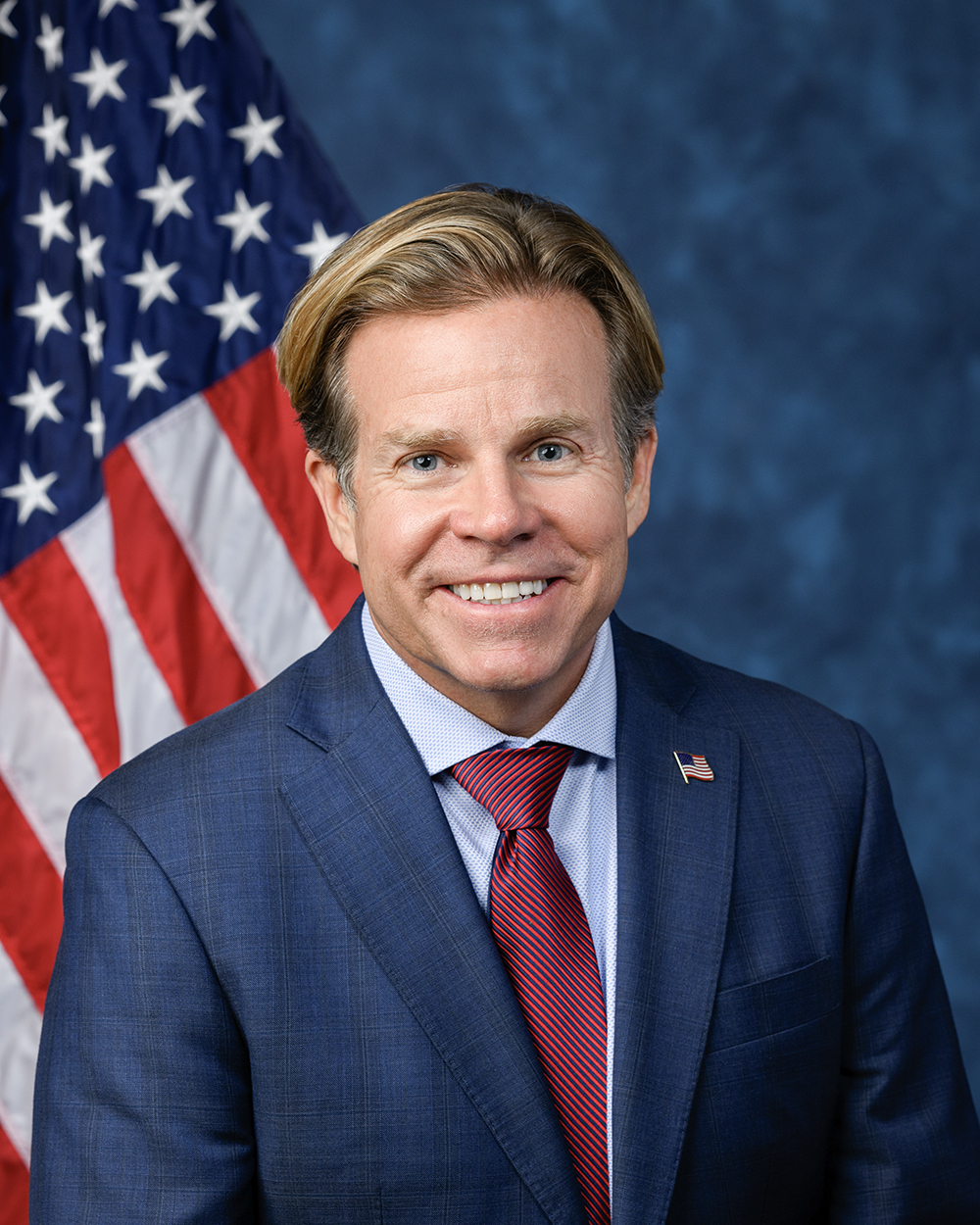
Rep. Mike Haridopolos
Sponsored bills
Maddy summaryThis bill would deny visas and immigration benefits to individuals who adhere to Sharia law, directly affecting immigrants and visa applicants. It allows officials to revoke existing immigration benefits, deport people found adhering to Sharia, and penalize false statements about Sharia adherence. Decisions under this law would be final and unreviewable by courts. The policy changes immigration eligibility based solely on adherence to Sharia law, with no judicial oversight.
Maddy summaryThis bill adds Medicare coverage for multi-cancer early detection screening tests (blood or biological tests analyzing cell-free DNA) starting January 1, 2028. It directly affects Medicare beneficiaries aged 68 and older (starting in 2028, with the age limit increasing by 1 year annually), requiring tests to be FDA-cleared and deemed reasonable/necessary by the Secretary for early cancer detection across multiple organ sites. Payment will initially match current stool DNA test rates before 2031, then shift to a lower rate or new payment system after 2031, with limits preventing more than one test per year. The bill explicitly states it does not alter coverage for existing cancer screenings like breast, colorectal, or prostate cancer tests.
Maddy summaryThis bill would require all states to recognize valid concealed carry permits issued by other states, allowing permit holders to carry concealed handguns (excluding machine guns) in any state that either issues such permits or doesn't prohibit concealed carry. It directly affects law-abiding gun owners with valid permits from their home state, ensuring they can carry in states with similar permit systems or no prohibitions. Key provisions include treating valid permit documents as proof of legal carry (reducing officer stops), shifting the burden of proof to prosecutors if challenged, and allowing civil lawsuits for violations with attorney's fee awards. The bill does not override state laws restricting firearms on private property or government land, nor does it affect federal gun restrictions like those in section 922(q).
Maddy summaryThis bill requires NASA and NOAA to establish civilian space cooperation with Taiwan within 90 days of enactment, focusing on satellite programs, weather technology, and personnel exchanges. It mandates that these efforts comply with the Taiwan Relations Act and U.S. export rules while protecting U.S. intellectual property and economic interests. The agencies must submit annual reports to Congress detailing cooperation activities, challenges, and progress for five years after enactment. The bill directly affects U.S. space agencies and Taiwan’s space agency, facilitating non-military space collaboration. It does not alter existing U.S. policy toward Taiwan but creates a formal mechanism for expanded technical engagement.
Maddy summaryThe SAVES Act (HR 2605) creates a 5-year pilot program where the Department of Veterans Affairs (VA) awards competitive grants to nonprofit organizations to provide service dogs to veterans with specific disabilities. It directly affects veterans with covered conditions like blindness, mobility impairments, PTSD, traumatic brain injury, or other disabilities deemed appropriate for service dog assistance by the VA. Key provisions include: grants capped at $2 million per nonprofit (with $10 million annually authorized), no fees charged to veterans, VA-provided lifetime veterinary insurance for the dogs, and requirements for nonprofits to train veterans and maintain humane animal standards. The program aims to expand access to service dogs as a support tool for veterans managing qualifying disabilities.
Maddy summaryHR 5548, the Fraud Accountability and Recovery Act, blocks U.S. foreign aid to countries that fail to extradite individuals convicted of defrauding the U.S. or assist in recovering stolen federal funds. The bill directly affects foreign governments that do not take legal action to identify, freeze, seize, or repatriate funds fraudulently obtained from U.S. programs. Key provisions require the President to withhold aid under the Foreign Assistance Act if a country neglects these measures, and mandate annual reports listing non-compliant countries along with the value of unrecouped fraud funds. The bill cites examples like a $250 million pandemic food fraud scheme in Minnesota to highlight the scale of losses (estimated $233-$521 billion annually), but focuses on preventing future fraud by denying safe havens abroad. It includes a presidential waiver option for national security reasons, requiring prior congressional notification.
Maddy summaryH.J.Res. 127 proposes a constitutional amendment to establish parental rights regarding children's upbringing, education, and care as a fundamental right. It would guarantee parents the right to choose private, religious, or home schooling instead of public school, or make reasonable choices within public schools for their children. The amendment would require the government to demonstrate a "highest order" interest to limit these rights, and explicitly prohibits denying these rights based on disability. This proposal, if ratified by 38 states, would amend the U.S. Constitution but is not yet law.
Maddy summaryHRES 719 is a House resolution honoring Charles "Charlie" James Kirk, the founder of Turning Point USA who was assassinated on September 10, 2025. The resolution condemns his assassination and all political violence, extends condolences to his family, and calls on Americans to reject violence while promoting civil discourse. It specifically recognizes Kirk's legacy as a defender of constitutional principles and his role in inspiring youth through free speech and faith-based civic engagement. As a commemorative resolution, it does not enact policy changes but formally expresses the House's stance on honoring his life and legacy.
Maddy summaryThis bill prohibits U.S. courts from enforcing judgments based on Shari'a or any foreign law if they conflict with constitutional rights, particularly in family law cases like divorce, child custody, or inheritance. It requires courts to apply only U.S. law when foreign legal systems would violate fundamental rights such as due process, equal protection, or freedom from coercion. Contracts may still reference foreign law, but enforcement is blocked if it infringes constitutional protections. The law aims to ensure all court decisions comply with U.S. constitutional standards nationwide.