

Maddy summaryThis bill (HR 5080) is purely procedural - it changes the name of the Department of Defense to "Department of War" and the Secretary of Defense to "Secretary of War" for all existing legal references. It does not alter military operations, funding, or policy; it only updates terminology in laws, regulations, and official documents. The bill directly affects how federal agencies and documents refer to the military department but has no impact on actual defense functions or the public. It is a symbolic renaming with no concrete policy changes.
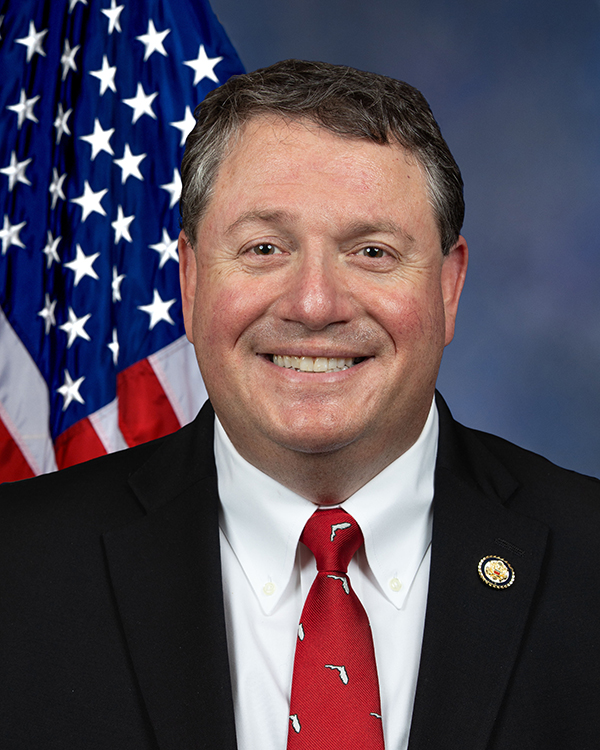
Rep. Randy Fine
Sponsored bills
Maddy summaryHJRES 116 is a ceremonial resolution honoring 13 U.S. service members who died in the August 26, 2021, Abbey Gate bombing at Kabul's airport. It designates a National Day of Remembrance for those who perished during the Afghanistan withdrawal, expresses condolences to their families, and commemorates their service. The resolution does not create new policies or funding but formally recognizes their sacrifice and the role they played in saving lives during the evacuation. It directly affects the Gold Star families of the named service members and the broader public through this national acknowledgment.
Maddy summaryHR 5035, the Veteran and Spouse Licensing Flexibility Act of 2025, allows veterans and their spouses to have their existing professional licenses recognized in a new state when they relocate within 36 months of the veteran's discharge. To qualify, applicants must submit a copy of the veteran's DD Form 214, a marriage certificate (for spouses), and a notarized affidavit confirming license validity and good standing. If a state cannot process the application within 30 days, it must issue a temporary license with the same rights as a permanent one. This bill directly affects veterans and their spouses moving states after military service, streamlining license portability without requiring new exams or training.
Maddy summaryThis bill streamlines defense cooperation between the U.S., Australia, and the United Kingdom under the AUKUS security pact. It removes bureaucratic barriers by allowing direct reexports of U.S. defense articles between these governments without presidential consent, and eliminates certification requirements for commercial technical assistance agreements with Australia or the UK. Key provisions include exempting authorized transfers (including intra-governmental and entity-level movements) from certain export controls and Foreign Assistance Act rules. The changes specifically target defense-related items and services shared among the three nations, reducing administrative hurdles for military collaboration. This affects U.S. defense exports, Australian and UK government entities, and authorized defense contractors involved in AUKUS partnerships.
Maddy summaryHJRES 114 is a procedural joint resolution extending the President's August 11, 2025, emergency declaration for the District of Columbia related to a crime emergency. It directly affects the District of Columbia by maintaining the existing emergency status under the District of Columbia Home Rule Act. The bill automatically extends the emergency period until the President formally ends it, with no new policy changes or funding provisions. This resolution solely continues the current emergency designation without altering DC's crime response measures.
Maddy summaryHR 4884, the "Correct the Count Act," requires the U.S. Census Bureau to count only U.S. citizens in the next population census, rather than all residents. It mandates adding a citizenship checkbox to the census questionnaire so respondents can indicate citizenship status for themselves and household members. This change directly affects how census data is collected and used for apportioning congressional seats and distributing federal funds. The bill alters the fundamental methodology of the decennial census by excluding non-citizens from population tabulations.
Maddy summaryHR 4846, the ROAD Act, creates a new legal defense for drivers involved in vehicle-related injuries or property damage during riots. It allows defendants to claim this defense if they were convicted of rioting under 18 U.S.C. § 2101 or if the court finds rioting occurred by a preponderance of evidence. The bill requires courts to pause civil cases during related criminal trials unless a conviction wouldn't support the defense. This applies specifically to cases involving motor vehicle incidents stemming from riots, directly affecting defendants with prior riot convictions. The law amends Title 18 to add Section 40B as a procedural change.
Maddy summaryThe LIFT Act of 2025 streamlines regulations for drone and eVTOL (electric air taxi) operations in the U.S. It requires the Transportation Secretary to create new safety rules enabling routine drone flights beyond visual range (BVLOS) within six months and use AI to speed up approval requests for drone waivers. The bill also establishes a 3-year pilot program giving grants to state, local, tribal, and territorial governments to test eVTOL operations - prioritizing projects using U.S.-manufactured drone technology and focusing on applications like medical response and cargo transport. This directly affects drone operators, local governments implementing air mobility projects, and U.S. drone manufacturers by accelerating regulatory approvals and funding for safe integration into national airspace.
Maddy summaryHR 4655 establishes a grant program to fund joint U.S.-Israel research on post-traumatic stress disorder (PTSD). It directs the Secretary of Defense to award grants to U.S. academic institutions or nonprofits partnering with Israeli organizations to develop new PTSD treatments and diagnostics. The program requires research projects to address specific PTSD needs identified by the Department of Defense and mandates joint agreements between U.S. and Israeli entities. Grants must be used for collaborative research, with reports submitted to Congress within 180 days of project completion, and the program terminates 7 years after the first grant is awarded.
Maddy summaryHR 4656, the *Path to Florida Springs National Park Act*, authorizes a special resource study by the Secretary of the Interior to evaluate the potential for designating approximately 2,800 square miles of Florida land (including forests, springs, and conservation areas like Ocala National Forest and Silver Springs) as a National Park. The study must assess the area's national significance, feasibility of park designation, and alternative preservation options, while consulting with relevant agencies and stakeholders. It requires the Secretary to submit a report to Congress within three years, detailing findings and recommendations. This bill does not create a park but initiates a formal evaluation process; the area directly affected is the specified Florida region encompassing existing conservation lands.