

This resolution supports the designation of a National FFA Week. It also (1) recognizes the important role of the National FFA Organization (Future Farmers of America) in developing the next generation of leaders who will change the world, and (2) celebrates 70 years of the National FFA Organization's membership magazine.
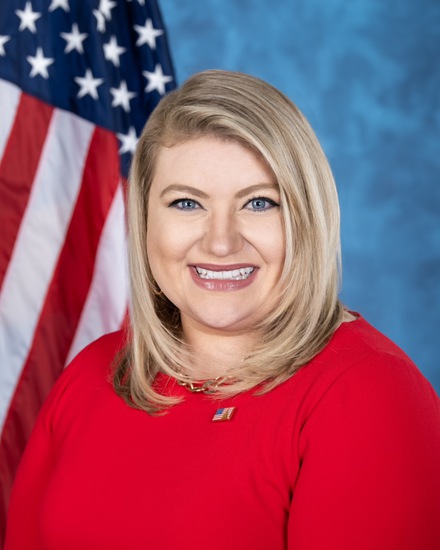
Rep. Kat Cammack
Sponsored bills
Upholding the 1995 Jerusalem Embassy Law Act of 2021 This bill prohibits using federal funds to establish any diplomatic facility in Jerusalem other than the U.S. Embassy to Israel.
This resolution addresses the need for improvements to broadband infrastructure, particularly in rural areas, and the role of specified federal agencies in making such improvements.
This resolution requests the President and directs the Department of Homeland Security (DHS) to transmit to the House of Representatives, no later than 14 days after the date of the adoption of this resolution, copies of certain documents and other materials, both classified and unclassified, in the possession of the President or DHS as of the date of adoption of this resolution that refer or relate to certain aspects on border policy, particularly along the southwestern border.
This bill requires the Food and Drug Administration (FDA) to report to Congress on barriers to the domestic manufacturing of imported active pharmaceutical ingredients, finished drug products, and devices that are critical to public health. The report must recommend strategies to overcome such barriers. The FDA may, to the extent appropriate, implement the strategies.
Stop Funding Our Adversaries Act of 2022 This bill prohibits federal agencies from conducting or supporting, either directly or indirectly, research that will be conducted by China's government, the Chinese Communist Party, or any agent, instrumentality, or entity belonging to or controlled by either entity.
Health Care for Burn Pit Veterans Act This bill updates policies and procedures related to Department of Veterans Affairs (VA) health care and benefits for veterans who have been exposed to toxic substances. Specifically, the bill extends the eligibility period for VA hospital care, medical services, and nursing home care for combat veterans who served after September 11, 2001, and were exposed to toxic substances, radiation, or other conditions, including those who did not enroll to receive VA care during the eligibility period. The VA must incorporate into its existing health care screening a screening to help determine potential exposures to toxic substances during military service. Among other requirements, the VA must also provide annual training to health care and benefits personnel with respect to veterans who were exposed to toxic substances; analyze total and respiratory disease mortality in veterans who served in specified locations on specified dates; conduct an epidemiological study on the health trends of veterans who served in the Armed Forces after September 11, 2001; conduct a study to determine trends in the rates of the incidence of cancer in veterans; publish a list of VA resources for veterans who were exposed to toxic substances, families and caregivers of such veterans, and survivors of such veterans who are receiving death benefits; and report on the data quality of the Individual Longitudinal Exposure Record and its usefulness in supporting veterans in receiving VA health care and benefits.
Protecting Family and Small Business Tax Cuts Act of 2022 This bill makes permanent provisions affecting individual and business taxpayers that were enacted in 2017 by the Tax Cuts and Jobs Act and are scheduled to expire at the end of 2025. The bill makes permanent provisions that reduce individual and capital gain tax rates. The bill increases the standard tax deduction for individual taxpayers. It also increases and modifies the child tax credit and raises the contribution base for the tax deduction of charitable contributions. The bill allows additional contributions to ABLE accounts (tax-exempt accounts designed to enable individuals with disabilities to save and pay for disability-related expenses). It exempts from taxation combat zone benefits of members of the Armed Forces serving in the Sinai Peninsula of Egypt and the moving expenses of servicemembers. Additionally, the bill lowers to $750,000 the amount of mortgage debt eligible for an interest expense tax deduction; excludes from the gross income of student borrowers income attributable to the discharge after 2025 of loan debt due to death or disability; makes permanent the limitation on the tax deduction for state and local taxes and denies a deduction for foreign real property taxes; makes permanent the tax deduction of the income of certain pass-through business entities; repeals the tax deduction for personal tax exemptions and the exclusion of employer-provided bicycle commuter fringe benefits; terminates certain miscellaneous itemized tax deductions; doubles the estate and gift tax exemption amount; and makes permanent the increase of the alternative minimum tax exemption amount for individual taxpayers.
Equal Access to Therapeutics Act This bill prohibits using race or ethnicity as a factor in decisions about an individual's access to COVID-19 treatments (e.g., monoclonal antibody therapies). Specifically, the Department of Health and Human Services (HHS) may not adopt any policy or guidance that allows race or ethnicity to be factored into such decisions. Furthermore, the Secretary of HHS shall be personally liable for the death of any individual who is denied access to COVID-19 treatments pursuant to a prohibited policy or guidance. The bill also prohibits hospitals or other health care providers that have policies restricting access to COVID-19 treatments based on race or ethnicity from receiving federal funds.
Blockchain Solutions for Small Businesses Act This bill requires the Small Business Administration to study the current and potential uses of blockchain technology (i.e., the technology that supports digital currencies such as Bitcoin) in making loans to qualified small businesses.