

Maddy summaryHR 6763, the Shelter Act, creates a 25% tax credit for both individuals and businesses to offset qualified disaster mitigation expenditures on their primary residences or places of business. For individuals, the credit is capped at $3,750 annually (or $7,500 for joint returns) with a cumulative $15,000 limit per dwelling, while businesses receive a $5,000 annual limit. Qualified expenditures include roof reinforcement, flood barriers, fire-resistant materials, and other measures to protect against natural disasters like hurricanes, floods, and wildfires. The credit phases out for higher-income taxpayers and cannot be claimed for government-funded improvements, applying to expenses incurred after December 31, 2025.
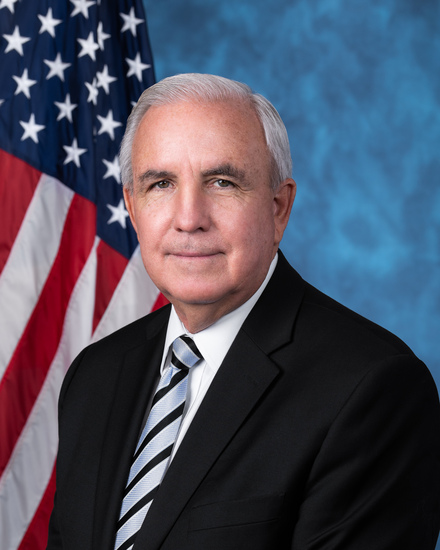
Rep. Carlos A. Gimenez
Sponsored bills
Miracle on Ice Congressional Gold Medal Act This act provides for the award of Congressional Gold Medals to the members of the 1980 U.S. Olympic men's ice hockey team in recognition of the team's achievement at the 1980 Winter Olympic Games.
Maddy summaryHR 6575, the CommonGround for Affordable Health Care Act, extends enhanced premium tax credits for health insurance through 2026, directly benefiting millions of lower and middle-income Americans purchasing coverage through the ACA marketplace. The bill modifies income thresholds for premium subsidies, creating new income tiers that maintain or increase financial assistance for households earning up to 1,000% of the poverty level. It includes provisions to prevent fraud in health insurance exchanges by imposing civil penalties on agents and brokers who provide false information, and requires transparency in pharmacy benefit manager contracts to improve drug pricing accountability. The legislation also extends the annual open enrollment period for health insurance exchanges for the 2026 plan year, allowing more time for people to enroll or change coverage.
Maddy summaryHR 6540, the "Anti-Communism Week Act," designates an annual observance to commemorate historical impacts of communist regimes. The bill requests the President to annually designate a week as "Anti-Communism Week" and issue a proclamation encouraging public ceremonies. It does not create new policies or affect specific groups; it only adds a procedural requirement to the U.S. Code for an annual presidential designation. The bill focuses on commemoration, not policy change, and references historical findings about communism in its preamble.
Maddy summaryThis bill would amend the Anti-Terrorism Act of 1987 to designate the Muslim Brotherhood as a terrorist organization and prohibit its operations within the United States. It would require the President to designate the Muslim Brotherhood as a foreign terrorist organization under immigration law and impose new visa restrictions, including immediate revocation of current visas, for individuals identified as members. The bill mandates annual reports from the Secretary of State identifying Muslim Brotherhood branches worldwide and determining which should be designated as terrorist organizations under existing laws. These provisions would directly affect Muslim Brotherhood members, branches, and affiliated organizations seeking entry to or operating within the United States.
Give Kids a Chance Act of 2025 This bill expands the Food and Drug Administration’s (FDA’s) authority with respect to research on rare pediatric diseases, including by permitting the FDA to take enforcement action against drug sponsors that fail to satisfy pediatric study requirements and by reauthorizing programs that support pediatric research. Specifically, the bill modifies requirements relating to molecularly targeted pediatric cancer investigations to permit research on new drugs in combination with active ingredients that have already been approved, provided certain conditions are met; permits the FDA to take enforcement action against drug sponsors that fail to comply with pediatric study requirements, if such sponsors demonstrated a lack of due diligence in satisfying the requirement; renews the FDA’s authority to award priority review vouchers to sponsors of new products intended to treat rare pediatric diseases through September 30, 2029; and reauthorizes through FY2027 certain funding for the National Institutes of Health to support priority pediatric research. The bill also provides statutory authority for the FDA’s interpretation of the orphan drug exclusivity period. The bill specifies, consistent with FDA regulations, that the seven-year market exclusivity period for drugs for rare diseases or conditions (i.e., orphan drugs) prohibits the approval of the same drug for the same approved use or indication with respect to the disease or condition. (In Catalyst Pharmaceuticals, Inc. v. Becerra , a court rejected the FDA’s interpretation and held that orphan drug exclusivity extends to all uses or indications for the disease or condition.)
Maddy summaryHCONRES 58 is a symbolic congressional resolution denouncing socialism in all its forms. It does not create new laws or affect any policies, as it is a non-binding statement of opinion. The resolution cites historical events and quotes from Founding Fathers to argue that socialism leads to authoritarianism and economic harm, referencing examples like the Soviet Union and Venezuela. It formally "denounces" socialism and opposes implementing socialist policies in the U.S., but has no legal effect on citizens or government actions. This is a procedural resolution, not a policy measure.
Maddy summaryHRES 915 formally recognizes the 1932-1933 Ukrainian famine, known as the Holodomor, as a genocide perpetrated by the Soviet Union. The resolution directly affects Ukrainian victims, survivors, and communities by affirming historical truth and condemning Soviet policies that intentionally starved millions. Key provisions include declaring the Holodomor a genocide, commemorating its victims, and condemning ongoing Russian aggression against Ukraine, including Vladimir Putin’s denial of Ukrainian sovereignty. This symbolic resolution aims to educate the public and align U.S. policy with historical facts about Soviet repression.
Maddy summaryHR 4070, the Tren de Aragua Border Security Threat Assessment Act, requires the Secretary of Homeland Security to conduct a detailed assessment of the criminal threats posed by the Venezuelan gang Tren de Aragua to U.S. borders within 180 days of the bill's enactment. The assessment must cover the group's origins, methods, funding, and specific threats to the southwest, northern, and maritime borders, followed by a strategic plan within one year outlining how federal, state, and local agencies will counter these threats through information sharing, interdiction, and preventing the group's expansion in the U.S. The bill directly affects DHS, intelligence agencies, and border law enforcement partners by mandating these reports and planning processes.
Maddy summaryThis bill establishes fairer pay and retirement benefits for federal firefighters. It requires that overtime hours worked during a firefighter's regular schedule be included in retirement calculations, improving retirement payouts. The bill also sets a maximum 60-hour regular workweek for federal firefighters, to be defined by the Office of Personnel Management within one year. These changes directly affect federal firefighters by addressing pay disparities with municipal firefighters and enhancing recruitment and retention.