

Maddy summaryThe Southeastern Rail Technologies Mapping Act of 2026 directs the Federal Railroad Administration to study how to improve rail performance and integrate new power technologies in the southeastern United States. This study will examine rail segments between Florida and Washington, DC to identify areas suitable for electrification or battery and fuel cell systems while noting any implementation challenges. If certain segments are found unsuitable for these technologies, the report must explain the reasoning and suggest specific infrastructure updates with estimated costs to make them viable. The Administrator is required to submit the findings of this study to Congress within 18 months of the bill's enactment.
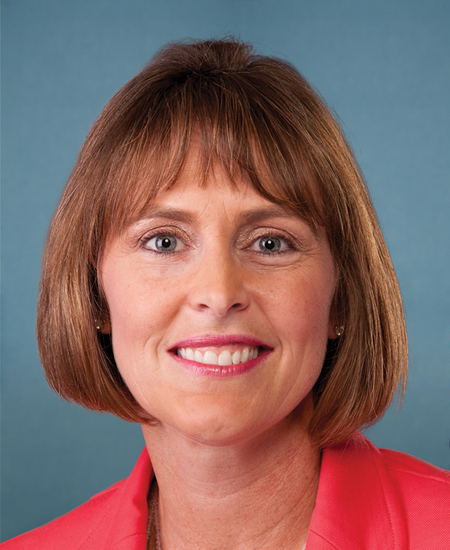
Rep. Kathy Castor
Sponsored bills
Maddy summaryThe Rail Motive Power Source Integration Act of 2026 directs the Federal Railroad Administration to launch a pilot program exploring how trains can switch between different power sources like batteries, electricity, hydrogen, and diesel. The bill requires the agency to research these technologies, design rail cars that allow for easy power source changes, and test these designs through demonstration projects. Additionally, the Administrator must study locations where trains currently need to change power sources due to limitations and report the findings to Congress within one year of the law's enactment.
Maddy summaryThis resolution expresses support for designating June 5, 2026, as National Gun Violence Awareness Day and June 2026 as National Gun Violence Awareness Month. The bill calls on the public to wear orange on the designated day to honor victims and promote awareness of gun safety. It highlights statistics on gun-related deaths and injuries to underscore the need for community discussions on making neighborhoods safer.
Maddy summaryThis resolution formally recognizes the vital contributions of academic medicine and designates the week of June 8 through 12, 2026, as Academic Medicine Week. It highlights the essential roles played by medical schools, teaching hospitals, and researchers in training healthcare professionals, conducting medical research, providing patient care, and supporting community health. The bill also notes the significant economic impact of these institutions, which contribute billions to the national GDP and support millions of jobs.
Maddy summaryThis bill appropriates $3.5 billion to help Florida farmers and growers recover from the severe freeze that occurred in March 2026. The funds are distributed as block grants specifically to cover losses in crops, trees, bushes, and vines caused by the cold weather, including compensation for multi-year crops. Assistance is restricted to counties officially designated as disaster areas by the Secretary of Agriculture on March 4, 2026, and requires a request from a state agriculture department to release the money. The Secretary of Agriculture must also submit quarterly reports to Congress detailing how the funds are being used until the budget is exhausted.
Maddy summaryThe Stay Cool Act establishes a comprehensive framework to help communities prepare for and respond to extreme heat events by creating cooling centers, improving housing conditions, and enhancing urban infrastructure. It directs federal funding to states and local governments to build and equip cooling facilities, install air conditioning in public housing, and develop green spaces and water features to lower temperatures. The bill also creates a national system to track heat-related health risks, mandates checks on vulnerable seniors during heatwaves, and allows tax credits for businesses that keep their doors open during heat emergencies. Additionally, it requires updates to utility assistance programs to account for cooling costs and calls for studies on heat-related mortality and safe residential temperature standards.
Maddy summaryThis resolution expresses support for designating May 2026 as Awareness Month for Progressive Supranuclear Palsy and Corticobasal Degeneration, two rare and complex neurodegenerative diseases. The measure highlights the challenges faced by the approximately 32,000 Americans living with these conditions, including difficulties with diagnosis, limited treatment options, and the significant impact on families and caregivers. By officially recognizing this month, the House aims to encourage increased public awareness, promote research into better treatments and cures, and honor the resilience of the affected community.
Maddy summaryThis bill authorizes the U.S. Mint to produce commemorative $5 gold and $1 silver coins marking the 25th anniversary of the September 11, 2001, terrorist attacks. The coins must feature designs honoring victims and first responders (including the inscription "Never Forget") and will be sold only during 2027-2028. All surcharges ($35 per gold coin, $10 per silver coin) collected from sales will fund the National September 11 Memorial and Museum at the World Trade Center, with no net cost to the federal government. The coins are legal tender but primarily intended for collectors, not circulation.
Maddy summaryThe Smithsonian American Women’s History Museum Act authorizes the creation of a new Smithsonian museum dedicated to women’s history, to be located within the National Mall Reserve in Washington, D.C. If the site is managed by another federal agency, the bill requires that agency to transfer the land after notifying Congress and relevant committees. The museum must ensure exhibits and programs accurately represent diverse women’s experiences by consulting a broad range of experts and community voices. The Smithsonian will submit biennial reports to Congress detailing how the museum meets these representation standards.
Maddy summaryThe At HOME Services Act establishes a two-year demonstration program allowing hospitals to provide outpatient observation services to Medicare beneficiaries in their own homes. To make this possible, the bill grants hospitals specific waivers that exempt them from standard requirements for on-site nursing staff and physical facility safety codes, while also permitting care to be delivered from the patient's residence. Participating hospitals must agree to maintain the same standard of care as inpatient treatment, adhere to patient safety standards, and share data with the government to monitor quality and costs. The legislation also mandates a study comparing the quality, costs, and outcomes of home-based care against traditional hospital settings, with results to be published on a public website.