

Maddy summaryHR 7066, the SHIELD Act, requires electricity utilities to fully recover grid upgrade costs from large commercial or industrial facilities (those with peak demand over 75 megawatts) that drive these upgrades. It prioritizes new service requests from such facilities that use energy efficiency, onsite storage, or zero-emission energy (like solar or wind) to meet their needs. The bill also defines "large load facilities" to exclude existing sites where increased demand results from electrification or emissions-reduction efforts. Utilities must implement these requirements within 2 years, with states reporting progress to Congress. This directly affects major electricity consumers and shapes how grid costs are allocated.
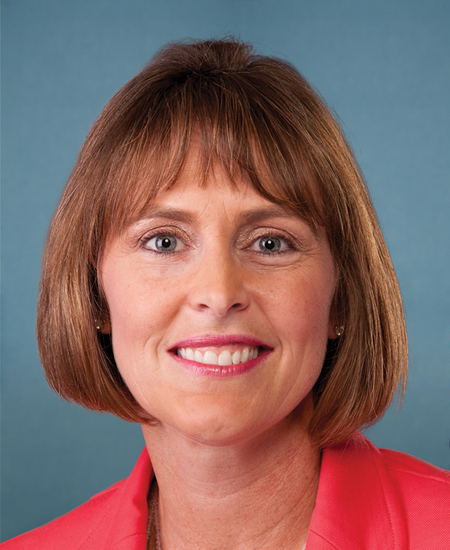
Rep. Kathy Castor
Sponsored bills
Maddy summaryThe Protecting American Energy Security Act of 2026 requires exporters to obtain a separate certification from the U.S. Secretary of Energy before shipping natural gas to "covered nations" (as defined in federal law). This certification, valid for one year, must confirm the export serves the public interest and is required in addition to existing export authorizations. The bill directly affects natural gas exporters targeting these specific nations, adding a new federal approval step. The Secretary of Energy can revoke the certification early if needed, but the requirement applies only to exports to the designated covered nations.
Maddy summaryHR 6088, the *Restoring Food Security for American Families and Farmers Act of 2025*, repeals specific sections (10101-10108) from a prior reconciliation law. This action revives previous provisions related to food security programs that were modified by those repealed sections. The bill directly affects federal food assistance and agricultural support programs by restoring their prior legal framework. It does not create new policies but reverses recent changes to existing food security measures.
Maddy summaryThe MORE Act (HR 5068) would remove cannabis from the federal list of controlled substances, effectively decriminalizing it at the federal level while establishing a new tax on cannabis products. The bill creates an Opportunity Trust Fund that would distribute tax revenues to support communities disproportionately impacted by cannabis prohibition, including funding for expungement programs, job training, and equitable licensing initiatives for minority business owners. It also includes provisions to prevent discrimination based on cannabis use in federal programs, immigration proceedings, and workplace policies. The bill would require federal courts to expunge non-violent cannabis convictions and establish a process for resentencing individuals currently serving time for such offenses. These provisions aim to address racial disparities in cannabis enforcement and create more equitable opportunities in the legal cannabis industry.
Maddy summaryHR 909, the Crime Victims Fund Stabilization Act of 2025, modifies how funds from the False Claims Act are deposited into the Crime Victims Fund. It specifies that from 2025 through 2029, certain False Claims Act proceeds (specifically those for qui tam plaintiff payments and government damage reimbursements) cannot be deposited into the fund. This change directly affects the composition of the Crime Victims Fund by excluding these specific revenue streams during the specified period. The bill does not create new benefits or alter victim services; it only adjusts fund allocation rules for existing False Claims Act revenues.
Maddy summaryThis concurrent resolution (HCONRES 69) commemorates the 15th anniversary of the January 8, 2011, Tucson shooting that killed six people and injured 13, including former Congresswoman Gabby Giffords. It honors the victims, survivors, and Giffords - now a prominent advocate for gun violence prevention - and recognizes her leadership in promoting civility and reducing gun violence. The resolution also commends Tucson residents and first responders for their resilience and reaffirms Congress’s commitment to respectful dialogue and opposing political violence. As a ceremonial resolution, it does not create new laws or policies.
Maddy summaryThis bill prohibits states from pursuing or collecting Medicaid recovery claims against individuals' estates for payments made during their lifetime. It requires states to withdraw all existing recovery liens within 90 days of enactment and notify affected individuals or their estates. The law specifically ends state efforts to reclaim Medicaid funds from beneficiaries' estates after death, applying to claims initiated before the law's effective date. It directly affects Medicaid beneficiaries and their estates who were subject to prior state recovery actions. The key mechanism is a mandatory 90-day withdrawal of all existing liens and a permanent ban on new recovery claims for correctly paid assistance.
Maddy summaryHR 4611 (EACH Act of 2025) requires all federally funded health programs - including Medicaid, Medicare, military health plans, and the Indian Health Service - to cover abortion services without restrictions, repealing the Hyde Amendment's long-standing ban on federal funding for most abortions. This directly affects millions of people enrolled in these programs, particularly low-income women, women of color (including 25% of Black women and 22% of Hispanic women on Medicaid), and young people. The bill mandates coverage in all federally administered health plans and prohibits state or private insurers from restricting abortion coverage in health insurance. It aims to eliminate current federal and state barriers that deny abortion access to people who rely on government health programs.
Maddy summaryThe Clean Competition Act (HR 6787) creates a carbon border adjustment mechanism that imposes fees on imported goods and domestic production based on their carbon intensity relative to U.S. industry averages. The bill requires covered entities to report greenhouse gas emissions and production data annually, calculates charges based on how much a facility's emissions exceed a baseline percentage that decreases over time, and provides rebates for exported goods. It includes provisions for carbon removal credits, establishes funding programs to support domestic industrial decarbonization through grants and contracts, and creates a framework for international 'carbon club' agreements with trading partners that meet specific environmental and labor standards.
Maddy summaryThe Public Health Air Quality Act of 2025 requires the Environmental Protection Agency to establish a national network for monitoring hazardous air pollutants near communities, focusing on facilities emitting specific chemicals linked to health risks like cancer and respiratory issues. The bill mandates fenceline monitoring at 100 high-priority facilities that emit chemicals such as benzene, formaldehyde, ethylene oxide, and other hazardous air pollutants, with public reporting of data within 7 days of collection. It also requires deployment of 1,000 low-cost air quality monitoring systems in communities disproportionately impacted by pollution, with data made accessible in multiple languages and formats. The Act authorizes $146 million for implementation during fiscal years 2026-2027 to support these monitoring requirements and public transparency efforts.