

Maddy summaryHR 5201, the Kari's Law Reporting Act, requires the Federal Communications Commission (FCC) to publish a report within 180 days of enactment assessing how well business phone systems comply with Kari's Law (which mandates direct 911 dialing in multi-line systems). The report must detail manufacturer compliance levels, identify implementation challenges, suggest FCC policy improvements, and recommend potential future legislation. This bill directly affects the FCC and phone system manufacturers by mandating a formal review of existing law enforcement. It does not change Kari's Law itself but aims to inform future policy decisions based on real-world implementation data.
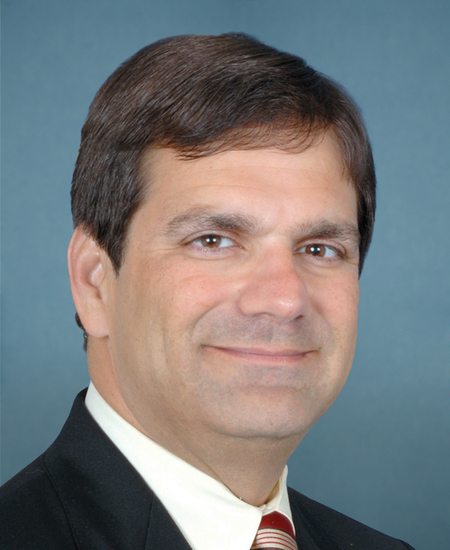
Rep. Gus M. Bilirakis
Sponsored bills
Maddy summaryThis House Resolution recognizes the 200th anniversary of the Exodus of Missolonghi, a significant event during the Greek War of Independence. It commemorates the courage and sacrifice of those involved and affirms the historical bonds and shared democratic values between the United States and Greece.
Maddy summaryThe Emergency Reporting Act (HR 5200) requires the Federal Communications Commission (FCC) to improve how it tracks and reports communication outages during major disasters. Specifically, it mandates annual public hearings about events where the Disaster Information Reporting System was activated for 7+ days, followed by FCC reports within 120 days detailing outage durations for broadband, mobile services, and 911 call disruptions. These reports must include affected user numbers, infrastructure impacts, and recommendations to strengthen network resilience. The law directly affects FCC operations and emergency communications providers, aiming to enhance data transparency for public safety agencies without altering existing service provider regulations.
Maddy summaryThe ALERT Act (HR 7613) requires the Federal Aviation Administration to improve aviation safety through several key measures. It mandates the evaluation and potential implementation of enhanced collision avoidance systems (ACAS-Xa) for commercial aircraft and ACAS-Xr for rotorcraft, with specific deadlines for rulemaking and installation. The bill establishes committees to develop recommendations for safety technology requirements, requires safety risk assessments for air traffic controllers, and addresses operational procedures at high-traffic airports like Ronald Reagan Washington National. These provisions affect air carriers, air traffic controllers, rotorcraft operators, and Department of Defense aircraft operations. The act aims to enhance situational awareness and reduce midair collision risks through technology upgrades and improved safety protocols.
Maddy summaryHR 2289, the Proportional Reviews for Broadband Deployment Act, exempts wireless broadband infrastructure deployments from certain federal environmental and historic preservation reviews. Specifically, it removes the requirement for National Environmental Policy Act (NEPA) and National Historic Preservation Act (NHPA) reviews when federal agencies approve "eligible facilities requests" for wireless facilities. This directly affects wireless providers seeking federal permits to build broadband infrastructure, streamlining their approval process by eliminating these specific review requirements. The bill modifies existing law to treat such deployments as not constituting "major Federal actions" under NEPA or "undertakings" under NHPA.
Maddy summaryThis resolution expresses support for designating April 2026 as Parkinson's Awareness Month to raise public awareness about the condition. It directly affects individuals living with Parkinson's disease, their caregivers, and organizations working to improve care and research. The bill does not change laws or funding but serves as a symbolic gesture to highlight the disease's impact and encourage continued research and community support. It recognizes the millions of people affected and acknowledges the importance of clinical trials and quality-of-life improvements for patients and their families.
Maddy summaryThe SEPTIC Act proposes to make financial assistance received by homeowners from state or local governments for certain wastewater management improvements tax-free. It would amend current tax law to exclude from taxable income any direct or indirect subsidy provided to a resident for the purchase or installation of wastewater management measures on their primary residence. These measures are defined as installations or modifications primarily designed to manage wastewater, such as septic tanks and cesspools. This change means homeowners would not have to pay federal income tax on such financial aid.
Maddy summaryThe SACRED Act adds a new federal crime to protect access to places of religious worship by prohibiting intimidating or harassing conduct within 100 feet of religious buildings. It directly affects individuals who engage in disruptive behavior near religious sites and those seeking to enter or exit them. The law defines prohibited actions as conduct that causes reasonable fear for physical safety or intentionally harasses people within 8 feet, with penalties ranging from fines up to $10,000 for nonviolent first offenses to potential life imprisonment if death results. The bill also establishes civil remedies allowing aggrieved individuals or religious organizations to sue for damages and injunctive relief, while permitting state and federal attorneys general to bring civil actions on behalf of affected persons. Importantly, the legislation explicitly preserves the right to peaceful expressive conduct like picketing and does not override existing state or local laws.
Maddy summaryThis resolution recognizes the 205th anniversary of the War of Greek Independence and extends congratulations to the people of Greece. It highlights the shared democratic values between the United States and Greece, noting historical ties from the American Revolution to modern NATO cooperation. The bill also acknowledges the contributions of the Greek-American community and Greece's strategic role in the Eastern Mediterranean and Balkans. This is a ceremonial measure that does not create new laws or require funding, but rather expresses official appreciation for the historical and ongoing partnership between the two nations.
Maddy summaryThis bill would allow children in foster care who are placed in qualified residential treatment programs to receive Medicaid coverage for their medical services. It directly affects state child welfare systems and healthcare providers by removing a federal exclusion that currently prevents Medicaid from covering institutional care for these children. The law amends the Social Security Act to exempt these children from the Medicaid Institutional Medicaid Days (IMD) exclusion, which typically denies coverage for services provided in institutions. The change would take effect for services provided on or after October 1, 2026, ensuring continuity of healthcare coverage for this vulnerable population.