

Maddy summaryThe Veteran Suicide Prevention Act requires the Department of Veterans Affairs (VA) to conduct a comprehensive review of all veterans who died by suicide during the five years before the bill's enactment. The review must analyze demographics, medication history (including black box warnings and psychotropic drugs), prescribing patterns, combat trauma, and facility-specific suicide rates. The VA must submit a public report to Congress within 30 days of completing the review, detailing findings and recommendations to improve veteran safety. This applies to all veterans who received VA care during the relevant five-year period. The law aims to identify systemic patterns and inform future suicide prevention efforts.
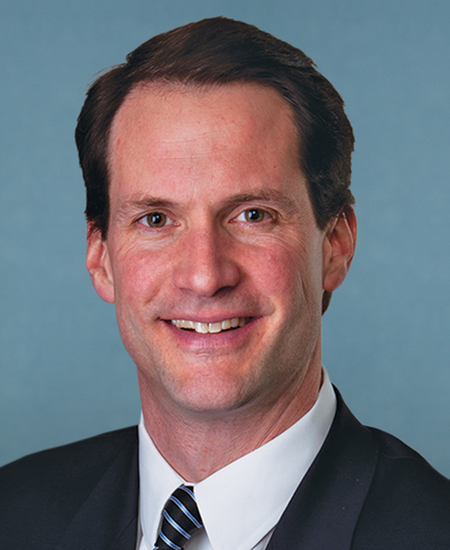
Rep. James A. Himes
Sponsored bills
Maddy summaryThis symbolic resolution expresses the U.S. House of Representatives' support for Iranian protesters demanding democracy and human rights. It condemns the Iranian regime's violent suppression of demonstrations, calls for the release of political prisoners, and urges expanded internet access for Iranian citizens. The resolution specifically demands an end to regime violence, recognizes the Iranian people's right to free elections, and asks the U.S. government to coordinate with allies on deterring further brutality. As a non-binding resolution, it does not create new laws but formally states congressional support for the protesters' cause.
Maddy summaryThis bill sets minimum annual funding levels for two financial oversight agencies: $124.6 million for the Office of Financial Research (OFR) and $15.3 million for the Financial Stability Oversight Council (FSOC). It requires these agencies to maintain minimum staffing levels (231 and 48 full-time equivalent positions, respectively) and adjusts both funding amounts yearly based on government wage increases. Crucially, the bill prohibits congressional review or reduction of these funding levels, protecting the agencies' independence. The bill directly affects how the OFR and FSOC operate by securing their core resources from legislative interference.
Maddy summaryThe Find It Early Act requires most health insurance plans, Medicare, Medicaid, TRICARE, and VA benefits to cover certain breast cancer screenings without cost-sharing for specific at-risk groups. It affects individuals at increased breast cancer risk (as determined by medical guidelines), those with dense breast tissue (as defined by the American College of Radiology), and others requiring screening due to factors like age, race, ethnicity, or family history. The bill mandates coverage for various screening methods including mammograms, ultrasounds, MRI, and other technologies at frequencies recommended by the National Comprehensive Cancer Network. This requirement takes effect for plan years beginning January 1, 2026, removing financial barriers to early detection.
Maddy summaryHRES 996 is a resolution introduced by multiple House members to impeach Kristi Lynn Arnold Noem, the Secretary of Homeland Security, for alleged violations of law and the Constitution. It outlines three articles of impeachment: obstructing congressional oversight by denying access to detention facilities and withholding funds, violating public trust through warrantless arrests and excessive force (including tear gas on children), and self-dealing by awarding federal contracts to associates without competitive bidding. If approved by the House, this resolution would formally charge Noem, triggering a Senate trial to determine her removal from office. The resolution itself does not enact new policy but initiates the constitutional impeachment process against a sitting Cabinet official.
Maddy summaryThis symbolic House resolution expresses U.S. congressional support for Iranian protesters demanding democracy and human rights. It condemns the Iranian regime's violent suppression of protests, including killings, mass arrests, and internet restrictions, while urging the regime to release political prisoners and restore communication access. The resolution reaffirms the Iranian people's right to self-determination through free elections and echoes a 2023 resolution (HCR 7) that similarly praised protesters. As a non-binding expression of support, it does not impose new policies or alter U.S. government actions.
Maddy summaryHR 6088, the *Restoring Food Security for American Families and Farmers Act of 2025*, repeals specific sections (10101-10108) from a prior reconciliation law. This action revives previous provisions related to food security programs that were modified by those repealed sections. The bill directly affects federal food assistance and agricultural support programs by restoring their prior legal framework. It does not create new policies but reverses recent changes to existing food security measures.
Maddy summaryHR 4509, the NOPAIN for Veterans Act, requires the Department of Veterans Affairs (VA) to add FDA-approved non-opioid pain medications to its national formulary within one year of their approval for pain management. These medications must reduce pain without acting on opioid receptors, directly affecting veterans receiving VA care who need pain treatment. The bill mandates the VA include such drugs in its formulary and drug standardization list, expanding access to non-opioid options. It also prohibits using funds from the Cost of War Toxic Exposures Fund to implement these changes, with implementation required within 90 days of the bill's enactment.
Maddy summaryHR 909, the Crime Victims Fund Stabilization Act of 2025, modifies how funds from the False Claims Act are deposited into the Crime Victims Fund. It specifies that from 2025 through 2029, certain False Claims Act proceeds (specifically those for qui tam plaintiff payments and government damage reimbursements) cannot be deposited into the fund. This change directly affects the composition of the Crime Victims Fund by excluding these specific revenue streams during the specified period. The bill does not create new benefits or alter victim services; it only adjusts fund allocation rules for existing False Claims Act revenues.
Maddy summaryHR 6997, the Community Passport Services Access Act, allows qualified public libraries to become official passport acceptance facilities and collect the standard execution fee for passport applications. It directly affects non-profit public libraries meeting U.S. State Department regulations, enabling them to serve as passport application sites - expanding access beyond current locations like post offices. Key provisions authorize new libraries to apply for this role and automatically authorize existing libraries that previously accepted passports. The bill also updates the Passport Act to formally include public libraries in the list of authorized acceptance locations. This creates a concrete policy change in where passport services are available to the public.