

Department of Homeland Security Appropriations Act, 2026 This bill provides FY2026 appropriations for various agencies and offices within the Department of Homeland Security (DHS), except for U.S. Immigration and Customs Enforcement (ICE), U.S. Customs and Border Protection (CBP), and management and oversight activities of the Office of the Secretary. Specifically, the bill provides appropriations to DHS for the Federal Protective Service, the Office of Inspector General, the Transportation Security Administration, the U.S. Coast Guard, the U.S. Secret Service, the Cybersecurity and Infrastructure Security Agency, the Federal Emergency Management Agency (FEMA), U.S. Citizenship and Immigration Services, the Federal Law Enforcement Training Centers, and the Science and Technology Directorate. The bill does not provide appropriations for some agencies and activities that have been funded in prior DHS appropriations acts, including ICE, CBP, and management and oversight activities of the Office of the Secretary.
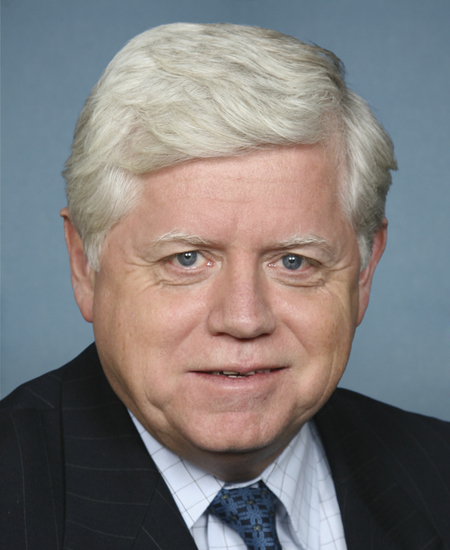
Rep. John B. Larson
Sponsored bills
Maddy summaryThis bill requires the military to approve leave for abortion and fertility care without commanders needing to know the specific procedure. It mandates reimbursement for travel, lodging, meals, and transportation costs when care isn't available nearby, and prohibits punishment for using this leave. It directly affects active-duty service members and their dependents who face barriers to reproductive care due to military restrictions or location. The policy change removes command discretion in approving leave for time-sensitive reproductive health services.
Maddy summaryThis bill would impose a 100% tax on civil damages received by a former President or their family members (spouse or relatives covered under tax code rules) from lawsuits filed against the U.S. government during their presidency. It applies to all settlement, verdict, or judgment amounts received while the individual served as President, covering damages from cases filed by them against the government. The tax treats these damages as taxable income, with no exclusion from gross income calculations. The bill amends the Internal Revenue Code to add this specific tax provision for such civil action awards.
Maddy summaryHR 6925, the Kennedy Center Protection Act, voids a December 2025 vote by the Kennedy Center's Board of Trustees that renamed the facility "The Donald J. Trump and John F. Kennedy Center for the Performing Arts." The bill mandates the immediate removal of all changed signage and restores the original name "John F. Kennedy Center for the Performing Arts" in all official references, documents, and records. It also permanently prohibits the Board from voting to rename the Center, amending existing law to restrict their authority in this regard. The bill requires the Board to report on any public or private funds used for the previous renaming effort within 30 days of enactment.
Maddy summaryThe Federal Property Integrity Act (HR 6926) prohibits federal agencies from naming, renaming, designating, or redesignating any federal building, land, or asset after the current President. This law directly affects the process of naming federal properties during a President's term in office. It would prevent the practice of honoring sitting Presidents with federal property names, such as naming a courthouse or park after the President while they are still in office. The bill does not apply to properties named before a President took office or to post-presidency naming.
Maddy summaryHR 6635, the Bus Operator Safety and Security Act, requires new fixed-route buses over 30 feet long (with a 10+ year lifespan) purchased using federal transit funds to have physical barriers at the driver's workstation. These barriers must extend from floor to ceiling, fully enclose the workstation to block entry of people or objects, and not obstruct the driver's view. Transit agencies must install these barriers within two years of the law's enactment, unless the labor union representing bus drivers agrees to waive the requirement. The rule applies only to new buses bought with federal funds (excluding those from rural transportation programs) and directly affects transit agencies and bus drivers operating large fixed-route vehicles.
Maddy summaryThe Bridges not Bumpers Act of 2025 creates a working group to improve data sharing about bridge clearances for commercial vehicles, requiring better GPS navigation tools, clearer height labeling on rental vehicles (over 5,700 lbs), and warnings to renters. It mandates that rental companies provide height information and warnings about bridge clearance, while also addressing liability for inaccurate GPS data. The bill establishes a national clearinghouse for bridge strike data and funds research grants to identify high-risk locations and improve infrastructure. It directly affects commercial truck drivers, GPS navigation providers, and rental car companies with fleets of 5+ vehicles, aiming to reduce bridge strikes through better information and infrastructure planning.
Maddy summaryThis bill exempts certain less-than-lethal projectile devices from federal sales taxes and National Firearms Act restrictions. It directly affects manufacturers, importers, and producers of these devices, which are defined as non-lethal tools (like rubber bullets or beanbag rounds) designed not to cause serious injury and unable to be easily converted to use standard firearm ammunition. Key mechanisms include a 90-day classification process for manufacturers seeking exemption, an annual public list of approved devices, and annual congressional reports on devices excluded from the exemption. The policy change applies to devices meeting specific safety criteria, such as projectile velocity limits and design features preventing misuse as conventional weapons.
Maddy summaryHJRES 144 is a congressional disapproval resolution targeting a specific rule issued by the Department of Veterans Affairs (VA) on December 31, 2025, which addressed "Reproductive Health Services" (90 Fed. Reg. 61310). This resolution directs Congress to disapprove the VA rule under Chapter 8 of Title 5, U.S. Code, meaning the rule would have no legal effect if passed. The bill directly affects the VA's implementation of reproductive health services for veterans, as it seeks to nullify the agency's existing policy. This is a procedural measure, not a substantive policy change, aimed solely at blocking the VA's rule through congressional action.
Maddy summaryHCONRES 68 would require the President to remove U.S. military forces from Venezuela unless Congress has explicitly authorized their use through a declaration of war or a specific law. This applies to any U.S. Armed Forces currently stationed in Venezuela without such authorization. The resolution is based on the War Powers Resolution, which mandates congressional oversight of military deployments. It directs the immediate withdrawal of unapproved forces without adding new time limits or conditions.