

Maddy summaryHR 5828, the Dads Matter Act of 2025, requires the Health and Human Services Department to launch a public awareness campaign about fathers' roles in pregnancy and postpartum care, and to issue guidance to states on training healthcare providers (like hospitals and doctors) to better include fathers. The bill aims to improve maternal and infant health outcomes by encouraging providers to discuss topics such as father involvement in prenatal visits, skin-to-skin contact, breastfeeding support, and recognizing maternal health risks. It directs HHS to provide resources countering narratives that minimize fathers' roles and to address cultural barriers to father engagement. A government study will later assess the bill's effectiveness after six years.
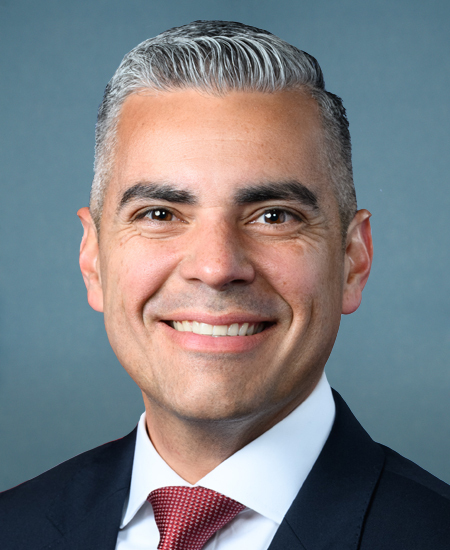
Rep. Juan Ciscomani
Sponsored bills
Maddy summaryThis bill ensures Medicare covers and pays for skin substitute products (used in wound care) by creating a new payment system starting in 2026. It establishes a payment rate based on a volume-weighted average of past payment data, adjusted annually for inflation, and requires a new billing code for these products by January 2026. The bill also adds program integrity measures: identifying the top 3% of providers by payment volume (outliers) for extra review, and requiring prior authorization for their claims starting in 2027. Additionally, it mandates coverage for these products in 2026 unless unsafe, and prohibits denying coverage solely based on clinical evidence analysis.
Maddy summaryThis bill, HR 5789 (the Donald J. Trump Congressional Gold Medal Act), authorizes Congress to award a gold medal to former President Donald J. Trump. It recognizes his "extraordinary peacemaking efforts" as described in the bill's findings, including a fictional 2025 Israel-Hamas peace agreement and other alleged diplomatic achievements. The key provision directs the Treasury Secretary to design and strike the medal, with bronze duplicates available for sale to cover costs. The bill does not create new laws or affect any policies; it is a ceremonial honor for Trump, with no direct impact on constituents or legislation.
Maddy summaryThis bill allows VA chaplains to share a veteran's contact information with faith-based organizations if the veteran consents. It applies to veterans receiving VA medical care who have undergone a spiritual needs assessment by a VA chaplain. Chaplains may only share contact details with religious or faith-based groups specifically chosen by the veteran, and the veteran must explicitly agree to the sharing. The policy change requires no action from the veteran beyond their voluntary consent during the assessment process.
Maddy summaryThe HEATS Act ensures continued funding for the Low-Income Home Energy Assistance Program (LIHEAP) during federal government shutdowns. It directs the use of unappropriated Treasury funds to pay for LIHEAP benefits when discretionary federal funding lapses, preventing interruption in aid for eligible households. This directly affects low-income families who rely on LIHEAP to cover heating and cooling costs. The bill creates a specific mechanism to maintain these critical energy assistance payments without requiring new congressional appropriations during shutdown periods.
Maddy summaryHRES 799 is a symbolic resolution (not a law) introduced by House members recognizing former President Donald J. Trump for his claimed diplomatic achievements. It states that Trump brokered a "historic peace agreement" ending Hamas-led hostilities in Gaza, securing hostage releases and disarming Hamas, and resolved other conflicts like Israel-Iran and India-Pakistan. The resolution urges the Norwegian Nobel Committee to award Trump the Nobel Peace Prize for these actions. It has no legal effect and serves solely as a ceremonial tribute to Trump's foreign policy record.
Maddy summaryHRES 795 is a non-binding resolution condemning Hamas for the October 7, 2023, attacks that killed over 1,200 people, took 251 hostages (including Americans), and involved sexual violence. It demands Hamas immediately surrender and release all remaining hostages - specifically noting 48 people still held, including two U.S. citizens. The resolution also affirms Israel’s right to self-defense, calls for humanitarian aid to reach Palestinians, and condemns global antisemitism following the attacks. As a symbolic congressional statement, it does not create new laws or alter policies.
Maddy summaryThe TAAP Act reauthorizes the U.S. program assessing shared aquifers between the U.S. and Mexico. It adjusts which states receive priority for aquifer studies (adding Arizona while excluding a specific Yuma basin area), reduces annual funding from $50 million to $1.5 million for fiscal years 2026-2033, and updates the program’s expiration date to align with this new law. The bill directly affects U.S. states (New Mexico, Texas, Arizona) and Mexican water management entities by modifying federal funding and assessment priorities for transboundary groundwater resources.
Maddy summaryThis bill adds Medicare coverage for multi-cancer early detection screening tests (blood or biological tests analyzing cell-free DNA) starting January 1, 2028. It directly affects Medicare beneficiaries aged 68 and older (starting in 2028, with the age limit increasing by 1 year annually), requiring tests to be FDA-cleared and deemed reasonable/necessary by the Secretary for early cancer detection across multiple organ sites. Payment will initially match current stool DNA test rates before 2031, then shift to a lower rate or new payment system after 2031, with limits preventing more than one test per year. The bill explicitly states it does not alter coverage for existing cancer screenings like breast, colorectal, or prostate cancer tests.
Maddy summaryThis bill would require all states to recognize valid concealed carry permits issued by other states, allowing permit holders to carry concealed handguns (excluding machine guns) in any state that either issues such permits or doesn't prohibit concealed carry. It directly affects law-abiding gun owners with valid permits from their home state, ensuring they can carry in states with similar permit systems or no prohibitions. Key provisions include treating valid permit documents as proof of legal carry (reducing officer stops), shifting the burden of proof to prosecutors if challenged, and allowing civil lawsuits for violations with attorney's fee awards. The bill does not override state laws restricting firearms on private property or government land, nor does it affect federal gun restrictions like those in section 922(q).