

Maddy summaryHR 6423, the HELP Copays Act, requires health insurance plans and coverage to count financial assistance from non-profits or drug manufacturers toward patient cost-sharing limits like deductibles and copayments. This directly affects patients enrolled in health insurance who receive such assistance for prescription drugs, ensuring the help they get reduces their out-of-pocket costs faster. The bill amends key health laws to mandate that these payments are included when calculating whether a patient has met their deductible or copayment threshold. The change applies to all prescription drugs, including specialty drugs and those subject to prior authorization, but does not alter how insurers manage drug access through tools like step therapy. It takes effect for plan years starting in 2026.
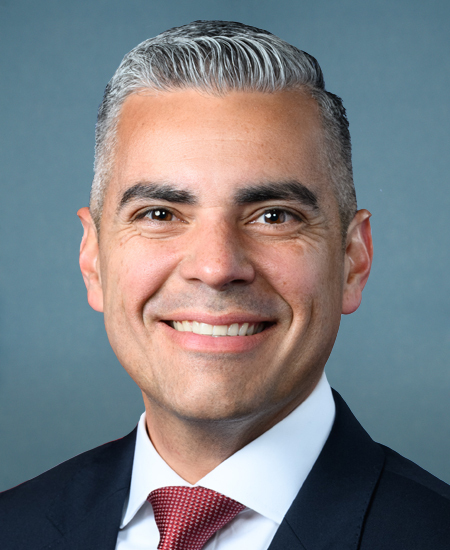
Rep. Juan Ciscomani
Sponsored bills
Maddy summaryHR 6379, the Shadow Wolves Improvement Act, amends the Homeland Security Act to establish new requirements for ICE's Shadow Wolves Program, which partners with tribal nations like the Tohono O'odham Nation. The bill requires ICE to define the program's mission, set staffing needs for special agents, create a recruitment/retention strategy with specific goals and timelines, and provide current Tactical Officers with clear details about reclassifying as special agents (including pay and training impacts). It also mandates a plan for filling vacancies due to retirements and outlines criteria for expanding the program to new tribal lands. The bill specifies no new funding is authorized for these changes and requires ICE to submit an implementation report to Congress within one year.
Maddy summaryThis bill amends the SUPPORT for Patients and Communities Act to expand substance abuse and suicide prevention services for children, adolescents, and young adults (up to age 25). It requires eligible providers - like pediatric specialists, emergency departments, and children’s hospitals - to offer parents or guardians counseling on preventing overdose/suicide and provide supplies to reduce access to lethal means (e.g., safe storage containers). The bill allocates at least $2 million annually in grants to fund these prevention programs through eligible entities, with funding authorized for fiscal years 2026-2030. It directly affects young people at risk of substance misuse or self-harm and their caregivers.
Give Kids a Chance Act of 2025 This bill expands the Food and Drug Administration’s (FDA’s) authority with respect to research on rare pediatric diseases, including by permitting the FDA to take enforcement action against drug sponsors that fail to satisfy pediatric study requirements and by reauthorizing programs that support pediatric research. Specifically, the bill modifies requirements relating to molecularly targeted pediatric cancer investigations to permit research on new drugs in combination with active ingredients that have already been approved, provided certain conditions are met; permits the FDA to take enforcement action against drug sponsors that fail to comply with pediatric study requirements, if such sponsors demonstrated a lack of due diligence in satisfying the requirement; renews the FDA’s authority to award priority review vouchers to sponsors of new products intended to treat rare pediatric diseases through September 30, 2029; and reauthorizes through FY2027 certain funding for the National Institutes of Health to support priority pediatric research. The bill also provides statutory authority for the FDA’s interpretation of the orphan drug exclusivity period. The bill specifies, consistent with FDA regulations, that the seven-year market exclusivity period for drugs for rare diseases or conditions (i.e., orphan drugs) prohibits the approval of the same drug for the same approved use or indication with respect to the disease or condition. (In Catalyst Pharmaceuticals, Inc. v. Becerra , a court rejected the FDA’s interpretation and held that orphan drug exclusivity extends to all uses or indications for the disease or condition.)
Maddy summaryHCONRES 58 is a symbolic congressional resolution denouncing socialism in all its forms. It does not create new laws or affect any policies, as it is a non-binding statement of opinion. The resolution cites historical events and quotes from Founding Fathers to argue that socialism leads to authoritarianism and economic harm, referencing examples like the Soviet Union and Venezuela. It formally "denounces" socialism and opposes implementing socialist policies in the U.S., but has no legal effect on citizens or government actions. This is a procedural resolution, not a policy measure.
Maddy summaryThis bill authorizes Congress to award two gold medals in honor of Charlie Kirk, a conservative activist and founder of Turning Point USA, who was tragically killed in 2025. One medal will go to his family, and the other will be displayed at the Smithsonian Institution to preserve his legacy. The bill does not create new policy or affect any laws - it is purely commemorative, following standard procedures for Congressional Gold Medals. It includes provisions for striking the medals and selling bronze duplicates to cover costs, but contains no substantive legislative changes.
Maddy summaryHR 6204 extends funding authorization for large-scale water recycling projects by changing the Infrastructure Investment and Jobs Act's Section 40905(k) from a 5-year to a 10-year period. This procedural bill directly affects existing water recycling projects currently funded under the Infrastructure Investment and Jobs Act (Public Law 117-58). The key provision is simply the extension of the authorization period, providing longer-term stability for these projects without creating new programs or altering eligibility.
Maddy summaryThis bill would require Medicare to cover early detection screening tests for Alzheimer's disease and related dementias starting January 1, 2028. It defines eligible tests as FDA-cleared genomic blood tests, blood product analyses, or equivalent medical imaging methods (like protein expression or whole genome sequencing) that detect pre-symptomatic or early-stage conditions. Medicare beneficiaries would receive this coverage without cost-sharing for these specific screenings. The bill amends Medicare coverage rules to explicitly include these tests under Section 1861(nnn) of the Social Security Act.
Maddy summaryHR 6126 authorizes the minting of commemorative coins to mark the 100th anniversary of the U.S. Foreign Service (established in 1924). It specifies three coin types: up to 50,000 $5 gold coins (90% gold), 400,000 $1 silver coins (90% silver), and 750,000 half-dollar coins, all to be sold during 2029. A surcharge of $35 per gold coin, $10 per silver coin, and $5 per half-dollar is added to the sale price, with all surcharge funds directed to the Association for Diplomatic Studies and Training to support its diplomatic history preservation work. The coins must include standard inscriptions (e.g., "Liberty," "United States of America") and will be legal tender, but the bill does not create new policy or affect government operations.
Maddy summaryHR 6137 would create a new separate job code for "direct support professionals" (DSPs) within the federal Standard Occupational Classification system. This change aims to better recognize DSPs - who provide daily support for people with intellectual and developmental disabilities (like helping with daily living, community participation, and goal-setting) - as distinct from other roles like home health aides. The bill requires the Office of Management and Budget to consider this revision during the next system update, without authorizing new funding. It addresses data gaps caused by high turnover rates (39% nationally) in DSP hiring and retention.