

Maddy summaryHR 2335 sets a spending cap of $5.72 billion for fiscal year 2024 on U.S. bilateral economic aid, global health programs, and HIV/AIDS initiatives. This bill directly affects federal programs providing international economic assistance and health support, limiting available funding to the specified amount. The key provision is a strict annual limit on funds for these specific categories, preventing additional appropriations beyond $5.72 billion. It does not change program eligibility or operations but restricts total funding levels for these areas in FY2024.
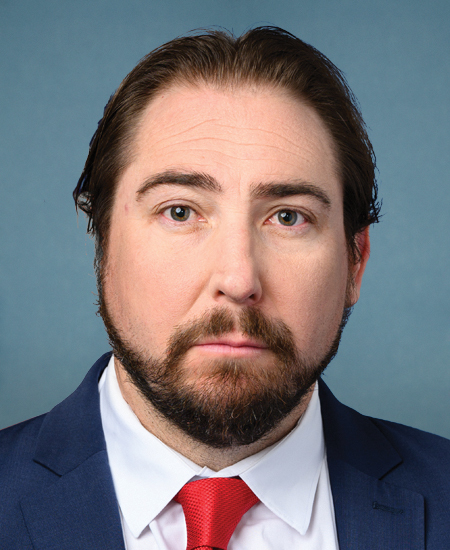
Rep. Elijah Crane
Sponsored bills
Maddy summaryHR 2334 sets a spending limit of $3,117,450,000 for U.S. bilateral economic assistance and global health programs in fiscal year 2024. This bill directly affects the allocation of federal funds for international aid programs focused on economic development and global health initiatives. The key provision is a hard cap that prevents any additional funding beyond this specific amount, overriding other existing funding authorizations. It applies solely to these two categories of foreign assistance within the FY2024 budget cycle.
Maddy summaryHR 2333 caps funding for the U.S. Agency for International Development's (USAID) Office of the Inspector General (OIG) at $76.6 million for fiscal year 2024. This bill directly affects USAID's OIG, which oversees audits and investigations of USAID programs, by limiting its available budget for that fiscal year. The key provision is a strict spending limit that prevents the OIG from using more than the specified amount, regardless of other funding authorizations. This is a procedural budgetary measure with no new policy requirements or program changes.
Maddy summaryThis bill (HR 2332) completely blocks funding for the U.S. Agency for International Development's (USAID) Capital Investment Fund in fiscal year 2024. It prohibits any spending from this specific fund by setting a $0 limit on authorized appropriations. The provision directly affects USAID's ability to finance infrastructure projects abroad, such as building schools, health facilities, or water systems in developing countries. This is a straightforward budgetary measure with no funding allowed for this particular program in FY2024.
This bill specifies that no FY2024 funding is authorized to be appropriated or made available for the U.S. Agency for International Development's Operating Expenses account.
Maddy summaryHR 2330 caps funding for the Western Hemisphere Drug Policy Commission's salaries and expenses at $1.5 million for fiscal year 2024. This bill directly affects the commission by restricting its budget authority for personnel and operational costs during FY2024. The key provision is a statutory limit preventing any use of funds exceeding $1.5 million for these specific purposes. The bill does not alter the commission's mission or create new policies, only setting a spending ceiling for its existing budget.
Maddy summaryHR 2329 limits the U.S.-China Economic and Security Review Commission's fiscal year 2024 funding to $3.5 million. This bill directly affects the Commission, a federal body that monitors China's economic and security impacts on U.S. interests. The key provision sets a strict spending cap, restricting the Commission's budget authority for FY2024.
This bill specifies that no FY2024 funding is authorized to be appropriated or made available for the Congressional-Executive Commission on the People's Republic of China, Salaries and Expenses account.
This bill specifies that no FY2024 funding is authorized to be appropriated or made available for the Commission on Security and Cooperation in Europe, Salaries and Expenses account.
Maddy summaryThis bill limits funding for the U.S. Commission on International Religious Freedom (USCIRF) to $4.5 million for fiscal year 2024. It directly affects the Commission by restricting its available budget for salaries and operations during that fiscal year. The key provision sets a strict spending cap on the Commission's authorized funds, preventing any amount above $4.5 million from being used for its core activities. This is a procedural budgetary measure with no direct impact on external groups or policies.