

Forest Litigation Reform Act of 2021 This bill sets forth provisions regarding legal challenges to federal forest management activities on land suitable for timber production. The bill revises the standard of review for a court considering a request for injunctive relief applicable to an agency's qualified forest management activity. Specifically, a court must balance the impact to the ecosystem of undertaking the agency action against not undertaking the agency action. The bill also limits the length of preliminary injunctive relief and stays pending appeal in such cases to 60 days. Additionally, the bill directs the Department of Agriculture, with respect to National Forest System lands, and the Department of the Interior, with respect to public lands, to each establish a discretionary arbitration pilot program as an alternative dispute resolution process for challenges to qualified forest management activities. The bill prohibits amounts from being obligated or expended from the Claims and Judgment Fund and awards to pay any fees or other expenses to any plaintiff related to an action challenging a qualified forest management activity.
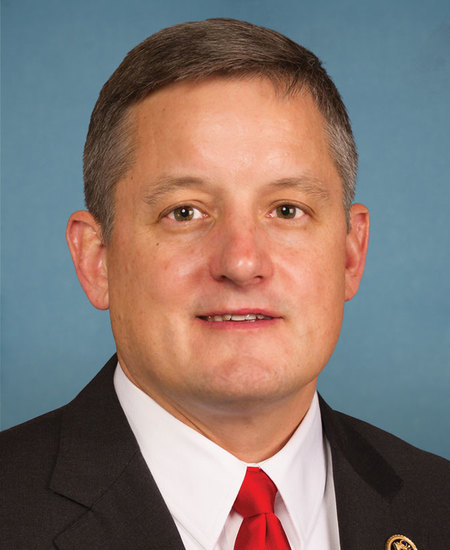
Rep. Bruce Westerman
Sponsored bills
Salvaging American Lumber Via Action with Greater Efficiency Act or the SALVAGE Act This bill provides for certain activities related to salvage operations and certain reforestation activities conducted on National Forest System lands or public lands. The bill categorically excludes salvage operations carried out by the Department of Agriculture (USDA) and the Department of the Interior, on certain National Forest System lands or certain public lands, respectively, from the requirement to prepare an environmental assessment or an environmental impact statement. Each salvage operation covered by the categorical exclusion may not contain treatment units that exceed a total of 10,000 acres. An environmental assessment for a salvage operation or reforestation activity proposed to be conducted on National Forest System lands or public lands that are adversely impacted by a large-scale catastrophic event shall be completed within 60 days after the conclusion of the event. In the case of such reforestation activities USDA and Interior shall, to the maximum extent practicable, achieve reforestation of at least 75% of the impacted lands during the five-year period following the conclusion of the catastrophic event. No later than 60 days after a wildfire is contained on National Forest System lands, USDA shall convert any timber sales on lands impacted by such wildfire to salvage sales. No restraining order, preliminary injunction, or injunction pending appeal shall be issued by any U.S. court respecting any decision to prepare or conduct a salvage operation or reforestation activity in response to a large-scale catastrophic event.
Protecting and Restoring Our Trees by Enhancing Conservation and Treatments Act or the PROTECT Act This bill categorically excludes forest management activities carried out on specified public lands from requirements to conduct environmental assessments and environmental impact statements. In order to be excluded from environmental review, the primary purposes of such activities must be to address insect or disease infestations, reduce hazardous fuel loads, protect municipal water sources, protect critical habitats from catastrophic disturbances, increase water yield, remove dead or dying trees or trees at high risk of dying, or facilitate native species restoration. The bill limits the categorical exclusion to activities that manage up to 10,000 acres of land. However, activities that manage up to 30,000 acres of land may be categorically excluded from environmental review if the activities are developed through a collaborative process, proposed by certain resource advisory committees, or covered by community wildfire protection plans.
Tribal Biochar Promotion Act of 2021 This bill establishes biochar demonstration projects. Biochar refers to carbonized biomass produced by converting feedstock through reductive thermal processing for nonfuel uses. Specifically, the bill directs the Department of the Interior (for land under Bureau of Land Management jurisdiction) and the Department of Agriculture (for land under Forest Service jurisdiction) to enter into agreements with tribes or tribal organizations to carry out biochar demonstration projects. These projects must support the development and commercialization of biochar on Indian forest land or rangeland and in nearby communities by providing them with reliable supplies of feedstock from federal lands.
This resolution recognizes the 75th anniversary of the Fulbright Program, which promotes international goodwill through the exchange of students in the fields of education, culture, and science.
American Energy First Act This bill addresses the onshore and offshore production of traditional (e.g., oil and gas) and alternative (e.g., solar and wind) energy resources and establishes requirements for distributing revenues generated from energy production, including revenues to states and territories for conservation efforts. For example, the bill limits the President's authority to (1) withdraw areas of the Outer Continental Shelf (OCS) from oil and gas leasing, and (2) declare new marine national monuments. In addition, the Department of the Interior must obtain congressional approval before declaring a moratorium on issuing leases on federal lands or waters for oil, gas, or coal. Further, the bill requires Interior to defer to state regulations, guidance, and permit requirements for all activities regarding hydraulic fracturing (i.e., fracking) relating to oil, gas, or geothermal production activities on federal land. Interior may delegate decisions about issuing oil and gas drill permits on federal land to states. Interior must also establish certain federal land as geothermal, solar, and wind energy leasing priority areas. The bill also allows Interior to conduct certain lease sales, such as offshore wind lease sales on the OCS in the U.S. Exclusive Economic Zone adjacent to U.S. territories, and establishes requirements for distributing revenues from such leases to the Treasury, the Coral Reef Conservation Fund established by this bill, and U.S. territories.
Alexander Lofgren Veterans in Parks (VIP) Act This bill makes the America the Beautiful-National Parks and Federal Recreational Lands Pass available, without charge, to members of the Armed Forces, veterans, and Gold Star Families. The pass covers the entrance fee and standard amenity recreation fee for all federal recreational lands and waters.
Provider Relief Fund Deadline Extension Act This bill extends the period during which health care providers may use payments received from the Provider Relief Fund to cover a variety of costs related to COVID-19.
Protecting Patients from Medicaid Fraud Act This bill requires state Medicaid programs to consult with the Centers for Medicare & Medicaid Services (CMS) about provider screening and oversight requirements if they have not already opted to do so. Additionally, states that are not in compliance with these screening and oversight requirements must submit progress reports to the CMS annually.
Sultana Steamboat Disaster Commemorative Coin Act of 2021 This bill directs the Department of the Treasury to mint and issue $5 gold coins, $1 silver coins, and half-dollar clad coins in recognition and remembrance of the Sultana Steamboat explosion of 1865. The designs of the coins shall be emblematic of the historical significance of the Sultana disaster, with special recognition and remembrance given to the lives lost, including the recently released Union soldiers returning home after having been prisoners of war during the American Civil War at Confederate prisons located at Andersonville and Cahaba. Treasury may issue coins minted under this bill to the public only during the one-year period beginning on January 1, 2023. All sales of such coins shall include a surcharge to be paid to the Sultana Historical Preservation Society, Inc. to establish and maintain a new Sultana disaster museum.