

Outpatient Surgery Quality and Access Act of 2021 This bill establishes and modifies certain requirements relating to Medicare payments for ambulatory surgical center (ASC) services. Specifically, the bill (1) requires the payment system for ASC services to feature certain positive annual adjustments equivalent to those made with respect to hospital outpatient department (OPD) services; (2) revises quality reporting requirements to permit publicly available, side-by-side comparisons of quality measures for ASCs and OPDs in the same geographic area; and (3) requires the Centers for Medicare & Medicaid Services (CMS), when excluding requested procedures from the list of those approved to be performed in ASCs, to cite specified reasons for doing so. With respect to excluding procedures from the approved list for ASCs, the CMS may not cite as a basis for exclusion that a procedure can only be reported using an unlisted surgical procedure code. (Physicians sometimes use unlisted codes when performing new procedures or services if no existing code is adequately descriptive.) The bill also limits the copayment amount for ASC services under Medicare to that of the inpatient hospital deductible.
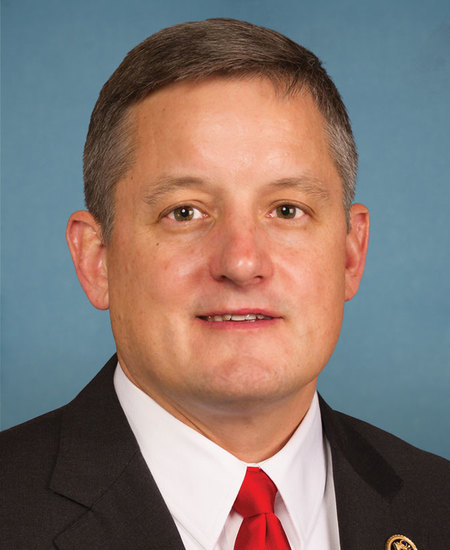
Rep. Bruce Westerman
Sponsored bills
This bill provides statutory authority for the rule published on August 27, 2019, by the Department of the Interior entitled Endangered and Threatened Wildlife and Plants; Regulations for Interagency Cooperation .
Threatened Species Protection Improvement Act of 2021 This bill provides statutory authority for the rule published on August 27, 2019, by the U.S. Fish and Wildlife Service relating to threatened species. The rule requires species listed as threatened after the issuance of the rule to be given protections tailored to the species' needs. Prior to the rule, threatened species were automatically provided with most of the protections that are provided to endangered species.
This bill provides statutory authority for the rule published on December 18, 2020, by the U.S. Fish and Wildlife Service entitled Endangered and Threatened Wildlife and Plants; Regulations for Designating Critical Habitat. The rule set forth a process for excluding areas from critical habitat designations under the Endangered Species Act of 1973.
State, Local, Tribal, and Territorial Fiscal Recovery, Infrastructure, and Disaster Relief Flexibility Act This bill allows states, tribes, territories, and localities to use certain COVID-19 relief funds for new categories of spending, including for natural disasters and infrastructure projects. It also makes changes to expenditure deadlines and other aspects of this funding. Specifically, recipients may use funds for emergency relief from natural disasters and associated negative economic impacts of natural disasters. In addition, recipients may use a portion of their COVID-19 relief funds for designated infrastructure projects, such as nationally significant freight and highway projects. Furthermore, the bill allows recipients to expend COVID-19 relief funds on these types of infrastructure projects until September 30, 2026. Under current law, recipients must expend the funds by December 31, 2024. Other changes in the bill include (1) modifying eligibility and allocation requirements for funding set aside for counties and Indian tribes that are near public lands, (2) allowing Indian tribes an additional year to expend their COVID-19 relief funds, and (3) establishing a process for government entities to decline COVID-19 relief funds and requiring any declined funds to be used to reduce the federal deficit.
This bill provides statutory authority for the rule published on December 16, 2020, by the U.S. Fish and Wildlife Service and the National Marine Fisheries Service entitled Endangered and Threatened Wildlife and Plants; Regulations for Listing Endangered and Threatened Species and Designating Critical Habitat . The rule defined habitat under the Endangered Species Act of 1973 and it responded to Supreme Court case law regarding the designation of critical habitat under the act.
This resolution recognizes the ultimate sacrifice of the unknown soldiers interred at Arlington National Cemetery and expresses gratitude and appreciation of all the members of the Armed Forces who have served during wars and peacetime. Additionally, the resolution commends all members of the 3d Infantry Regiment, specifically those who guard the Tomb of the Unknown Solider.
This resolution supports the designation of National Dyslexia Awareness Month and calls on Congress, schools, and educational agencies to recognize that dyslexia has significant educational implications that must be addressed.
This resolution expresses support for the designation of Second Chance Month to promote awareness of unnecessary legal and social barriers that prevent individuals with criminal records from becoming productive members of society.
Sara's Law and the Preventing Unfair Sentencing Act of 2021 This bill modifies federal sentencing options for individuals who commit criminal offenses as juveniles. Specifically, the bill authorizes federal sentencing courts to do the following: impose a sentence below the mandatory minimum for a juvenile who was convicted of a violent offense against a person who engaged in certain conduct (e.g., trafficking, abuse, or assault) against the juvenile, impose a sentence below the mandatory minimum by up to 35% to reflect the juvenile's age and prospect for rehabilitation, and reduce a prison term imposed on a defendant convicted as an adult for an offense committed as a juvenile if the defendant has served at least 20 years in custody and is not a danger to public safety.