

Improving Seniors' Timely Access to Care Act of 2022 This bill establishes several requirements and standards relating to prior authorization processes under Medicare Advantage (MA) plans. Specifically, MA plans must (1) establish an electronic prior authorization program that meets specified standards, including the ability to provide real-time decisions in response to requests for items and services that are routinely approved; (2) annually publish specified prior authorization information, including the percentage of requests approved and the average response time; and (3) meet other standards, as set by the Centers for Medicare & Medicaid Services, relating to the quality and timeliness of prior authorization determinations.
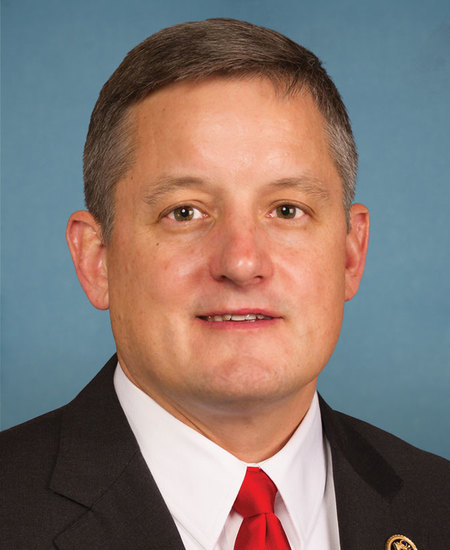
Rep. Bruce Westerman
Sponsored bills
This joint resolution nullifies a Department of Education rule published on July 6, 2022, concerning final priorities, requirements, definitions, and selection criteria for the Charter Schools Program.
Debt Cancellation Accountability Act of 2022 This bill prohibits the Department of Education from providing class-based loan forgiveness unless funds have been specifically requested and appropriated for this purpose. Class-based loan forgiveness refers to the cancellation, waiver, assumption, discharge, reduction, or other forgiveness of any obligation due on Federal Family Education Loans, Federal Direct Loans, or Federal Perkins Loans (1) on a class-wide basis and for a class of two or more loan borrowers, and (2) that totals more than $1 million. The prohibition does not apply to targeted loan forgiveness programs established under the Higher Education Act of 1965 and in effect before the enactment of this bill if the loan forgiveness is granted for a single borrower on a case-by-case basis.
This bill requires the Economic Development Administration to award grants to designated institutions of higher education located in distressed communities for use in projects including developing commercial infrastructure, building municipal broadband networks, and training health care professionals.
Save Our Sequoias Act This bill provides for the conservation of giant sequoia trees ( Sequoiadendron giganteum ) in California, including by providing statutory authority for the Giant Sequoia Lands Coalition; directing the coalition to submit a Giant Sequoia Health and Resiliency Assessment; declaring an emergency on certain public lands and allowing officials to carry out protection plans during the emergency to respond to the threat of wildfires, insects, and drought; directing the Department of the Interior to develop and implement a Giant Sequoia Reforestation and Rehabilitation Strategy; and establishing a variety of programs and funds to support the conservation of giant sequoias.
Harriet Tubman Bicentennial Commemorative Coin Act This bill directs the Department of the Treasury to mint and issue 50,000 $5 gold coins, 400,000 $1 silver coins, and 750,000 half-dollar clad coins emblematic of the legacy of Harriet Tubman as an abolitionist. The Secretary may issue coins under this bill only during the period of January 1, 2024, through December 31, 2024. All surcharges received by Treasury from the sale of such coins must be paid equally to the National Underground Railroad Freedom Center in Cincinnati, Ohio, and The Harriet Tubman Home, Inc. in Auburn, New York, for the purpose of accomplishing and advancing their missions.
National World War II Memorial Commemorative Coin Act This bill directs the Department of the Treasury to mint and issue up to 50,000 $5 coins, 400,000 $1 silver coins, and 750,000 half-dollar clad coins in commemoration of the National World War II Memorial in the District of Columbia. The design of the coins shall be emblematic of the memorial and the service and sacrifice of American soldiers and civilians during World War II. All surcharges received from the sale of such coins shall be paid to the Friends of the National World War II Memorial to support the National Park Service in maintaining and repairing the memorial, and for educational and commemorative programs.
Maddy summaryThe National Park Foundation Reauthorization Act of 2022 extends and increases funding for the National Park Foundation. It amends federal law to authorize $15 million annually (up from $5 million) for the Foundation through 2030 (extending from 2023). This bill directly affects the National Park Foundation by providing a longer-term, higher level of federal appropriations for its operations. The key change is a specific funding authorization adjustment in Title 54 of the U.S. Code, with no new program requirements or policy changes.
Advancing Human Rights-Centered International Conservation Act of 2022 This bill requires the U.S. Fish and Wildlife Service (USFWS) to take actions to ensure that the international financial assistance it provides does not go to any foreign security force unit (e.g., a military or paramilitary unit) where there is a reasonable belief that the unit has committed a gross violation of internationally recognized human rights. The USFWS must conduct risk analysis to ensure that a recipient (or subrecipient) of a grant does not fund or support any such unit. The prohibition against providing funding to such a unit shall not apply if the applicable government is taking effective steps to (1) bring the responsible members of the unit to justice, and (2) prevent gross violations of internationally recognized human rights by the unit in the future. The USFWS must take other actions to prevent funding such a unit, such as (1) coordinating with the Department of State on procedures for vetting potential assistance recipients, (2) publicly identifying units that are barred from receiving assistance, (3) requiring assistance recipients to provide certain information and to implement a safeguards plan, and (4) requiring periodic financial and programmatic audits of assistance recipients. The bill also requires (1) a grant recipient to report credible information about possible human rights violations involving a grant to the USFWS and the relevant diplomatic or consular post, (2) the program awarding the grant to investigate such allegations, and (3) the Office of the Inspector General of the Department of the Interior to investigate certain cases referred by the USFWS.
This joint resolution nullifies the final rule issued by the Council on Environmental Quality titled National Environmental Policy Act Implementing Regulations Revisions and published on April 20, 2022. The rule restores regulatory provisions issued under the National Environmental Policy Act of 1969 (NEPA) that were in effect before being modified in 2020 by the Update to the Regulations Implementing the Procedural Provisions of the National Environmental Policy Act rule.