

This resolution expresses the sense of the House of Representatives that the President should work with Congress to develop and execute a strategy to counter the rise in violent crime across the country by reinforcing strong criminal justice policies, by laying blame on the perpetrators of violent acts, and by securing the southern border.
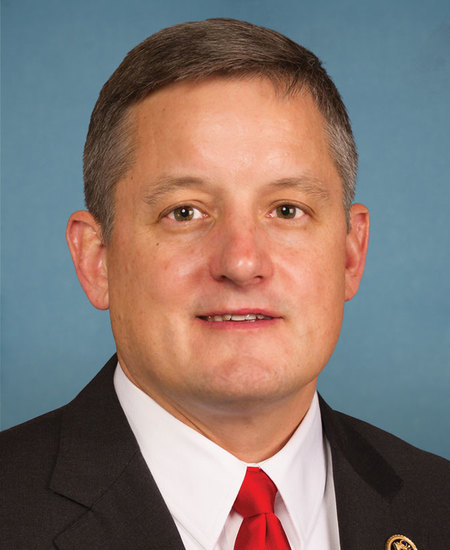
Rep. Bruce Westerman
Sponsored bills
Maddy summaryHRES 1183 is a non-binding House resolution condemning domestic terrorist violence targeting religious organizations and pregnancy support groups. It specifically references multiple recent incidents of vandalism and arson against such facilities - including pregnancy centers and churches - occurring after the leak of a Supreme Court abortion decision. The resolution urges the Department of Justice, FBI, and National Security Council to investigate and prosecute these attacks and update domestic terrorism strategies to prevent future violence. As a symbolic measure, it does not create new laws but formally expresses the House’s stance against targeting these groups.
Maddy summaryHRES 1114 is a non-binding House resolution expressing support for recognizing "National Police Week" as a way to honor law enforcement officers across the United States. The resolution acknowledges the service and sacrifices of law enforcement officers, particularly those who have died in the line of duty, and specifically references 619 officers who died in 2021 as listed in the resolution. This resolution does not create new laws or allocate funds but serves as a symbolic gesture to encourage public recognition of law enforcement personnel. It calls for Americans to observe National Police Week by honoring officers and raising awareness about their essential role in community safety. The resolution was introduced by multiple members of Congress and referred to the Committee on the Judiciary.
This resolution expresses support for the designation of Second Chance Month to promote awareness of unnecessary legal and social barriers that prevent individuals with criminal records from becoming productive members of society.
Maddy summaryHRES 566 is a resolution passed by the U.S. House of Representatives to commemorate the 80th anniversary of the Civil Air Patrol (CAP). The resolution recognizes CAP's 80 years of service, including its roles in disaster response (such as Hurricane Katrina, the Deepwater Horizon spill, and the COVID-19 pandemic), search and rescue operations, support for the U.S. Air Force, and youth aviation education programs. It honors CAP's contributions as a volunteer organization with over 10,000 trained members and assets like 560 aircraft, which have impacted millions of Americans through community support and emergency services.
Protecting Pain-Capable Unborn Children from Late-Term Abortions Act This bill establishes a new criminal offense for performing or attempting to perform an abortion if the probable gestational age of the fetus is 15 weeks or more. A violator is subject to criminal penalties—a fine, a prison term of up to five years, or both. The bill provides exceptions for an abortion (1) that is necessary to save the life of the pregnant woman, or (2) when the pregnancy is the result of rape or incest. A physician who performs or attempts to perform an abortion under an exception must comply with specified requirements. A woman who undergoes a prohibited abortion may not be prosecuted for violating or conspiring to violate the provisions of this bill.
Fair Care Act of 202 2 This bill addresses the health care system, including Medicare, Medicaid, the private health insurance market, and the prescription drug approval process. The bill also revises tax provisions related to certain health care costs and establishes requirements for lawsuits involving health care provided, at least in part, through a federal program or with federal funds.
Stop Pills That Kill Act This bill increases criminal penalties for offenses relating to the manufacture of fentanyl or counterfeit substances. It also establishes requirements for federal agencies to address the use of counterfeit substances. Specifically, the bill applies an increased criminal penalty for possessing, manufacturing, or distributing certain equipment or materials that are used to illegally manufacture fentanyl, an analogue of fentanyl, or a counterfeit substance (the increased penalty is currently limited to offenses involving methamphetamine). The bill also requires the United States Sentencing Commission to review sentencing guidelines and amend them, if appropriate, to include an enhanced penalty for those who knowingly misrepresent counterfeit pills that have fentanyl, a fentanyl analogue, or methamphetamine as legitimate pills. The Drug Enforcement Administration must establish and implement a plan to address counterfeit fentanyl or methamphetamine substances through law enforcement action and education and prevention efforts. In addition, the Department of Justice must annually report on the collection of counterfeit fentanyl or methamphetamine substances by law enforcement and on related prosecutions.
Ensuring Safer Schools Act of 2022 This bill allows funds under the Community Oriented Policing Services (COPS) grant program to be used to hire and train veterans and retired law enforcement officers as school resource officers. It also directs the Department of Veterans Affairs to coordinate with COPS grant recipients to connect veterans seeking to serve as school resource officers with local law enforcement agencies participating in school-based partnerships.
Secure Every School and Protect Our Nation’s Children Act or the STOP II Act This bill reauthorizes and supports various grants to enhance school safety and security initiatives. It also provides statutory authority for the federal clearinghouse of school safety resources. (The clearinghouse identifies and publishes best practices and recommendations for school safety for use by state and local educational and law enforcement agencies, institutions of higher education, health professionals, and the public.)