

Maddy summaryHR 4361, the STOP China Act, prohibits the use of federal transportation funds to purchase vehicles or related infrastructure (like charging stations for buses) from companies linked to China. Specifically, it bans federal funding for "covered vehicles" made by entities owned or controlled by China (as defined by the bill), including those using Chinese-made electric powertrains. The U.S. Trade Representative must publish and update a public list of these banned entities within 30 days of the bill’s enactment, with updates every 90 days initially and annually thereafter. Exceptions apply only for vehicle safety testing, inspections, or research. The bill directly affects federal transportation projects and contractors receiving federal funds, requiring them to avoid procurement from listed Chinese-connected companies.
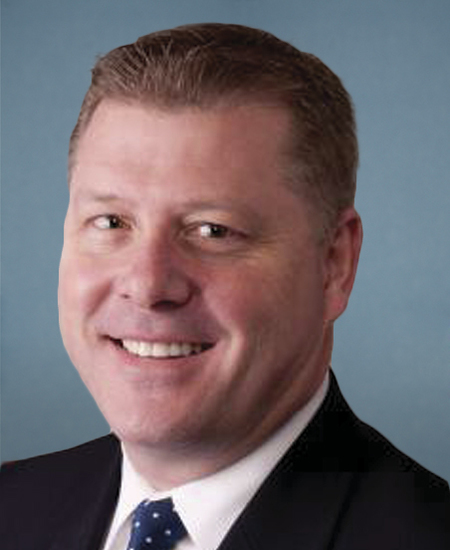
Rep. Eric A. "Rick" Crawford
Sponsored bills
Maddy summaryHR 4382 authorizes the U.S. Mint to produce commemorative coins for the 2028 Los Angeles Olympics/Paralympics and 2034 Salt Lake City Winter Olympics/Paralympics. It specifies gold, silver, and half-dollar coin designs with defined mintage limits (e.g., up to 100,000 $5 gold coins for each event), all bearing inscriptions like "2028" or "2034" and standard coin features. A surcharge ($5-$50 per coin) is added to sales, with all funds directed to the respective Olympic committees to support event hosting and legacy programs like youth sports. The bill ensures no net cost to the government by requiring surcharge revenues to cover all design, production, and marketing expenses before funds are disbursed.
Maddy summaryThis bill requires trucking companies operating vehicles weighing over 10,000 pounds to report positive hair drug test results from pre-employment or random tests to the Drug and Alcohol Clearinghouse. It mandates that such tests come only from laboratories accredited by the College of American Pathologists for forensic hair testing and must follow Department of Health and Human Services scientific guidelines when available. The law updates existing reporting rules to include hair test results alongside traditional urine tests in the clearinghouse system. This directly affects commercial motor vehicle employers and drivers subject to federal drug testing requirements.
Maddy summaryThe CONNECT for Health Act of 2025 expands Medicare telehealth coverage by removing geographic restrictions that limited where patients could receive care, expanding the types of health care providers who can offer telehealth services, and eliminating the requirement for an in-person visit before receiving telemental health services. The bill includes specific provisions to support telehealth use for Native American health facilities, rural health clinics, and Federally Qualified Health Centers. It requires the Centers for Medicare & Medicaid Services to collect and publish data on telehealth usage and impacts, and to develop resources to improve accessibility for people with disabilities and limited English proficiency. Program integrity measures are added to monitor telehealth billing practices and prevent fraud while maintaining coverage for telehealth services during public health emergencies.
Maddy summaryHR 4092, the Protect RAIL Act, amends U.S. immigration law to make certain crimes involving stolen goods transported by carriers (like trains, trucks, or ships) grounds for denying entry or deporting non-citizens. It adds new inadmissibility and deportability provisions for anyone convicted of theft from interstate or foreign shipments under Title 18, Section 659 of the U.S. Code. The bill directly affects non-citizens who commit these specific theft offenses, making them ineligible to enter the U.S. or subject to removal. This changes immigration consequences for existing criminal offenses, not the crimes themselves.
Maddy summaryThis bill proposes a constitutional amendment that would grant Congress the power to pass laws banning the physical desecration of the U.S. flag (such as burning, trampling, or defacing it). If ratified, it would directly affect individuals who engage in such acts by making them subject to federal criminal penalties under new laws Congress could create. The amendment would add a specific clause to the Constitution stating: "Congress shall have power to prohibit the physical desecration of the flag of the United States." Ratification would require approval by 3/4 of state legislatures within seven years of submission.
Maddy summaryThe FUELS Act (HR 3909) amends the Spill Prevention, Control, and Countermeasure (SPCC) rule under the Clean Water Act by adjusting storage capacity thresholds. It lowers the exemption threshold for small facilities from 20,000 gallons to 10,000 gallons, requiring more agricultural operations to implement SPCC plans. The bill also raises the main threshold for SPCC coverage from 20,000 gallons to 42,000 gallons and modifies related numerical requirements. These changes directly affect farms and facilities storing oil or hazardous substances above 10,000 gallons, expanding the scope of entities subject to spill prevention regulations.
Maddy summaryHR 3946, the FIGHT Act of 2025, amends the Animal Welfare Act to specifically prohibit gambling on animal fighting events and restrict the interstate transport of roosters used in such ventures. It defines "rooster" as male chickens over six months old and makes it unlawful to sponsor, exhibit, attend (for those under 16), or gamble on animal fighting events - whether in-person or broadcast. The bill creates a civil enforcement mechanism allowing any person to file a lawsuit to stop violations after providing 60 days' notice to authorities, with potential fines up to $5,000 per violation. It also establishes seizure of property used to facilitate violations and clarifies that state laws on animal fighting remain in effect unless directly conflicting with federal provisions.
Maddy summaryHR 3885, the Community TEAMS Act of 2025, creates a new grant program to expand medical student clinical training in rural and medically underserved communities. It provides funding for consortia of medical schools partnered with rural health clinics, community health centers, or facilities in underserved areas to support student rotations in outpatient settings. The grants, lasting 1-5 years, require applicants to detail project plans, sustainability, and how the program will improve community access to healthcare. This directly affects medical students, training facilities, and residents of high-need areas by aiming to build a sustainable physician workforce in those locations.
Maddy summaryHRES 483 is a House resolution recognizing the 250th anniversary of the U.S. Army's founding on June 14, 1775. It expresses appreciation for the Army's service over 250 years, honors soldiers' valor and core values, and calls for public observance through ceremonies and activities. The resolution has no policy impact or funding provisions - it is purely commemorative. It was introduced by 30 bipartisan House members and referred to the Armed Services Committee.