This Act is the final leg of a constitutional amendment that would eliminate from the Delaware Constitution the limitations as to when an individual may vote by absentee ballot. This amendment to the Delaware Constitution provides that the General Assembly shall enact general laws providing the circumstances, rules, and procedures for absentee voting.
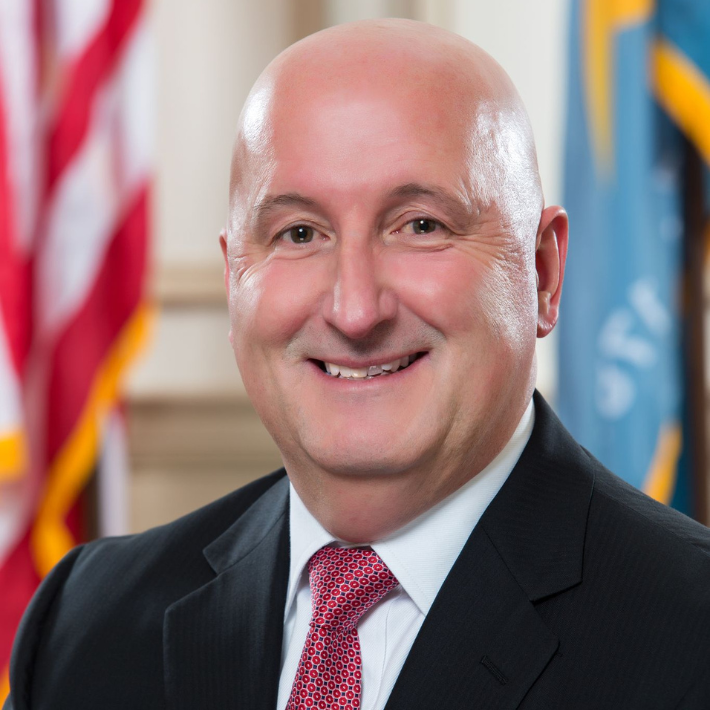
Sen. Jack Walsh
Sponsored bills
This bill converts the senior property tax credit from a credit against the school taxes imposed and collected at the county level to a means-tested refundable income tax credit to be administered by the Department of Finance, Division of Revenue. For eligible seniors who do not file a personal income tax because their income falls below the threshold set by the Code, the Division will issue a rebate in the amount for which that person is eligible. The Division is authorized to promulgate whatever forms or rules are necessary to administer this section. The tax credit will become effective as early as tax year 2019 upon certification by the Secretary of Finance that systems are in place for the Division of Revenue to administer the credit.
This bill establishes a 20 year retirement for correction officers and specified peace officers. The bill amends the multiplier for calculation of state employee pension benefits for correction officers and specified peace officers from either 1.85%, 2.0% or 2.45% to a uniform 2.5% for the first 20 years, plus 3.5% for years beyond 20 years. The increased multipliers reflect increased costs, reduced benefits and the need to recruit and retain qualified and competent correction officers and specified peace officers with a modernized pension benefit. In addition, this bill amends the employee contribution for all correction officers and specified peace officers to a uniform 7%. Specified peace officers means (1) Probation and parole officers employed by the Department of Correction; (2) Capitol Police officers; (3) Department of Natural Resources police officers; (4) University of Delaware Police; (5) State Fire Marshal officers; (6) Division of Alcohol and Tobacco Enforcement agents; (7) Justice of the Peace Court constables; and (8) Probation and parole officers in the Serious Juvenile Offender Unit and senior probation officers employed by the Division of Services for Children, Youth, and their Families.
Individuals who are released from prison face many hurdles as they re-enter the community, including difficulty obtaining identification documents. Lacking identification imposes additional hurdles as these individuals attempt to find housing and employment. This Act requires the Department of Correction to provide individuals who are being released from the custody of the Department of Correction ("DOC"), after 6 months of incarceration following conviction, with a Delaware Personal Credential Card ("Personal Credential"). An individual may present the Personal Credential to receive one free certified copy of the individual's birth certificate and one identification card or driver's license, if otherwise eligible to receive those documents. This Act builds on the pilot that has been in place since 2012, when the DOC partnered with the Division of Motor Vehicles and the Department of Health and Social Services to obtain identification for individuals who volunteer to participate in the I-ADAPT re-entry program. Currently, individuals in I-ADAPT receive a Prisoner Re-Entry card, valid for 1 year, that can be used to obtain to obtain a free copy of their birth certificate, if they were born in Delaware, and a free identification card, if otherwise eligible to receive one.

This Act stabilizes revenue for the Hazardous Substances Cleanup Act ("HSCA") Fund ("the Fund") by minimizing the wide swings in revenue due to oil prices changes. Under this Act, the Department of Natural Resources and Environmental Control ("the Department") is prevented from receiving a revenue windfall when oil prices rise, while minimum funding for the Brownfields Grant Program is protected when oil prices are low. The legislation ties HSCA funding to a median benchmark and authorizes the Division of Revenue to adjust the tax rate up or down for the following year to smooth the revenue stream and avoid the roller coaster effect of oil price changes. This Act caps the HSCA tax rate at 1.675% and allows the lowest rate to drop to .675%, versus the current HSCA rate of .9%. This Act sets aside a minimum of $5,000,000 annually in HSCA funds for the Brownfields Grant Program, which has leveraged private investment of 16 times the public funds expended in cleaning up polluted sites and returning them to productive use, generating jobs and tax revenue.
This Act encourages prescribers and patients to use proven non-opioid methods of treating back pain by doing the following: 1. Prohibits numerical limits on physical therapy and chiropractic care, which might deter prescribers or patients from using those treatments rather than opioids. 2. Adds continuing education requirements for prescribers relating to risks of opioids and alternatives to opioids. 3. Creates a pilot program within the state employee health care plan that allows the use of massage therapy, acupuncture, and yoga for the treatment of back pain.
This Act establishes the High Needs Educator Student Loan Payment Program. The Program allows qualified applicants to apply for a payment from the State to the applicant’s lending agency, to pay a portion of the applicant’s student loan debt. The purpose of the Program is to encourage Educators to work and remain working in certification areas in which Delaware has a shortage and to encourage Educators to work and remain working in Delaware’s hardest-to-staff Schools. The amount of the award shall be no less than $1000 and no more than $2000. This substitute redesignates the chapter where this language will be placed in the code.
This bill creates regulations concerning the use, distribution and education of Benzodiazepine and Non-benzodiazepine Hypnotics. It require Practitioners to obtain consent from a minor’s parent or guardian prior to prescribing these drugs, and require pharmacist to include a cautionary statement explaining the risks associated with the long term use of these drugs.
This Act fulfills recommendations made by the Joint Legislative Overview and Sunset Committee by making amendments to the statute governing the Board of Occupational Therapy Practice to make Chapter 20 of Title 24 consistent with other Title 24 boards and delete antiquated sections that are no longer applicable, including: - Adding the duty to report conduct that constitutes grounds for discipline or inability to practice. - Removing "censure a practitioner" as an available sanction. - Removing references to temporary licenses, because the temporary license section of the statute was repealed in 2005. - Removing § 2015(c) and § 2017(c) because they are covered under the Administrative Procedures Act. - Revising the reciprocity language to address situations where a licensee holds a current license in a state that is no substantially similar to Delaware. In addition, this Act includes several amendments to conform existing law to the standards of the Delaware Legislative Drafting Manual, including deleting unnecessary words, correcting grammatical errors, and improving consistency and clarity.
The state is currently funding service providers at 75% of the market rate established in a 2014 study that was done by DHSS. This bill would mandate an increase in the rates paid to service providers according to the recommendations of the market study, so that by fiscal year 2021 the state would fund service providers at 100% of the benchmarked rate. These rate increases are necessary to increase the hourly wages of Direct Support Professionals (DSPs), to improve recruitment and retention of these positions, to decrease staff turnover, and to decrease position vacancies. Along with the corresponding costs for program oversight, direct supervision of DSPs, and training, stabilizing the DSP workforce with increased pay is essential to keep people with I/DD safe and integrated to the maximum extent possible in their local communities. The bill also requires that the adequacy of the rate system be evaluated against performance measures that are commonly used to assess program quality.