This bill names the hill west of Mill Creek situated on New Castle County parcel number 0803100018 where the Spring Grove Mill House sits as “General Washington’s Hill of Deception”. This is the site of one of the most impactful combat event that occurred on Delaware soil during the Revolutionary War.
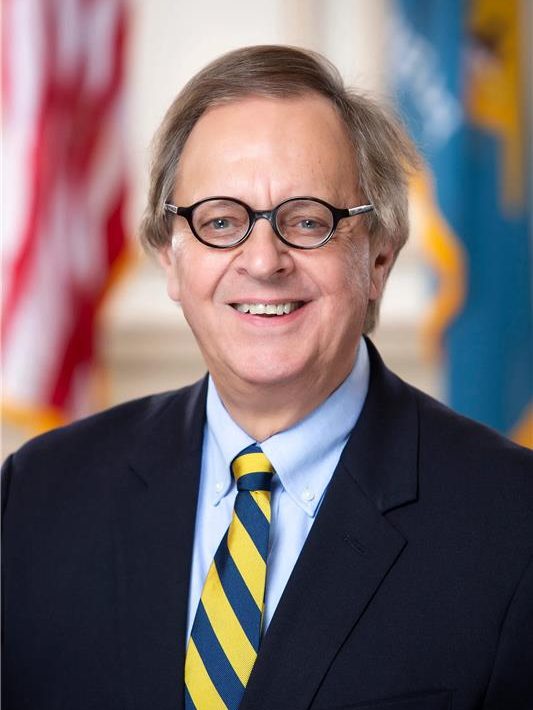
Sen. Ray Seigfried
Sponsored bills
This Act provides that March 9 will be known as 6888th Central Postal Directory Battalion Day and will be commemorated in this State by appropriate ceremonies to honor the 6888th Central Postal Directory Battalion members. In commemorating such a day, citizens are encouraged to write and mail letters to family, friends, military personnel, and veterans to recognize postal employees and the important service these employees provide in connecting us to each other.
Maddy summarySB 70 amends Delaware law to allow licensed genetic counselors to directly order genetic tests, which previously required physician authorization. This change directly affects licensed genetic counselors and their patients in Delaware, streamlining access to genetic testing. The key provision removes the prior requirement that counselors obtain orders from physicians for genetic tests, enabling counselors to make these clinical decisions independently within their scope of practice.
This Act provides protections and rights to victims of sexual assault by doing all of the following: • Codifying the core sections of Delaware's Sexual Assault Kit (SAK) testing policy, adopted in May 2022. • Enacts the recommendations of the Victims' Bill of Rights Committee (VBR Committee), established under SCR 99, (152nd General Assembly) providing rights to victims regarding information about the location, status, and preservation of biological evidence. These protections and rights for victims of sexual assault are in addition to existing requirements for DNA analysis performed by the Division of Forensic Science (DFS) laboratory under Chapter 47 of Title 29 and the Victims’ Bill of Rights under Chapter 94 of Title 11. Section 1 revises the definitions in Chapter 47 of Title 29 by transferring definitions from § 4713 of Title 29, updating existing definitions, and creating new defined terms that reflect current practices. Section 2 updates existing requirements under § 4713 of Title 29 that apply when the DFS laboratory receives, analyzes, and classifies biological samples and obtains DNA results, by doing all of the following: • Adding the names of the state and federal DNA databases. • Referencing current law-enforcement procedures, including the names of Delaware’s criminal justice case management systems. • Requiring the Department of Justice, or a law-enforcement agency authorized by the Department of Justice, to inform DFS if the investigation has determined that no crime occurred in the case connected to a biological sample that has been submitted. This enables DFS to comply with NDIS policies and procedures related to when DNA results can be included in the National DNA Index System. • Adding the VBR Committee’s recommendations preventing the destruction of biological samples from unsolved sexual assault cases based on the victim’s age at the time of the alleged offense. For adults, these biological samples may not be destroyed until 20 years after the collection of the evidence and if the victim was under 18 years of age, until the victim is 40 years old. • Adding references to the new SAK-specific provisions under § 4713A of Title 29 and § 9403B of Title 11. Section 3 adds additional requirements that apply when the DFS laboratory conducts DNA analysis of SAKs, codifying Section 5 and Section 7 of the existing SAK testing policy. Section 4 adds definitions related to biological evidence to Chapter 94 of Title 11 for the Victims’ Bill of Rights. Section 5 adds the following to the Victims’ Bill of Rights: • Requirements that apply to investigating law-enforcement agencies, codifying provisions in Section 3 and Section 4 of the existing SAK testing policy. • The VBR Committee’s recommendations regarding victims’ rights to information about the location, status, and preservation of biological evidence, such as learning the status and results of DNA testing. Victims of unsolved sexual assault cases have the right to notice before biological evidence is destroyed, to request that this evidence be preserved, and to designate another person to receive information about the status of biological evidence on their behalf. Section 6 updates how victims receive notifications from law-enforcement agencies that are required under the Victims’ Bill of Rights, to allow for implementation of the victims’ rights to information about biological evidence. All of the following changes were recommended by the VBR Committee and are identical to the language in Senate Bill No. 17 (153rd): • Allowing law-enforcement agencies to send notifications electronically. • Providing that victims are responsible for providing a law-enforcement agency with changes to the victim’s contact information. • Allowing a victim to indicate and change their preferred method of contact by law-enforcement agencies, including a preference not to be contacted, and law-enforcement agencies must use the victim’s preferred method of contact when possible. Sections 7 through 9 revise the definitions of “DNA” and “DNA profile” in Part II of Title 11 for criminal procedure so they align with the definitions in Chapter 47 of Title 29. This Act also makes technical corrections to conform existing law to the standards of the Delaware Legislative Drafting Manual.

This bill clarifies that only law enforcement officers may petition for emergency relief in the Justice of the Peace Court pursuant to Title 10, Section 7703. The statute is currently ambiguous with regard to who may file pursuant to Section 7703. Section 7701(4) defines a "Petitioner" as a law enforcement officer or any person who would be qualified to file a Petition for Protection from Abuse. Section 7702(a) provides that "a petitioner may request relief under section 7703 (Emergency hearings) or Section 7704 (Nonemergency hearings)." However, Section 7703 only addresses the process a law enforcement officer must follow to procure a Lethal Violence Protective Order ("LVPO") and fails to mention any other class of petitioner. At the time of the passage of the LVPO statute, there was specific discussion and intention to prevent individuals from filing for emergencies in the Justice of the Peace Court for the same reason that citizen warrants are no longer accepted in that Court. This conclusion is borne out by the fact that Section 7703 does not prescribe any procedure or burden of proof an individual would need to meet to prevail in an emergency petition for a LVPO. As with Weapons Relinquishment Orders governed by Section 1448C of Title 11, this proposed bill requires requests for emergency relief to come through a law enforcement agency rather than directly from an individual member of the public. The bill removes the confusion that exists with the current wording of the statute.
This Act establishes the Office of Suicide Prevention to address suicide prevention and to do the following: (1) Serve in coordination with the Department of Services for Children, Youth and their Families as a place to reach all suicide prevention resources in the State. (2) Assist the suicide prevention coalition in its mission. (3) Provide suicide prevention, intervention, and postvention vision and guidance to stakeholders throughout the State. (4) Work with community level prevention organizations to promote best practices in suicide prevention, intervention, and postvention. (5) Oversee suicide prevention, intervention, and postvention funding application processes and seek grant funds to further suicide prevention, intervention, and postvention. (6) Prepare an annual report for the General Assembly and Governor that outlines the work of the Office and progress made towards suicide prevention, intervention, and postvention, beginning on October 15, 2026. (7) Create the State’s Suicide Prevention Plan, with approval of the suicide prevention coalition, and update it no fewer than every three years. The Act provides that the Division of Substance Abuse and Mental Health will choose a Director to carry out the Office’s duties.
This Act provides financial support to owners who adopt a horse that retired from serving with the Department of Correction, State or Capitol police, the Department of Natural Resources and Environmental Control, or the Office of the State Fire Marshal. The owners of these retired-law enforcement horses may be reimbursed up to $3,000 annually for veterinary care expenses and farrier services paid by the owner for the care of the retired law-enforcement horse. The Department that the retired law-enforcement horse assisted shall issue veterinary care and farrier services reimbursements and promulgate regulations to create a reimbursement process for retired law-enforcement horses. This Act also makes structural changes to incorporate the support for retired law-enforcement animals into a single subchapter. This Act changes subchapter VII of Title 16 from the Retired Law-Enforcement Canine Act into the Retired Law-Enforcement Animals Act. This Act moves all the definitions into their own section, and adds and modifies definitions, as needed, to account for the addition of horses. This Act is effective immediately and shall be implemented 6 months after enactment. This Act does not apply to law-enforcement horses that retire before the implementation date of this Act. This Act also makes technical corrections to conform existing law to the standards of the Delaware Legislative Drafting Manual.

The Delaware Equal Accommodations Law, Chapter 45 of Title 6, prohibits discrimination in places of public accommodation on the basis of race, age, marital status, creed, religion, color, sex, disability, sexual orientation, gender identity, or national origin. This Act ensures that all government services, including those provided directly by government entities and those that are government-funded or supervised, are subject to the same non-discrimination requirements as private businesses by revising the definition of “place of public accommodation”. This Act also creates a definition of “person” that is consistent with similar definitions in the Code. Sections 2 through 4 of this Act provide enactment instructions because House Bill No. 36 (153rd General Assembly) also revises § 4502(19) of Title 6. This Act also makes technical corrections to conform existing law to the standards of the Delaware Legislative Drafting Manual.
Current law allows pensioners to be employed in a Governor-appointed position or as a temporary, casual, seasonal, or substitute employee, including as a substitute teacher, but only after a 6-month separation of service period if the pensioner is under age 65 and limits annual earnings by temporary, casual, seasonal, or substitute employees to $50,000 before an individual’s earnings affect the amount of the individual’s pension. To alleviate staffing shortages in schools and state agencies with 24-hour shifts, this Act removes the earnings limit beginning calendar year 2025, lowers the age when the separation of service period applies to individuals who are under 59 ½ years old, and reduces the required separation of service period to 3 months. This Act also clarifies that the pensioners may be employed as substitute teachers by charter schools under the same requirements as school districts. To comply with federal law, this Act makes the bona fide 3-month separation period applicable to all pensioners employed under § 5502(a) of Title 29. This Act also makes technical corrections to conform existing law to the standards of the Delaware Legislative Drafting Manual.
This Act creates the crime of “discharging a firearm at a dwelling, place of worship, vehicle, or place of business.” The offense is a class E felony. The offense contains a provision that provides that a person may not be convicted of both a violation of this section and reckless endangering 1st or 2nd with regard to the same conduct. It also exempts a shooting range from the businesses covered by the statute.