

In January 2019, the Code Revisors provided the General Assembly with a list of potential technical corrections that they identified as they revised the Delaware Code to reflect legislation that was enacted by the 149th General Assembly in 2018 or as they reviewed titles of the Code. While technical in nature, these changes are beyond the authority of the Code Revisors to make and can only be done by the General Assembly through legislation. This Act also includes technical corrections identified outside of the list provided by the Code Revisors. This Act requires a three-quarters vote, erring on the side of caution if any of the sections of the Delaware Code being revised require a super-majority vote. Section 1. This Section corrects a typographical error created in § 512 of Title 4 when House Bill No. 284 was passed after House Bill No. 158 in the 149th General Assembly and House Bill No. 284 did not incorporate the revisions made to § 512 by House Bill No. 158. Sections 2 through 4. These Sections correct errors created by House Bill No. 125 of the 150th General Assembly changing the limit on the number of barrels to 6 million instead of the reference to the Code of Federal Regulations in 5 sections of the Delaware Code. The Code of Regulations limit includes a time period of a calendar year on the number of barrels and that time period was included in 2 of the 5 sections where this was changed. These sections add “in a calendar year” after the number of barrels in the other 3 sections and corrects the spelling for “million” in 1 section. Sections 5 through 6. These Sections replace a reference to § 2728 of Title 18 with a reference to § 4915 of Title 10. The synopsis to Senate Bill No. 195 of the 149th General Assembly explains that SB 195 repealed § 2728 of Title 18 because that section has been superseded by § 4915 of Title 10. Section 7. House Substitute No. 1 to House Bill No. 222 of the 149th General Assembly created lethal violence protective orders. This Section removes the word “emergency” from § 7704 of Title 10 because an order is entered after a nonemergency petition is filed and a hearing is held under § 7704 of Title 10. Section 8. Senate Bill No. 150 of the 149th General Assembly revised the Delaware Police Accreditation Commission. This Section replaces an incomplete sentence with standard organizational language regarding the ability of members to appoint a designee and makes other technical corrections. Section 9. During discussions of Senate Bill No. 10 in the 150th General Assembly, outdated language describing disqualifying felonies for eligibility to vote was identified. This Section corrects the inconsistent language by referencing Chapter 61 of Title 15, which was enacted by the 140th General Assembly and establishes when persons with felony convictions are permitted to vote. This Section also makes technical corrections to conform existing law to the standards of the Delaware Legislative Drafting Manual. Section 10. This Section revises § 4944 of Title 15 to correctly identify the State Election Commissioner as the custodian of the names of electors and the spelling of Vice President, errors discovered while drafting legislation for the 150th General Assembly. Sections 11 through 16. These Sections correct the incorrect spelling of Vice President identified while drafting legislation for the 150th General Assembly. Section 17. House Bill No. 248 of the 149th General Assembly did not properly include the existing language in the Delaware Code. This Section revises § 122(3)p.2.B.VI. of Title 16 by including the language intended by House Bill No. 248 and repealing the existing provisions. Section 18. House Bill No. 431 of the 149th General Assembly, as amended, requires nursing and assisted living facilities to offer onsite influenza vaccinations to all employees every year. The Code Revisors interpreted the phrase “of the following year” to mean only 2019, the calendar year after enactment of the Act. This Section revises § 1144 of Title 16 so that it is clear that the vaccinations must be provided every calendar year. Section 19. House Bill No. 409 of the 149th General Assembly, as amended, included the phrase “any of the above” in the first sentence of § 1904 of Title 19. This Section revises this sentence to clarify that it refers to the events earlier in the sentence. Sections 20 through 21. House Bill No. 311 intended to create a 2 year grandfathering of licenses after enactment but the effective date allowed for only 1 year. This Section establishes a 2 year grandfathering period. Section 22. After House Bill No. 46 was passed during the 150th General Assembly, questions arose regarding how to interpret the new provisions. This Section makes revisions to provide clarity. Section 23. This Section repeals § 704(c) of Title 29 because the provisions in § 704(c) are repeated with more detail in § 7331 of Title 15, an error discovered while drafting legislation for the 150th General Assembly. Section 24. Senate Bill No. 227 contains a delayed effective date and a sunset provision. This Section changes the sunset provision so it is 3 years after the effective date instead of 3 years after enactment. Section 25. This Section makes Section 22 of this Act effective the day after House Bill No. 46 is enacted.
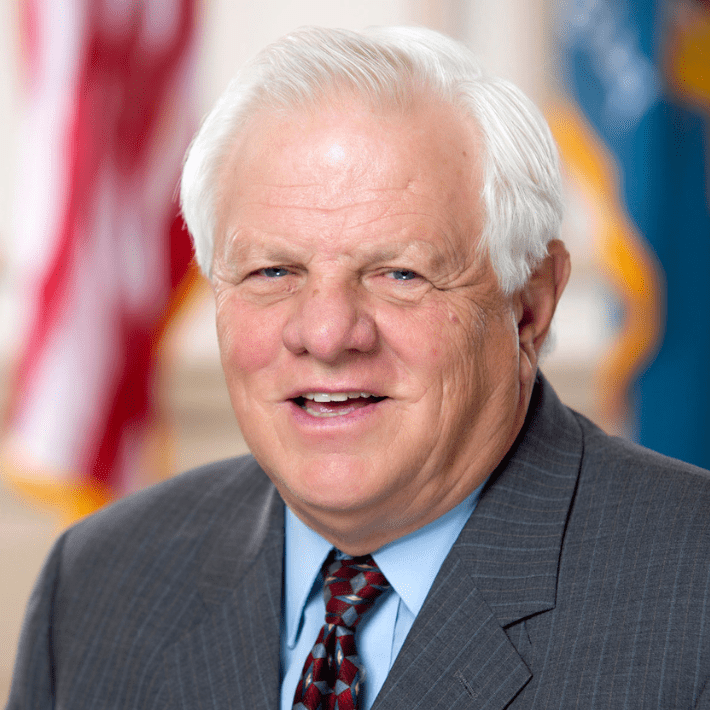
Sen. Gerald Hocker
Sponsored bills
The Town Council for the Town of Millsboro determined that the way they award contracts should be improved. The amount that initiates the process is increased from $20,000 to $50,000 to better reflect the current cost of ordinary purchases that the Town must make. This Act also allows the Town of Millsboro to have the ability to award a contract to a bidder other than the lowest bidder while also laying out the factors that the Town Council must use in determining who is a responsive and responsible bidder in accordance with their bid vetting process.
This Act amends the Charter of Millville to give the Town Council the authority to impose and collect a lodging tax.
This Act allows the Department of Safety and Homeland Security to share accident reports and the data in the reports with the Department of Transportation. This Act also allows the Department of Transportation to provide certain de-identified data from accident reports to limited requestors. This Act also makes technical corrections to conform existing law to the standards of the Delaware Legislative Drafting Manual.
Individuals who volunteer their services through stand-alone EMS companies have been a valuable part of public safety to the citizens of the State of Delaware. To try to bolster the ranks of these volunteers, this bill exempts anyone applying for membership of a volunteer EMS company from paying the cost of a background check done by the State of Delaware Bureau of Identification.
This Act enables the Department of Natural Resources and Environmental Control to employ Seasonal Patrol Officers without conferring on the seasonal patrol officers all the powers of investigation, detention, and arrest conferred by law on peace officers or constables under § 4701(a)(8) of Title 7. Seasonal patrol officers will assist the Department's park rangers and have limited powers to enforce the Division of Parks and Recreation's rules and regulations. This Act also makes technical corrections to conform existing law to the standards of the Delaware Legislative Drafting Manual.
This Act creates the crimes of unlawful possession of a drug masking product, punishable as a class A misdemeanor, and unlawful distribution, delivery, or sale of a drug masking product, punishable as a class E felony. Drug masking products are designed to be added to human urine or human hair to defraud alcohol or drug urine screening tests.
The opioid epidemic spreading through Delaware has reached critical levels, with 210 fentanyl-related deaths in 2017. This legislation will update the schedule for Fentanyl analogues, consistent with language used by the Drug Enforcement Administration (DEA). The Forensic Chemistry Unit at the Division of Forensic Science has confirmed the presence of these analogues in Delaware, but some of which are not currently scheduled under Title 16. This is directly related to continuous structural modifications of Fentanyl by illicit manufacturers. This legislation will close that gap and provide clarity to Title 16, consistent with federal law, by addressing ever-changing structural modifications being made in the illicit manufacture of Fentanyl. This legislative is aimed to curb the manufacture and distribution of illicit Fentanyl analogues and has no impact on the legal manufacture of Fentanyl for medical use.
This Bill establishes the pilotage rates for the Pilots’ Association for the Bay and River Delaware for 2020, 2021 and 2022.
This Act allows the Department of Agriculture to establish fees that may be charged for participation in the Delaware Hemp program.