

This Act authorizes the Division of Motor Vehicles (“Division”) to issue special registration plates to motorcycle clubs without having to enact a special law for each request. A motorcycle club must have 50 applications for its special registration plate before the Division is required to issue a special registration plate; however, the requirement is reduced to 25 for certain motorcycle clubs. This Act is limited to owners of a motorcycle who are members of a motorcycle club and have completed or are enrolled in, and complete, an experienced rider course. This Act assesses a 1-time, $20 fee, $10 of which must be deposited by the Division into a special account to be used by the Division only for the expenses incurred in the administration of the motorcycle rider education program.
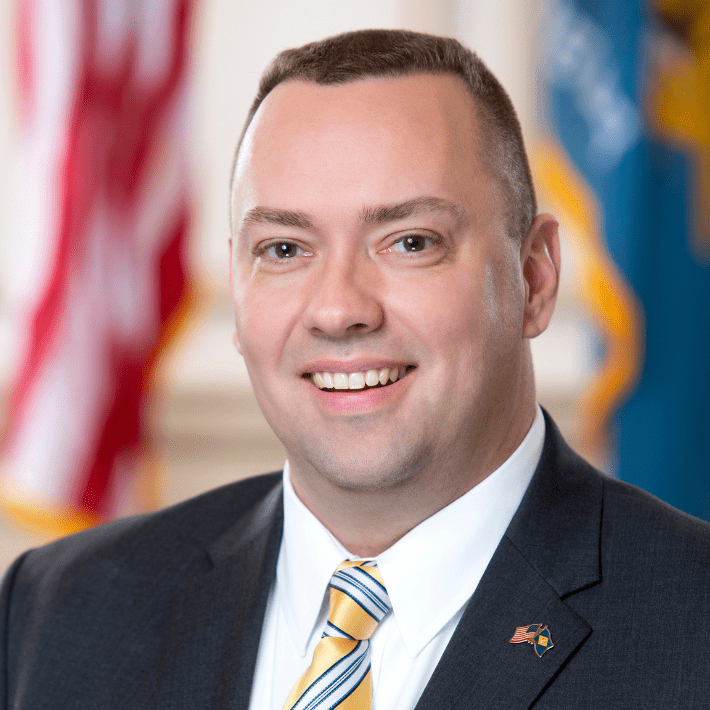
Sen. Brian Pettyjohn
Sponsored bills
This Act authorizes the Governor, Attorney General, Secretary of the Department, or General Assembly to request, and requires the Auditor of Accounts conduct or contract for, an audit of a charter school's business and financial transactions, records, and accounts in certain circumstances. Such a request must be based on evidence of misuse of State money or a violation of the following State law, or regulation promulgated under the State law: (1) Part I of Title 11 (relating to the Delaware Criminal Code). (2) Chapter 5 of Title 14 (relating to charter schools). (3) Subchapter I of Chapter 58 of Title 29 (relating to the State employees’, officers’, and officials’ code of conduct). (4) Chapter 69 of Title 29 (relating to State procurement). In addition, this Act makes clear that the Auditor of Accounts may not charge for an audit conducted or contracted for under this Act.
This bill will allow marinas in Sussex County to sell gasoline that does not contain ethanol. Sussex County comfortably meets the National Ambient Air Quality Standard for ground level ozone, and removing ethanol from marine fuel will have no significant impact on ambient ozone levels. The State of Maryland now allows the sale of non-ethanol gasoline in certain counties that are adjacent to Sussex County and Delaware businesses are losing sales to their Maryland counterparts.
The purpose of the Bill is to protect farmers and ranchers from nuisance lawsuits filed by individuals who inhabit areas where agricultural operations lawfully exist, and who exercise nuisance actions to attempt to stop operation and production. This Bill protects farms and agricultural operations that use commonly accepted agricultural practices from being considered a nuisance in areas zoned for agricultural uses and operations that have existed for a period of 1 year or longer. This will enable the State to protect the production of food, fuel and fiber within the state. AR Districts provide for a full range of agricultural activities and protect agricultural lands, as one of the State’s most valuable natural resources, from the depreciating effect of uses deemed objectionable, hazardous or unsightly (Kent County Zoning Code Chapter 205-60 Article VI and Sussex County Zoning Code Chapter 115-19 Article IV). Moreover, AR Districts serve as a transitional buffer zone between agricultural and residential uses and are also intended to protect watersheds, water resources, and forest areas. Kent and Sussex county ordinances permit specified land uses within AR Districts to provide for a wide range of agricultural uses and farm related services while also providing for low-density residential development in areas that are rural in character and where farming may not be the optimum land use activity. New Castle County Unified Development Code (UDC) permits agricultural uses in eight Urban and Suburban-Transition Districts and seven Suburban and Special Character Districts (UDC Chapter 40). Permitted uses within these districts include crop production and animal production, and any other agricultural uses as recognized by Delaware law. Additional uses, permitted for Limited Review, include Farm Market and Clearing activities (UDC Land Use tables 40.03.110 A and 40.03.110 B). It is the express intention of this act to establish as the policy of this State the protection of agricultural operations from nuisance actions, where recognized methods and techniques of agricultural production are applied, while, at the same time, acknowledging the need to provide a proper balance among the varied and sometimes conflicting interests of all lawful activities in Delaware.
This bill clarifies that in order to be found guilty of prostitution the person must be 18 years or older.
This Act amends the Charter of Georgetown to give the Town Council the authority to impose and collect a lodging tax, as permitted by § 908 of Title 22.
This Act narrows the meaning of “firearm” for purposes of the Delaware Criminal Code by aligning the definition of “firearm” with the definition in federal criminal background check law. “Firearm” was defined in the Criminal Code for the first time in 1983 by Senate Bill No. 13, as amended, 132nd General Assembly, 64 Del. Laws, c. 17 (“Senate Bill No. 13”). Senate Bill No. 13 defined “firearm” to include “any weapon from which a shot, projectile or other object may be discharged by force of combustion, explosive, gas and/or mechanical means, whether operable or inoperable. It does not include a BB gun.” This definition is substantially the same as the definition for “firearm” in the Delaware Criminal Code today. During the Senate floor debate on Senate Bill No. 13, Senator Berndt noted the expansive nature of the definition due to the inclusion of “by . . . mechanical means,” which he noted meant that the definition would include cross bows and slingshots. Because of Senate Bill No. 13’s placement of “firearm” in the general definition section for the Delaware Criminal Code, the definition applied throughout the Delaware Code. When the Delaware Criminal Code was adopted in 1972 there were 9 mentions of “firearm” in the Delaware Criminal Code. Today, there are 194 mentions of “firearm” in the Delaware Criminal Code (Part I of Title 11). As the number of mentions of “firearm” has increased, it has done so with the definition of “firearm” as a backdrop, meaning that these new mentions have intentionally or unintentionally adopted the definition of “firearm.” Research reveals no other state with a similar definition of “firearm” in its laws. While at least 2 states had previously had a similar definition, those definitions were removed by their legislatures in 2015. In 1 of those states, Michigan, legislative history indicates the definition was changed as part of the state’s efforts to align its definitions of firearms with the definition found in federal law governing the National Instant Criminal Background Check System (NICS), the system through which criminal history checks are performed. For purposes of NICS, firearm is defined to mean as follows: “(A) any weapon (including a starter gun) which will or is designed to or may readily be converted to expel a projectile by the action of an explosive; (B) the frame or receiver of any such weapon; (C) any firearm muffler or firearm silencer; or (D) any destructive device. Such term does not include an antique firearm.” See 18 U.S.C. 921(a)(3).
Benzodiazepine drugs that are approved for medical use in the United States are classified by the federal Drug Enforcement Agency as Schedule IV. Fourteen benzodiazepine drugs are currently listed on Schedule IV of the Uniform Controlled Substances Act, § 4720 of Title 16. Benzodiazepine drugs have a serious potential for abuse. This Act adds both additional benzodiazepine drugs by name and the category of benzodiazepine drugs to Schedule IV of the Uniform Controlled Substances Act so that all current and future benzodiazepine drugs are included on Schedule IV in Delaware, whether or not the specific drug is approved for medical use in the United States.
This bill creates the Grants-In-Aid Committee. The Committee is a joint committee of the Senate and House of Representatives. The purpose of the Committee is to view requests for grants-in-aid and to develop the grants-in-aid appropriations bill.
This Act requires captive insurance companies to pay premium taxes on or before April 15 of each year. This Act complements House Bill No. 289 of the 149th General Assembly (Chapter 251, Volume 81 of the Laws of Delaware) by ensuring that captive insurers’ annual statements and payment of premium taxes are both due by the same date.