

In 2018, the General Assembly enacted House Bill No. 204 of the 149th General Assembly, Chapter 200, Volume 81 of the Laws of Delaware, ("HB 204"), with "the goal of modernizing the pretrial process, reducing reliance on monetary conditions, improving the efficiency and outcomes for the criminal justice system, and ensuring the safety of the community." HB 204 has resulted in the release of violent offenders into our communities, leading to more Delawareans being victimized. Therefore, this Act repeals HB 204, replacing HB 204's provisions with the law in effect before the enactment of HB 204 and bringing back greater safety for law abiding Delawareans and accountability for defendants. This Act also makes technical corrections to conform existing law, and previous law being returned to the Delaware Code, to the standards of the Delaware Legislative Drafting Manual.
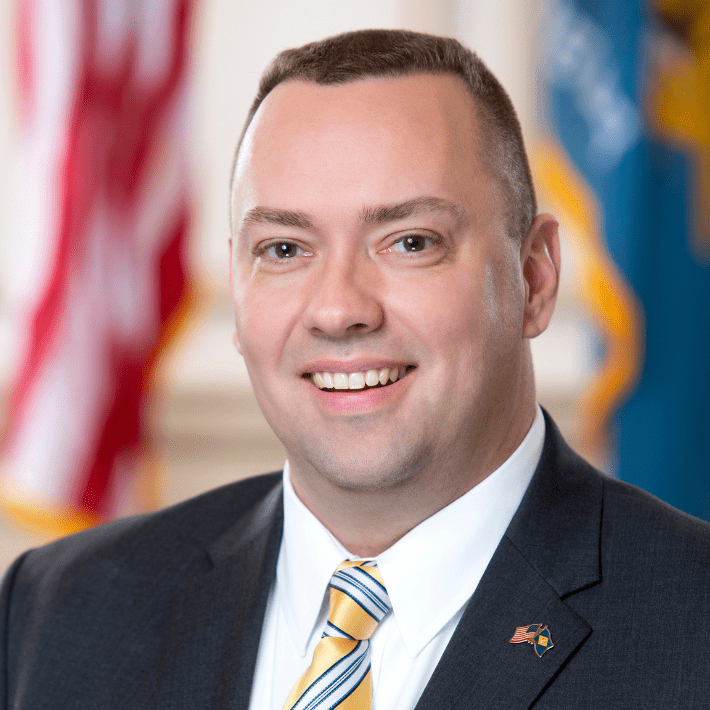
Sen. Brian Pettyjohn
Sponsored bills
This Act limits the use of certain Class B firefighting foams (“Class B foams”) in Delaware. Class B foams are used to put out fires caused by flammable liquids like gasoline, oil, and jet fuel, and can be divided into 2 categories: those with PFAS chemicals and those without. PFAS chemicals include a range of chemistries with differing properties, which have been widely-used for decades in products other than Class B foams, like food packaging, carpets, and other household items, and in firefighting foam. The use of firefighting foams containing PFAS chemicals, however, is an emerging public health challenge to avoid future contamination and reduce exposure to firefighters and Delawareans. Firefighting foam containing PFAS chemicals can get into water wells and drinking water supplies, and expose firefighters and others to the chemicals. More studies into the effects of PFAS chemicals are emerging; some of the health effects of exposure to certain PFAS chemicals include pregnancy complications, liver damage, and high cholesterol. The PFAS chemicals in firefighting foams must be weighed against their particularly-effective nature in fighting liquid fires when mixed with water. To that end, this Act prohibits the use of Class B foams containing intentionally-added PFAS chemicals unless the use is for fire prevention or emergency firefighting. Further, this Act permits the use of such foam for training and testing only if the facility in which the training or testing occurs has implemented containment, treatment, and disposal measures to prevent releases of Class B foams containing PFAS chemicals. This Act also makes technical changes to Part IV of Title 16, to more accurately reflect its current structure.
Delaware’s Constitution does not currently require the Governor to inform the General Assembly in advance of issuing extensions to State of Emergency Orders or any executive order extending, amending, guiding or modifying a State of Emergency Order. In that the General Assembly is a separate branch of government, serving as a necessary check on executive power, these constitutional amendments require the Governor to inform the General Assembly no later than 24 hours prior to the issuance of a State of Emergency Order Beyond 14 days, including any executive order extending, amending, guiding or otherwise modifying a State of Emergency Order. In such circumstances the Senator Pro Tempore and the Speaker of the House shall convene four members of the General Assembly, one from each caucus of the House and Senate sitting on an appropriate House or Senate Committee, to review and consider the extension, amendment, guidance or modification to any State of Emergency Order.
This Resolution proclaims June 25th, 2020 as “Korean War Remembrance Day”.
This Concurrent Resolution recognizes the class of 2020’s challenge faced due to the COVID-19 pandemic in Delaware
This bill creates a pilot program for the Red Clay School District to utilize external camera systems on their school buses to catch motorists that illegally pass school buses and to punish these motorists by issuing them a civil penalty. The purpose of this bill is to protect children as they are in the process of boarding and exiting the school bus and to spread awareness of school bus traffic safety. At least 16 states have implemented similar legislation, including Pennsylvania in 2018. As Red Clay School District already has these cameras in operation, this program grants the authority to begin issuing violations to motorist that illegally pass school buses in their district.
In January of 2015, the Office of Civil Rights & Public Trust was created by the Attorney General to establish a centralized office within the Department of Justice for the investigation of matters concerning civil rights enforcement and the prosecution of matters concerning violations of the public trust. This office must remain an independent entity within the Department of Justice to avoid conflicts with other Department of Justice duties and thus effectively enforce laws protecting the public trust and civil rights. Thus, this Act creates the Division of Civil Rights and Public Trust within the Department of Justice which will be separate from the other Divisions within the Department of Justice and have a Director who reports directly to the Chief Deputy Attorney General, to avoid conflicts of interest with the work of the other Divisions. This Act also clarifies the current scope of the Department of Justice’s ability to investigate and bring civil rights actions to protect the civil rights of all Delawareans.
This Act allows the owner of a vehicle which has a “check engine” light illuminated to be able to pass the Division of Motor Vehicles’ (DMV) On-board Diagnostic (OBD) test emission inspection if a Department of Natural Resources and Environmental Control (DNREC) certified emissions repair technician determines that the vehicle is operating within the manufacturer’s designed emission thresholds. If the DNREC technician cannot determine whether the vehicle will operate within the required thresholds, the technician may issue documentation to the vehicle owner which will require the DMV to disregard the OBD test and use an alternative test to determine if the vehicle will pass the emissions portion of the inspection. Because not all “check engine” lights relate to an emission problem, this bill will prevent unnecessary costly repairs while still maintaining the integrity of the emissions inspection process by using alternative tests when prudent.
Transporters of mobile homes must have a hauling permit under Title 21, Chapter 45 to transport mobile homes on public roadways. This bill eliminates the need to also obtain a temporary registration to transport the mobile home.
This Act implements recommendations of the Interagency Pharmaceuticals Purchasing Study Group created by House Concurrent Resolution No. 35. First, this Act creates the Interagency Pharmaceutical Purchasing Collaborative (“Collaborative”) to leverage the total volume of State pharmaceutical purchases to negotiate lower prices. The Collaborative must conduct a data analysis of current pharmaceutical purchasing prices paid by State agencies to create a data analytic profile. After building the data analytic profile, the Collaborative must build a market database by assessing the value, as determined by cost and patient outcome, of individual drugs and calculating the volume of individual drug purchases by all State agencies. The Collaborative must use the market database to identify opportunities to leverage the total volume of State pharmaceutical purchases to negotiate lower prices which may include a group purchasing agreement or a consortium with other states. Second, this Act requires that State agency contracts to purchase pharmaceuticals must contain specific transparency provisions. These transparency provisions will allow the State to monitor and control the cost of pharmaceutical purchases. Finally, this Act clearly provides that information received or generated by the Collaborative or under contract transparency provisions is not public information under the Freedom of Information Act. However, the Collaborative must provide an annual report that summarizes the Collaborative's work. House Substitute No. 1 for House Bill No. 287 differs from House Bill No. 287 as follows: 1. In § 6317A(e)(2)a. of Title 29, requires the Interagency Pharmaceutical Purchasing Collaborative to assess the value of individual drugs using evidence-based cost and patient outcomes instead of by the simple cost and patient outcomes. 2. Changes “pharmacy benefit manager” to “wholesaler” in § 6937(a)(1) of Title 29, because the acquisition cost is negotiated between a wholesaler and manufacturer not between a pharmacy benefit manager and manufacturer. 3. Requires the Secretary of the Department of Health and Social Services to provide and purchase the data analytics required under § 6317A(e)(1) of Title 29 by March 31, 2021.