This Resolution directs the Secretary of the Senate to notify the House of Representatives and the Governor that the Senate of the 151st General Assembly is organized.
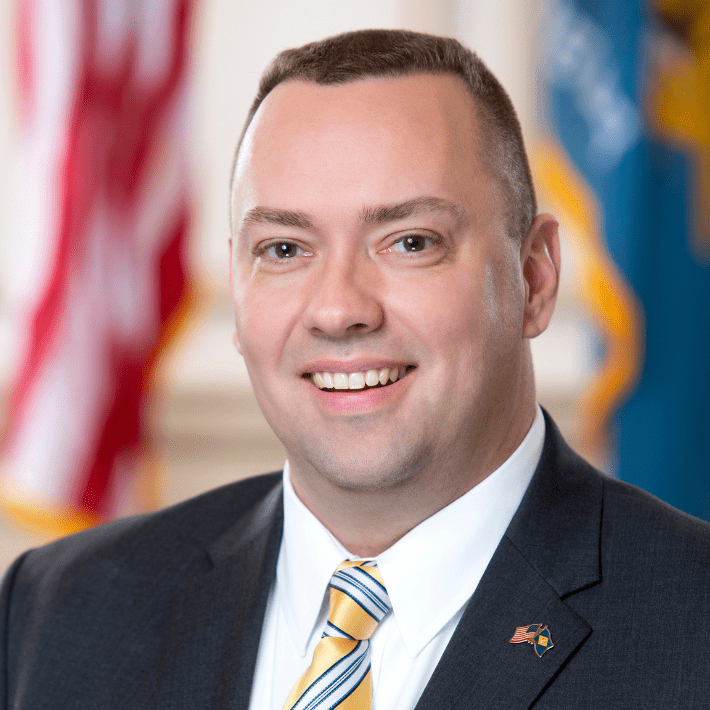
Sen. Brian Pettyjohn
Sponsored bills
This Resolution elects David P. Sokola to be the President Pro Tempore of the Senate of the 151st General Assembly.
This Resolution establishes the roll of members of the Senate of the 151st General Assembly.
This Act is the first leg of a constitutional amendment to establish the right to hunt and fish in Delaware. Twenty-one other states have preserved the rights of their citizens to hunt, fish, or trap wildlife. This Act is modeled after the constitutional provisions of Idaho, Indiana, Kentucky, Louisiana, and Tennessee. This Act specifically acknowledges Delaware’s valued, natural heritage of hunting, fishing, and trapping, and declares hunting, fishing, and trapping as the preferred methods of managing and controlling wildlife in this State. This Act may not be applied to do any of the following: 1. Affect rights to divert, appropriate, or use water, or to establish a minimum amount of water in any water body. 2. Lead to a diminution or abrogation of a public or private right or of the State’s power to regulate commercial activities. 3. Prevent the suspension or revocation, under a law enacted by the General Assembly, of an individual’s hunting, fishing, or trapping license. 4. Alter a burden of proof requirement otherwise established by law for a challenge to a law or regulation pertaining to hunting, fishing, or trapping the wildlife of this State.

This Resolution elects Ryan C. Dunphy to be the Secretary of the Senate of the 151st General Assembly and appoints Raymond Lewis to be the Assistant Secretary of the Senate of the 151st General Assembly.
Subchapter III, Chapter 68, Title 16 of the Delaware Code (“Subchapter III”) was originally enacted in 1982. In 1996, President Clinton signed the Bill Emerson Good Samaritan Food Donation Act, 42 U.S.C. § 1791 (“Bill Emerson Act”). The Bill Emerson Act preempts Subchapter III to the extent of any conflict, known as “partial preemption”. This Act makes Subchapter III consistent with the Bill Emerson Act by protecting a “gleaner” from civil or criminal liability as it relates to their donation of the gleaned food. Since the Bill Emerson Act only partially preempts state law on this subject, the State is free to provide greater protection than the Bill Emerson Act. Therefore, this Act does all of the following: 1. Extends to those who, in good faith, donate food to state agencies the same immunity from civil or criminal liability that is granted to those who, in good faith, donate food to nonprofit organizations. 2. Specifically includes within the definition of “food” both perishable food and wild game to makes it clear that food, in all of its forms, is covered by this Act. Thus, under this Act, those donating deer to the Division of Fish and Wildlife’s Sportsmen Against Hunger program would be immune from civil or criminal liability as it relates to the donation. 3. Protects a person who, in good faith, provides services to a nonprofit organization or state agency related to the processing of wild game that is donated to a nonprofit organization or a state agency. The bill also clarifies the authority of Division of Public Health and Department of Agriculture relating to donated food.
This bill requires that inadvertent out-of-network services be included in individual and group health insurance policies as well as group and blank health insurance policies. This bill defines inadvertent out-of-network services are those services that are covered under a policy or contract of health insurances, but are provided by an out-of-network provider in an in-network facility, or when in-network health care services are unavailable or not made available to the insured in the facility. Inadvertent out-of-network services also includes laboratory testing ordered by an in-network provider but performed by an out-of-network laboratory.
This bill clarifies the requirements for Lot Rental Assistance as intended by the original language in the statute. Also, the bill changes the date from July 1, 2006 to July 1, 2009 the homeowner or tenant must have owned the manufactured home or resided in the home in the manufactured home community in order to be eligible for lot rental assistance.
The bill makes any "police officer" employed by the State and its political subdivisions not currently under the jurisdiction of the Police Officers' and Firefighters' Employment Relations Act subject to it. The purpose of this bill is to render all police and firefighters employed by the State not currently subject to the Police Officers' and Firefighters' Employment Relations Act subject to it. Nothing set forth in this bill is intended nor shall be construed to effect the rights of police officers and firefighters currently subject to the Police Officers' and Firefighters Employment Relations Act. In addition, employees classified in bargaining units pursuant to §1311A(b)(10) and (11) are not covered by this Act.
This Act removes the requirement that applicants for a marriage license state their race as part of the application process. Delaware is one of a small number of states that currently requires this information. In October 2019, the United States District Court for the Eastern District of Virginia ruled that requiring marriage license applicants to provide their race violates the United States Constitution. In Delaware, the Clerks of the Peace, who are the points of data collection, have expressed support for this Act, as has the Office of Vital Statistics in the Department of Health and Social Services. The National Center for Health Statistics ("NCHS") has not requested detailed information from states regarding marriage and divorce since 1996. NCHS only requires states to provide the total number of marriages that occur each month.