

This Act makes changes to the operating requirements for the Delaware Anti-Trafficking Action Council. It reduces the members required for quorum from 13 to 10. Since the quorum requirement has been reduced to less than a majority of the Council, the bill also specifies that the Council may generally take action upon the vote of a majority of members present at a meeting, but that a majority vote of the Council members is required to approve the appointment of an Executive Director. Consistent with current practice, the Executive Director has the authority to hire staff and contract for services within the limits of available funds. The Act also revises the reporting on funds spent to be part of the annual report and include state, federal, or other funding received by the Council other than State-funded positions. At the present time, the Council does not receive state funding other than allocated personnel positions. Finally, the Act allows the Council to have a virtual meeting with a physical location open to the public (anchor location) so long as a staff member of the Council is present at the anchor location. Without this authorization, a member of the Council would be required to attend at the anchor location in order to comply with the State’s open meeting rules.
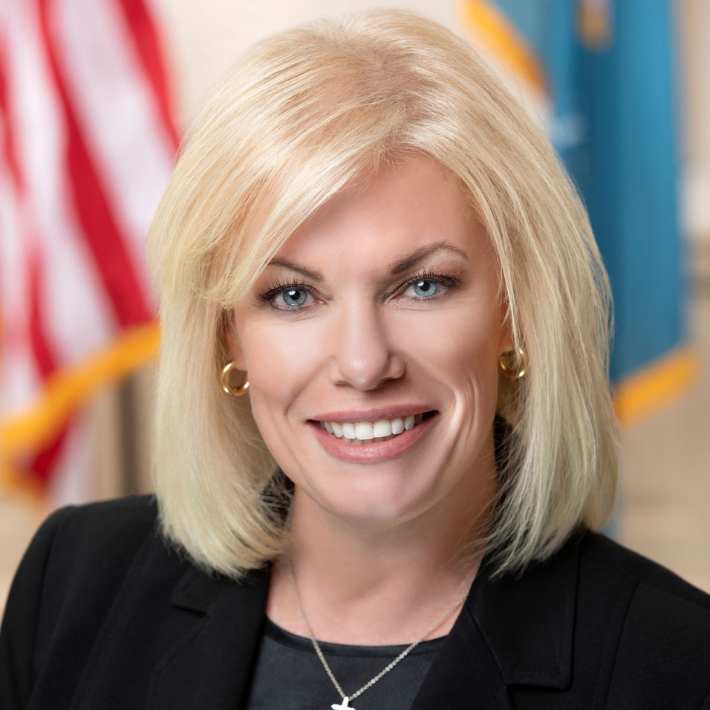
Sen. Nicole Poore
Sponsored bills
Maddy summaryThis resolution commemorates the 75th anniversary of the Sportfish Restoration Program. It acknowledges the program's role within the American System of Conservation Funding.
Maddy summarySCR 57 is a concurrent resolution that officially recognizes April 29, 2025, as "World Wish Day" within the state of Delaware.
Maddy summaryHCR 31 designates April 10th, 2025, as “Youth Author Day” in the State of Delaware. This resolution aims to recognize and celebrate young authors within the state.
Maddy summaryHouse Concurrent Resolution 35 recognizes April 2025 as "National Fair Housing Month" in the State of Delaware. This resolution aims to acknowledge the importance of fair housing principles for all residents during that month.
This Concurrent Resolution reestablishes the Port of Wilmington Expansion Task Force ("Task Force"). The Task Force was previously created by House Concurrent Resolution No. 38 in the 148th General Assembly and concluded that port expansion should be pursued by the State and the Diamond State Port Corporation. The General Assembly is reestablishing the Task Force to monitor the port expansion project, to report monthly to the President Pro Tempore of the Senate and Speaker of the House of Representatives on the progress of the port expansion project, and to provide recommendations to the General Assembly that ensure the success of the planned port expansion and foster continued growth in Delaware's maritime economy.
This bill resolves an internal inconsistency in the Insurance Code regarding the timing of payment of taxes for captive insurance companies and surplus lines brokers. Sections 1917 and 6914 of the Insurance Code specifically address the amount and timing of taxes due for surplus lines brokers and captive insurance companies, respectively. Surplus lines brokers and captive insurance companies will continue to pay premium taxes in accordance with Sections 1917 and 6914, respectively, as they have historically.
This Concurrent Resolution recognizes the month of March 2025 as “Developmental Disabilities Awareness Month” in Delaware and aims to highlight the prevalence of developmental disabilities both nationally and within Delaware, emphasizing the importance of awareness, inclusion, and advocacy to support and empower individuals with developmental disabilities.
This Concurrent Resolution designates March 26, 2025, as "Epilepsy Awareness Day" in Delaware and calls upon State agencies and the people of Delaware to undertake suitable efforts to increase epilepsy awareness.
Maddy summaryThis resolution designates the week of April 6-12, 2025, as "Delaware Saves Week 2025." It is a symbolic gesture by the Delaware legislature to acknowledge and promote financial literacy or savings initiatives during that period. The bill does not create new laws, alter regulations, or directly affect individuals or organizations. It serves solely as a formal recognition by the state government.