This Concurrent Resolution recognizes September 24, 2026 as Firefighter Suicide Awareness Day, September 25, 2026 as Emergency Medical Services Suicide Awareness Day, September 26, 2026 as Law Enforcement Officer Suicide Awareness Day, and September 27, 2026 as Telecommunications Suicide Awareness Day in Delaware.
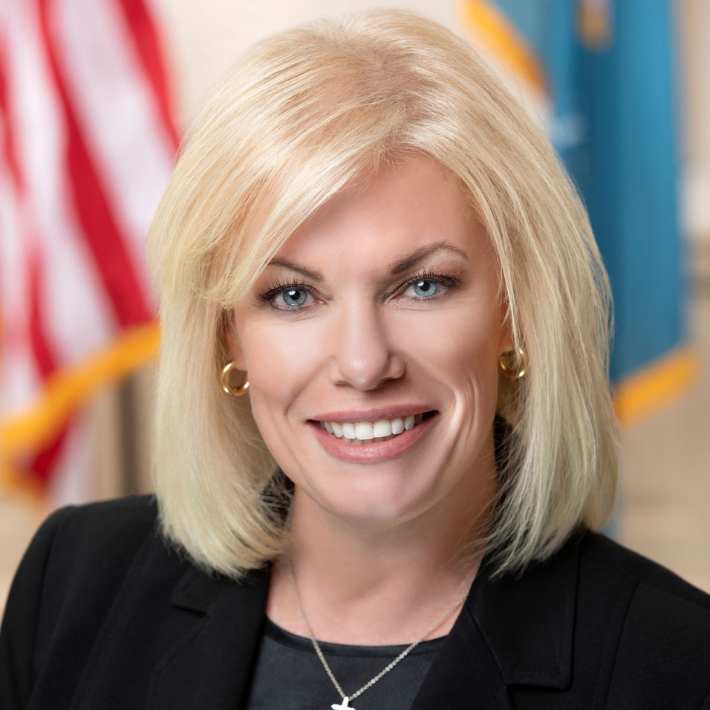
Sen. Nicole Poore
Sponsored bills
Maddy summaryThis Senate Concurrent Resolution, titled "Celebrating the Spirit of America 250," is a ceremonial measure designed to honor a specific anniversary or theme. It does not create new laws, change existing policies, or allocate any funding. The bill's primary effect is to formally recognize the "Spirit of America 250" within the legislative body.
This Concurrent Resolution encourages the Department of Veterans Affairs (Department) to explore and make recommendations on the feasibility of establishing a veteran’s cemetery in Kent County, Delaware, and to submit a report containing those recommendations no later than January 1, 2027.
This Act provides the following support for federal workers during a government shutdown: (1) In Section 1 of this Act, interest free loans to provide financial assistance. (2) In Section 2 of this Act, free transportation on public transit. (3) In Sections 3 through 6 of this Act, deferral of certain State, county, and school tax filings, payments, and collections.
Like House Bill No. 272, this Substitute creates the new crime of "interference with reproductive health services or exercise of religion”, which is based on a substantially similar federal law (18 U.S.C. § 248). The Superior Court is vested with jurisdiction over criminal prosecutions of this offense. This Substitute for House Bill No. 272 adds clarification by defining “place of worship”. This Substitute also replaces the phrase “discourage any person from obtaining or providing reproductive health services” with “seek to persuade any person with respect to a reproductive health choice or the provision of reproductive health services.” Finally, this Substitute adds language modeled on the similar federal law to clarify that nothing in this law (1) prohibits expressive conduct, including peaceful picketing or demonstration, that is protected under either the U.S. or Delaware Constitution, (2) creates new remedies for interference with activities protected by the free speech or exercise clauses or limit any existing legal remedies for such interference, nor (3) provides exclusive criminal penalties or civil remedies with respect to conduct prohibited under this law.
This bill creates a special license plate for Delaware State University to support student access, academic excellence, and university programs that advance the institution’s mission.
This Act requires that effective amounts of folic acid be added to corn masa flour and corn masa which are staples in many minority diets. Under this Act, corn masa flour sold or used in the State must contain folic acid at a level of .7 mg of folic acid per pound of corn masa flour. Wet corn masa product must contain .4 mg of folic acid per pound of end product. These products must include a declaration of folic acid on the nutrition label in accordance with applicable federal law. Minority communities in the United States face a greater risk of neural tube defects (NTDs), which are serious birth defects that occur during early pregnancy. NTDs include spina bifida, characterized by an opening along the spine that can cause mild to severe nerve damage and disability, and anencephaly, a fatal condition where parts of the brain or skull are missing in newborns. Research has shown that daily intake of folic acid can reduce the risk of NTDs by over half. In response, the U.S. Food and Drug Administration mandated folic acid fortification in enriched cereal grain products in 1998, resulting in a 35% reduction in NTD cases. However, this policy did not include corn masa flour, a staple in many minority diets.
This Act amends the Delaware Personal Data Privacy Act (DPDPA), Chapter 12D of Title 6, originally enacted in 2023, to more closely align the DPDPA with similar consumer data protection laws enacted in other states. This Act amends the applicability threshold of the DPDPA to entities who process the personal data of not less than 15,000 consumers, which on a population percentage basis closely aligns to thresholds in Connecticut and New Jersey. This Act amends Gramm-Leach-Bliley Act (GLBA) applicability exemptions, adopting approaches to financial data in similar laws in Connecticut, Montana, and Oregon, by exempting all data regulated by GLBA while limiting entity-level exemptions specifically to banks and insurers and their respective affiliates. This Act introduces contracting and due diligence requirements where businesses sell or disclose personal data to third parties and also harmonizes several DPDPA business requirements and consumer rights with personal data privacy laws in other states. This Act also makes technical changes to existing law to conform to the standards of the Delaware Legislative Drafting Manual.

This Act amends Title 16 to establish statewide standards for levels of neonatal care for facilities that operate neonatal nurseries or neonatal intensive care units. The Act requires facilities to comply with nationally recognized standards for levels of neonatal care established by the American Academy of Pediatrics (AAP), ensuring that newborns receive care in facilities equipped to meet the complexity of their medical needs. Under the Act, the Secretary of the Department of Health and Social Services (DHSS) will designate each facility's level of neonatal care based on compliance with the AAP standards, including staffing, equipment, facility capabilities, and patient protocols. The Act further establishes additional requirements for facilities providing Level IV NICU services which care for the most critically ill and medically complex newborns. DHSS must adopt implementing rules by January 30, 2027, and will seek input from the Delaware Perinatal Quality Collaborative and existing NICU providers in developing these rules.
This Act requires that meetings of the Public Service Commission be livestreamed virtually and requires that members of the public have the opportunity to comment virtually.