This Concurrent Resolution reaffirms Delaware's commitment to strengthening the longstanding partnership with Taiwan, supports Taiwan’s efforts to secure the signing of an Avoidance of Double Taxation Agreement with the United States, commends Taiwan’s vibrant full-fledged democracy, and continues to support Taiwan’s meaningful participation and contributions in international organizations.
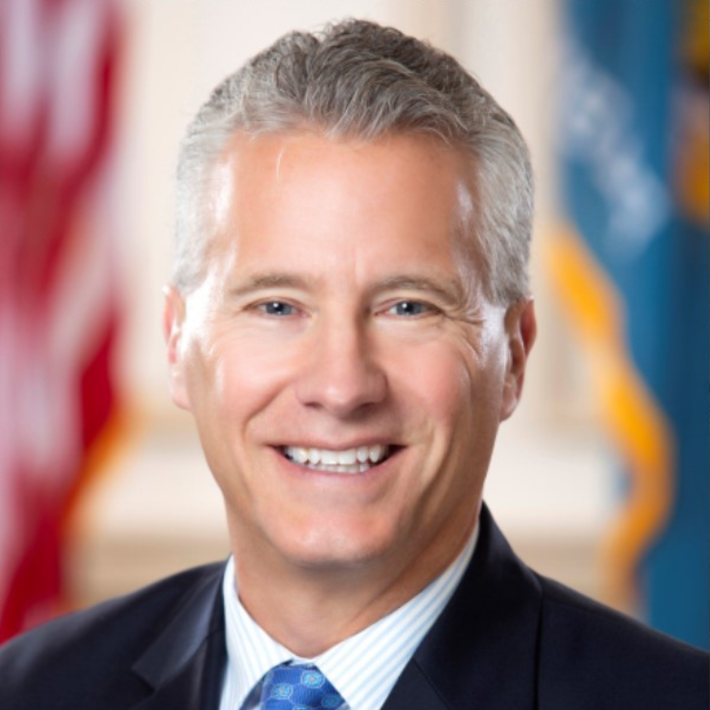
Rep. Lyndon Yearick
Sponsored bills
This Bill requires the Division of Motor Vehicles, which is the only state agency that administers automatic voter registration, to conduct an audit of certain voter registrations that: (1) have a non-federally compliant driver's license or identification, (2) their documents predate the implementation of REAL ID, and (3) obtained a driver's license or identification card after Automatic Voter Registration took effect June 21, 2023. The Department of Elections, in coordination with the Division of Motor Vehicles, is to report the audit's findings within 1 year of completing the audit.
Maddy summaryThis bill designates the week of September 13-19, 2026, as "Adult Education and Family Literacy Week" throughout the State of Delaware. It serves as a commemorative resolution to recognize the importance of adult learning and literacy programs without changing any laws or budgets. The measure was passed by both the Senate and the House to formally acknowledge this specific timeframe for educational awareness.
Maddy summaryHB 290 designates June 11 as "Puerto Rico Day" in Delaware for annual commemoration. This ceremonial bill, introduced in January 2026, formally recognizes Puerto Rico's cultural significance through a designated observance. It does not create new laws or regulations but establishes an annual state-level recognition event. The bill directly affects Delaware's state calendar and commemorative practices, with no direct impact on individuals or policies.
For conveyances having a property value of less than $350,000, the state will not assess a realty transfer tax. This Act also reduces the State's rate of realty transfer tax by 1/4% per year for 4 years, for residential property conveyances having a property value of $350,000 to $500,000.
Maddy summaryThis bill designates June 2026 as "Sacred Heart of Jesus Month" within the State of Delaware. It directly affects state officials and the public by formally recognizing this specific month for religious observance. The key mechanism is a legislative resolution that names the month, without altering laws or government operations. This action serves as a commemorative gesture rather than implementing new policy requirements.
Maddy summaryThis Senate Concurrent Resolution designates the week of June 14 through June 21, 2026, as "Men's Health Week" throughout the State of Delaware. The measure serves as a commemorative gesture to raise awareness about men's health issues during that specific time period. It does not create new laws, allocate funding, or change existing policies, but rather establishes an official state recognition for the event.
This House Concurrent Resolution recognizes June 2026 as National Homeownership Month in Delaware and highlights updated housing data and program impact.
This Act adopts the Respiratory Care Interstate Compact (“Compact”). This Compact takes effect on the date on which this Compact is enacted into law in 7 states. As of January 2026, this Compact has been enacted in 5 states and has been filed in 6 other states. This Compact is an interstate occupational licensure compact for respiratory therapists. There are approximately 130,000 licensed respiratory therapists in the United States. Licensees currently face significant barriers providing services across state borders, even when they meet the qualifications to practice in another state. This Compact will facilitate multistate practice by reducing unnecessary licensure burdens and improve public safety by enhancing state information sharing.
This Act adopts the Cosmetology Licensure Compact (“Compact”). The Compact is active because enough states have enacted legislation to adopt the Compact. The purpose of the Compact is to reduce the burdens on state governments and to facilitate and regulate the interstate practice of cosmetology by creating a framework for a multistate licensing program. The multistate licensing program provides increased value and mobility to licensed cosmetologists, including military members and their spouses, and ensures safe, competent, and reliable cosmetology services are provided to the public. The Compact allows individuals residing in a state that joins the Compact (a “member state”) to apply, through the state, for a multistate license. A multistate license allows a qualifying licensee to practice cosmetology in all member states. Applicants for a multistate license must hold an unrestricted license to practice cosmetology in the applicant’s home state and must meet educational, national licensing examination, and background check requirements to qualify for a multistate license. Licensees must meet continuing competency requirements to qualify for renewal of a multistate license. Member states share information related to disciplinary actions against licensees, investigations of licensees, and anything that would disqualify a licensee from holding a multistate license so that each member state is aware if a licensee’s authority to practice is restricted or if the licensee is disqualified from practicing cosmetology.