

This Concurrent Resolution recognizes sundown on April 13, 2026, through nightfall on April 14, 2026, as Yom HaShoah, Holocaust Remembrance Day. It honors the memory of the six million Jewish men, women, and children murdered by the Nazi regime and its collaborators during the Holocaust, recognizes the courage and resilience of Jewish survivors and those who resisted oppression, and urges all residents of Delaware to reflect on the lessons of the Holocaust and stand against Antisemitism, hatred, and intolerance in all forms.
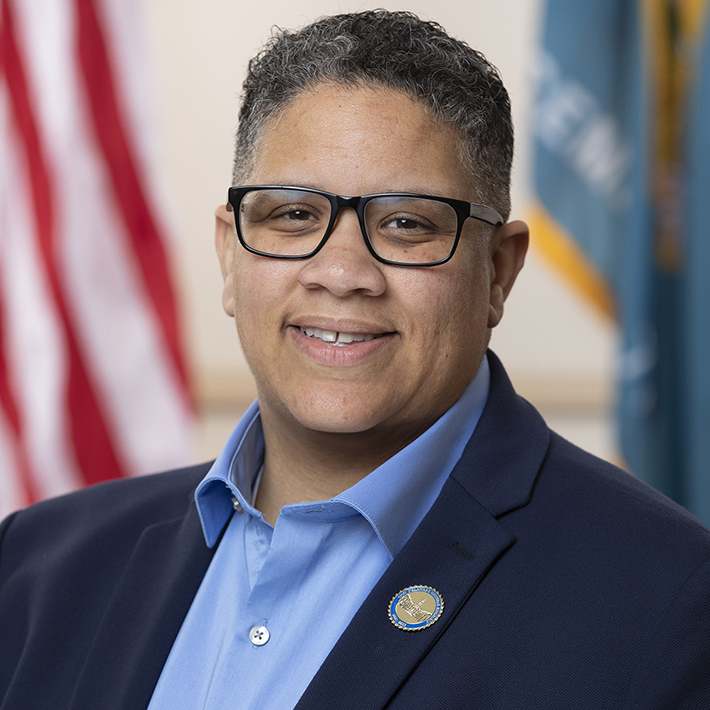
Rep. Kerri Harris
Sponsored bills
Maddy summaryHCR 109 designates the week of April 11 through April 17, 2026, as Black Maternal Health Awareness Week throughout the state of Delaware. This legislative measure is a formal recognition intended to highlight the importance of maternal health outcomes for Black women during that specific period. The bill does not create new laws, allocate funding, or change government operations; it serves solely as a symbolic declaration passed by both the House and Senate.
This Act is a substitute for Senate Bill No. 3. This Act differs from Senate Bill No. 3. in that it incorporates technical corrections made to the Delaware Constitution by House Bill No. 10 (153rd General Assembly). Like Senate Bill No. 3, this Act is the first leg of a constitutional amendment to eliminate the limitations on when an individual may vote absentee and provide an absolute right to vote by absentee ballot without an excuse. This Act is in response to the Supreme Court’s decision in Albence v. Higgins, 2022 Del. LEXIS 377 (Del. 2022). Although Section 1 of this Act creates an absolute right to vote by absentee ballot without an excuse, a qualified voter who desires to cast an absentee ballot must request an absentee ballot from the Department of Elections for each election cycle, unless the qualified voter is granted permanent absentee status. This State’s current absentee voting law authorizes permanent absentee status for various reasons (see § 5503(k) of Title 15 of the Delaware Code) and this Act adopts those reasons. For each election in which a qualified voter votes by absentee ballot under a permanent absentee status, the qualified voter must take an oath or affirmation that the qualified voter remains eligible for permanent absentee status. Section 2 of this Act requires all absentee ballots to include an oath or affirmation that the qualified voter’s vote is free from improper influence. This oath or affirmation is in lieu of the oath or affirmation otherwise required under Section 3 of Article V of the Delaware Constitution. Amending the Delaware Constitution requires not only the passing of the changes in this Act, but also passage of the same changes after the next general election by the next General Assembly. This Act requires a greater than majority vote for passage because § 1 of Article XVI of the Delaware Constitution requires the affirmative vote of two-thirds of the members elected to each house of the General Assembly to amend the Delaware Constitution.
Maddy summaryHB 266 (Delaware Code Title 21 amendment) allows large Delaware municipalities to permit the rental of low-speed motorized scooters through local ordinances or regulations. This directly affects cities (like Wilmington or Newark) and scooter rental companies by giving local governments authority to establish rules for scooter operations. The key provision removes a barrier by enabling municipalities to create their own permitting systems for scooter rentals, rather than requiring state-level approval. The bill passed the House unanimously and is now before the Senate Environment Committee.
Maddy summaryThis bill designates April 2026 as Parkinson's Disease Awareness Month in Delaware. The resolution formally recognizes this month to highlight awareness of Parkinson's disease, a progressive neurological condition. It does not create new laws or funding but serves as a symbolic acknowledgment to encourage public education and support for those affected by the disease. The measure was passed by both the Senate and House without additional legislative requirements.
Maddy summaryThis House Concurrent Resolution extends the deadline for the Housing Department Task Force to submit its final report to October 1, 2026. The measure directly affects the Housing Department Task Force by granting it additional time to complete its work and deliver findings. By adjusting the reporting schedule, the resolution allows the task force more time to conduct its analysis without changing its original purpose or scope. This procedural change does not alter the task force's mandate or the housing policies it examines, only the timeline for its final submission.
This Concurrent Resolution designates March 26, 2026, as "Epilepsy Awareness Day" in the State of Delaware and calls upon State agencies and the people of Delaware to undertake suitable efforts to increase epilepsy awareness.
Maddy summaryThis bill is a concurrent resolution that formally recognizes Christian Holy Week and Passover within the State of Delaware. It does not create new laws, allocate funding, or change government operations, but rather serves as a symbolic acknowledgment of these religious observances. The resolution was passed by both the Senate and the House without requiring a formal vote in the House, indicating broad support for the recognition. As a procedural measure, it does not impose any obligations or restrictions on individuals or state agencies.
Maddy summaryThis House Concurrent Resolution designates March 26, 2026, as "Equal Pay Day" in the State of Delaware. The bill does not change any laws or policies but serves as a symbolic recognition of the date when women must work into the year to earn what men earned in the previous year. It affects the state by establishing an official commemorative date for awareness of wage gap issues. The resolution was passed by both the House and Senate without requiring a formal vote count.
Maddy summaryThis bill designates March 30, 2026, as National Doctors' Day in Delaware to honor physicians and surgeons for their contributions to public health. It specifically recognizes the Delaware Chapter of the American College of Surgeons for their life-saving service and dedication to improving healthcare in the state. The measure establishes an official state recognition date but does not create new laws, funding, or operational requirements. It serves as a commemorative resolution rather than a policy change affecting daily operations or regulations.