This Act temporarily addresses Delaware's childcare crisis by gradually increasing Purchase of Care eligibility from 200% to 275% FPL over 5 years starting July 1, 2026, reducing benefit cliffs and supporting moderate-income families. It includes a sunset clause expiring June 30, 2031, to allow evaluation and ensure fiscal sustainability, with annual reporting on impacts.
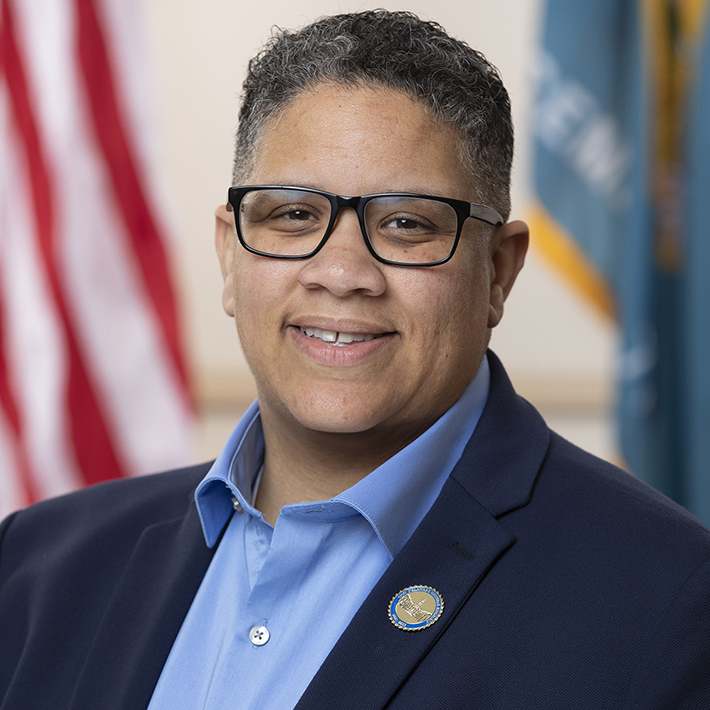
Rep. Kerri Harris
Sponsored bills
This Act, advocated by Eric Carpenter-Grantham and his mother Linda Carpenter-Grantham, promotes equitable treatment for individuals with nonapparent disabilities in interactions with law enforcement. Also referred to as "Eric's ID Law", this Act establishes the use of a butterfly symbol on state driver's licenses and identification cards to provide individuals with nonapparent disabilities to communicate their needs and circumstances. This Act requires the Division of Motor Vehicles to make available a notation on a driver’s license or identification card that indicates a person has a disability, including an intellectual or developmental disability. It also requires that police officer training include instruction on the notation and best practices for safe interactions during a traffic stop with a person with a nonapparent disability. Upon passage of the Act, the Division of Motor Vehicles is directed to consult with disability advocacy groups regarding the design of the notation and to conduct public outreach to make the availability of the notation known. The Act is effective immediately and to be implemented within 6 months of its enactment.
Maddy summaryHB 219 designates "Diwali Day" as an annual ceremonial observance in Delaware, to be commemorated appropriately each year. This bill formally recognizes Diwali, the Hindu festival of lights, as a day of cultural significance within the state's official calendar. It does not create new laws, alter regulations, or affect specific groups or programs - it solely adds a symbolic day to Delaware's recognized observances.
This Act strengthens essential protections for victims of human trafficking by removing practical barriers that prevent victims from getting convictions or juvenile delinquency adjudications obtained as a result of being a victim of human trafficking vacated and the related criminal or juvenile records expunged. This Act amends § 787 of Title 11 in the following ways: (1) Requires a showing that the offense to be vacated was committed “as a result”, instead of “as a direct result”, of the victims having been trafficked, which recognizes that victims of human trafficking may engage in a range of criminal behaviors related to their exploitation. (2) Provides that a motion to vacate and any hearing or proceeding related to the motion to vacate must remain confidential, unless the court determines good cause exists to open the proceeding, so a victim of human trafficking may seek relief without fear of revictimization. (3) Eliminates the requirement of a mandatory hearing on a motion to vacate unless the Attorney General files a timely objection to the motion. This will allow victims to obtain relief on uncontested motions without needing to relive their trauma through questioning at a formal hearing. (4) Clarifies that the standard of proof for determining eligibility for vacating an adjudication or conviction under § 787(j) is by a preponderance of evidence. (5) Allows a victim to vacate a conviction or adjudication of delinquency under § 787(j) and expunge the records of that conviction or adjudication. Additionally, this Act allows the court to order immediate expungement sua sponte or on request and allows expungements to be ordered by the court deciding the motion to vacate. (6) Establishes guidelines for the Attorney General to request an extension of time, if needed, to respond to a motion to vacate. This Act also aligns the standards for a defense to a charge of prostitution or loitering from “as a direct result” to “as a result” of human trafficking. This matches the change made to the vacatur provisions and keeps the standards in § 787 consistent. This Act also makes technical corrections to conform existing law to the standards of the Delaware Legislative Drafting Manual.

This Concurrent Resolution commends the 2026 Delaware Educational Support Professional of the Year, Donna Ward, and all of the District/Charter Network Educational Support Professionals of the Year.
This House Concurrent Resolution recognizes and commends Children & Families First for its extraordinary and enduring contributions to the children and families of Delaware during National Foster Care Awareness Month and Mental Health Awareness Month in May 2026.
This Act repeals the requirement that a person must apply for a certificate of public review prior to the acquisition of major medical equipment. A certificate of public review may still be required if the acquisition meets the capital expenditure threshold under § 9304(a)(2) of Title 16. This Act also makes technical corrections to conform with the Delaware Legislative Drafting Manual and restores a missing word to § 9304(a)(2) of Title 16.
Maddy summaryThis bill designates May 2026 as "Small Business Month" in Delaware to recognize small businesses within the state. It does not create new laws, regulations, or funding but serves as a symbolic resolution to acknowledge the importance of small enterprises. The measure directly affects small business owners and the public by encouraging awareness and celebration during the specified month.
Maddy summaryThis bill designates May 2026 as "Community Action Month" throughout the State of Delaware. It serves as a symbolic proclamation to encourage civic engagement and community involvement during that specific month. The measure does not alter laws, allocate funds, or create new regulations, but rather establishes an official theme for public awareness.
Maddy summaryThis bill designates May 2026 as "Foster Care Month" throughout the State of Delaware. It serves as a symbolic recognition rather than a law that changes funding, mandates specific programs, or alters existing regulations. The measure directly affects the state government by establishing an official theme for the month, though it does not impose new obligations on foster care agencies or families.