

This House Substitute No. 1 provides that if a school board allows school board members to attend meetings remotely through electronic means, then permission to attend remotely must be granted in the case of any of the following: illness of the school board member; illness of an individual in the school board member’s family where that individual requires caretaking; a public health emergency; pregnancy or immediate postpartum care responsibilities of the school board member or the school board member’s spouse or partner; or military deployment of the school board member. This substitute for House Bill No. 83 differs from the original in that it does not require school boards to allow remote attendance. But if the school board does allow remote attendance, it provides the permissible reasons remote attendance may be allowed, allows a school board to limit the number of times permission to attend remotely may be granted, and indicates that a school board may not add to the statutory reasons for remote attendance. It also expands the permissible reasons from the original bill to include pregnancy or postpartum complications of a board member’s spouse or partner.
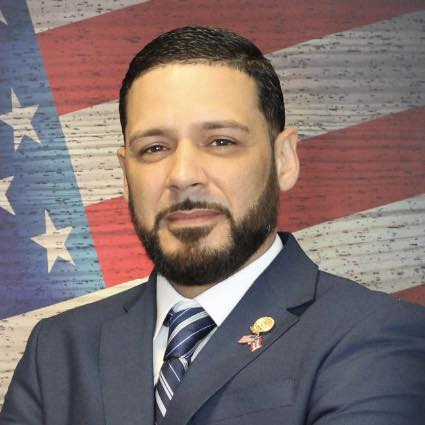
Rep. Josue Ortega
Sponsored bills
This Act removes the time restriction that only allowed for certain teachers or specialists who were hired after August 9, 2023, to obtain additional experience credit for purposes of salary computation. This Act would allow for teachers or specialists hired before August 9, 2023, to qualify for the same experience credit for purposes of salary computation.
This Act makes changes to the Delaware Child Care Act to clarify that early education programs run by state or local education agencies are subject to a parallel regulatory and monitoring structure administered by the Office of Child Care Licensing to ensure health, safety, and child development standards are met.
This House Joint Resolution directs the Department of Health and Social Services (“DHSS”) to explore participating in the federal Restaurant Meals Program (RMP). The RMP is an option that states may incorporate into their Supplemental Nutrition Assistance Program (SNAP) to ensure that SNAP recipients who are senior citizens, disabled, or unhoused, or other eligible family members of those participants, may use their SNAP benefits to buy hot foods or hot prepared meals. These populations may otherwise experience barriers that prevent them having the opportunity to access a nutritious and sustaining meal. This Joint Resolution also requires DHSS to provide a report to the General Assembly as to its findings.
This Act clarifies the requirements regarding obtaining a permit to operate a funeral establishment. Technical corrections are also made to existing statutory language to conform with the requirements of the Legislative Drafting Manual.
This Act enters Delaware into the Social Work Licensure Compact. This will allow social workers to obtain a multistate license among the member states. Delaware will join the Compact Commission that is comprised of membership of all states that have enacted the Compact. Enough states have enacted the Compact that the Commission has been created and the applications for licensure could start in late 2025. Currently, at least 24 states have joined the Compact, while another 18 have pending legislation to enact the Compact, including Maryland and Pennsylvania. This Substitute changes the Chapter and Section numbers to place the Chapter in a more appropriate place in the code, and it corrects internal references to the new section numbers.
This Joint Resolution directs the Department of Natural Resources and Environmental Control to obtain an architectural report of Kingston-upon Hull to consider estimated costs to either restore or stabilize the property. The resolution further directs the report consider future use of the property and recommend a course of action for the property.
This Joint Resolution establishes the Driving Under the Influence Prevention Task Force, established for the goal of deterring drivers in Delaware from Driving Under the Influence. By January 1, 2026, the Task Force is to identify the number of convictions under the Driving Under the Influence Statute in the Code, as opposed to arrests, the reason for the lack of convictions of the arrested persons, and what reforms to Delaware laws and regulations could further help deter instances of Driving Under the Influence, and further topics aimed towards deterring drivers in Delaware from Driving Under the Influence.
This Act makes it unlawful to possess, operate any motor vehicle with, purchase, install, manufacture, sell, offer to sell, or otherwise distribute a number plate flipping device. A “number plate flipping device” means a manual, electric, or mechanical device designed or adapted to be installed on a motor vehicle that does either of the following: a. Switch between two or more number plates for the purpose of allowing a motor vehicle operator to change the number plate displayed on the operator's vehicle; or b. Hide a number plate from view by turning the number plate so that the number plate registration number is not visible. The penalty for violation of this statute is for the first offense, a fine not less than $50 nor more than $200, imprisonment not less than 30 days nor more than 90 days, or both. For each subsequent like offense, such person shall be fined not less than $100 nor more than $300, be imprisoned not less than 90 days nor more than 6 months, or both. The Act also makes technical changes to existing code language to conform to the Legislative Drafting Manual. A reference to farm vehicles being exempt from registration is removed, because that exemption was removed from the Code in 2014. This Act requires a greater than majority vote for passage because § 28 of Article IV of the Delaware Constitution requires the affirmative vote of two-thirds of the members elected to each house of the General Assembly to create a new crime within the jurisdiction of the Court of Common Pleas, Family Court, or Justice of the Peace Court.
This Act provides that March 9 will be known as 6888th Central Postal Directory Battalion Day and will be commemorated in this State by appropriate ceremonies to honor the 6888th Central Postal Directory Battalion members. In commemorating such a day, citizens are encouraged to write and mail letters to family, friends, military personnel, and veterans to recognize postal employees and the important service these employees provide in connecting us to each other.