

Delaware relies on fees imposed as surcharges by the criminal legal system to generate revenue for government services. These criminal fees can be an unstable revenue generator, especially when there are recessions, pandemics, or other major economic events. This Act repeals three fees that currently fund videophone systems used by state and local agencies, personnel, equipment, and training expenses related to judicial branch security, and victim notification initiatives. The elimination of these fees was recommended by the Criminal Legal System Imposed Debt Study Group created by House Bill 244, as amended by House Amendment No 2, of the 151st General Assembly, in its December 7, 2023 report. The Criminal Legal System Imposed Debt Study Group also recommended replacement of lost revenue for affected agencies as needed with General Funds. In repealing these fees, the General Assembly intends to eliminate any outstanding balances owed on these fees.
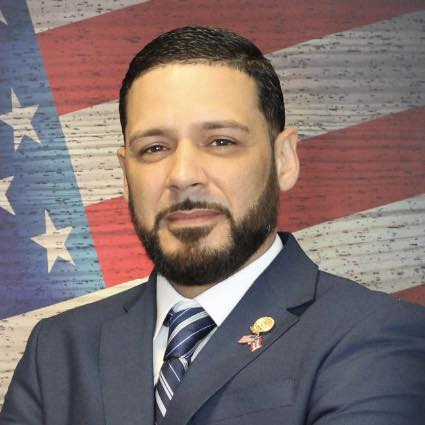
Rep. Josue Ortega
Sponsored bills
Like House Bill No. 204, this Substitute establishes a dedicated Child Care Complaint Investigation Unit within the Office of Child Care Licensing, under the Department of Education, to enhance timely, transparent, and accountable responses to complaints involving licensed child care providers. This Substitute deletes a duplicative requirement contained in House Bill No. 204 for the Child Care Complaint Investigation Unit, specifies that the Unit must coordinate with the Department of Children, Youth, and Family Services rather than the Division of Family services within that Department, and clarifies that the annual public report prepared by the Unit must comply with applicable privacy laws and regulations. This Substitute also requires that, like House Bill No. 204, the Department of Education use existing staff and resources for the Unit, but further specifies that the staff must be reclassified and salaries aligned with the schedule set forth in section 1305 of Title 14. This Substitute changes the implementation date contained in House Bill No. 204 from 90 days to 180 days.
Because Delaware lacks an adequate amount of emergency shelter beds, housing support services, and affordable housing units, only 952 out of 7,131 households that contacted the Housing Alliance Delaware’s homelessness hotline in 2024 were referred to housing assistance. Without adequate shelter available, thousands of individuals experiencing homelessness are forced to seek shelter on the streets, parks, parking lots, and sidewalks, which puts them in constant conflict with local residents, businesses, and the police. Instead of providing adequate housing, local governments are using emergency services, hospital services, and the criminal justice system to remove unhoused individuals from public spaces, exacerbating the barriers unhoused individuals face to achieve stable housing and wasting taxpayer money. This Act seeks to incentivize localities to coordinate or create adequate emergency housing, permanent housing, and wrap-around services for individuals experiencing homelessness, which will ease the financial burden placed on emergency services, hospitals, and the criminal justice system, while providing unhoused individuals stability and dignity. To that end, this Act does the following: 1. Permits an individual experiencing homelessness to conduct life sustaining activities in public, so long as such activities do not obstruct the normal movement of pedestrian or vehicular traffic in such a manner that creates a hazard to others, unless adequate alternative indoor space is available to the individual in a given jurisdiction and has been offered to the individual, including transportation for the individual and their belongings. 2. Mandates that an individual experiencing homelessness receive the same degree of protection for personal property stored in public places as personal property stored in a private dwelling, which includes protections against unreasonable search and seizure. 3. Prohibits the State or local jurisdiction from requiring an individual experiencing homelessness to move a motor vehicle or a recreational vehicle provided that the vehicle is parked on public property and the vehicle is not parked in a position to obstruct the normal movement of traffic or create a hazard to other traffic upon the highway. 4. Provides that, if a motor vehicle or recreational vehicle must be moved because the vehicle is obstructing normal movement of traffic or creates a hazard to other traffic on the roadway, the individual experiencing homelessness must be permitted to relocate the vehicle before a parking ticket is issued or the vehicle is towed. This Act does not prohibit State and local governments from making and enforcing reasonable time restrictions on public spaces (including public parks and parking lots) so long as those time restrictions apply to everyone and are not disproportionately enforced against individuals experiencing homelessness. The Attorney General may commence a civil action against any State or local government, government agency, or government official that violates this Act and this Act also contains a private right of action. No monetary or punitive damages may be awarded under this Act. This Act specifically waives sovereign immunity. This Act is named in honor of Dr. DeBorah Gilbert White.
This Act establishes an Early Childhood Education Endowment. For the fiscal year ending June 30, 2026, the State Treasurer is directed to transfer 1% of the annual revenue from the Corporate Franchise Tax to initially fund the Endowment. The Endowment is invested by the State Treasurer under a fiduciary standard. Programmatic administration and disbursement of released funds is the responsibility of the Department of Education in consultation with the IRMC to oversee the operation, expansion, and disbursements of the Endowment. Annual draw rates are capped at the prior fiscal year's net investment return on endowment assets and may not exceed 7.5% of total endowment balances in any year. The State Treasurer sets the draw rate after reviewing investment performance, endowment growth projections, and long-term sustainability. The State Treasurer may commingle endowment assets with other State Treasurer-managed investment portfolios for efficiency, provided that the endowment's proportionate share of income and gains is separately accounted for. "Expansion costs" include expenses to increase early child care and education program provider payment rates, increase equitable access and affordability of high quality early childhood education, extend the hours of operation covered, or to sustain such services. "Programmatic costs" include costs for parent and early child care and education enrollment campaigns, local governance partners, needs assessment technical assistance, facilities program technical assistance, and workforce recruitment and scholarships for educators. Not later than June 30 of each year, the State Treasurer must submit to the IRMC and the General Assembly an annual endowment report including: (1) total endowment market value; (2) net investment return for the prior fiscal year; (3) the draw rate authorized for the current fiscal year and the basis for that determination, including a 10-year sustainability projection; (4) total funds released to DOE and the purposes for which such funds were expended; and (5) any recommended adjustments to the draw rate for the ensuing fiscal year. Not later than January 1, 2033, and every 5 years thereafter, the Secretary of DOE must prepare an impact analysis concerning the operations of the Early Childhood Education Endowment and the effect that the expenditure of funds from the endowment has had on the availability, affordability, and quality of early child care in the State.
This Act prohibits employers from asking employees or potential employees about political preferences, including donations the employee makes to candidates for office or political committees. It also prohibits employers from taking any adverse action against an employee based on political affiliation or preference. The prohibition does not apply if a political affiliation or preference is a bona fide occupational qualification of the employment. It also does not apply if employer disclosure of employee contributions is required by federal or state law.
This Act is a substitute for House Bill No. 370. This Act differs from HB 370 in that it adds a provision for the selection of the DEFAC Co-Chair, authorizes designees for the ex officio members, clarifies a provision relating to DEFAC meetings proceedings, and makes several technical corrections. This Act also differs from HB 370 by making the effective date July 1, 2026, or upon enactment, whichever is later. Like HB 370, this Act codifies the Delaware Economic & Financial Advisory Council (“DEFAC”) which was initially created by Executive Order No. 5 in March 3, 1977, and has continued through several executive orders issued since 1977. This Act is known and may be cited as the “DuPont-Cook Financial Responsibility Act.” The purpose of this Act is to preserve DEFAC’s structure under executive order while strengthening continuity, transparency, and clarity. DEFAC consists of at least 25, but no more than 34, members. The Speaker of the House of Representatives and the Senate Pro Tempore each appoint 2 members, 1 from each caucus. The Governor appoints the remaining members, from the public and private sectors, and must appoint at least 12 members. The following serve by virtue of their positions: the Controller General, Director of the Office of Management and Budget, Secretary of Finance, Secretary of State, Secretary of Transportation, Secretary of the Department of Health and Social Services, Joint Finance Committee Co-Chairs, and State Treasurer. The duties of DEFAC are as follows: (1) Meet in March, May, June, October, and December of each year, and on other occasions that the Governor or DEFAC Chair deem necessary. (2) Serve in a general advisory capacity to the Governor and Department of Finance. (3) Advise the Governor, Secretary of Finance, and Legislative Council on: (a) The overall financial condition of the State of Delaware. (b) Current and projected economic conditions and trends, particularly as they affect the expenditures and revenues of the State, its citizens, and its major industries. (c) The tax policy of the State and the impact of federal tax policies. (4) Submit to the Governor, Secretary of Finance, Controller General, and General Assembly, by the dates required under § 6534(a) of Title 29, the General Fund and Transportation Trust Fund revenue and expenditures. (5) Submit to the Governor, Secretary of Finance, Controller General, and General Assembly, not later than December 31 of each year, estimates on the General Fund and Transportation Trust Fund revenue and expenditures. (6) Perform other duties and responsibilities imposed upon it in the Delaware Code. (7) Prepare an annual report summarizing DEFAC’s activities throughout the year, including forecast accuracy and key fiscal risks identified, no later than December 31, for distribution to the Governor and General Assembly. This Act also establishes the DEFAC Healthcare Spending Benchmark Subcommittee. Under this Act, state agencies must provide DEFAC financial and staffing support.
This Act alters various fees assessed by the Delaware Secretary of State. The Act provides that most changes to the fees will take effect on August 1, 2026, however changes to the partnership, limited partnership, and limited liability company annual tax and changes to the annual tax on registered series of limited partnerships and limited liability companies will take effect on January 1, 2026. This Act requires a greater than majority vote for passage because § 10 of Article VIII of the Delaware Constitution requires the affirmative vote of three-fifths of the members elected to each house of the General Assembly to increase the effective rate of a tax levied by the State.
This Act is a result of the Joint Legislative Oversight and Sunset Committee's focused review of the Division of Developmental Disabilities Services' (DDDS) adult day and employment services. This Act requires that DDDS submit an annual report relating to its services to increase the transparency of the services and highlight unmet needs for efficient service delivery. In § 7909A(c)(2)a. of Title 29, DDDS will provide data on census, new applications, demographics of those groups, and the size and diversity of the provider system. Section 7909A(c)(2)b. allows DDDS to demonstrate that its services, and how the services are accessed, change over time. Section 7909A(c)(2)c. gives DDDS the flexibility to provide information on service requests that could not be met, why service requests could not be met, and observed gaps in service delivery, or other information related to challenges DDDS identifies related to the service system. This Act also makes technical changes to conform existing law to the standards of the Delaware Legislative Drafting Manual.
According to the Arts Education Partnership, 27 states currently include arts course credits as a requirement for high school graduation, and several states have implemented diploma seals or similar recognition programs to incentivize participation. This Act directs the Department of Education to establish the Delaware Certificate of Arts Excellence to recognize high school students who demonstrate sustained engagement and achievement in the arts. Establishing a similar program in Delaware could help increase arts enrollment, elevate the value of arts education, and support students interested in pursuing creative professions.
This Act provides that health care facilities must permit patients who have been issued and possess a valid registry identification card for the medical use of marijuana and have a terminal illness to use medical marijuana on the health care facilities’ premises, subject to certain restrictions. However, a health care facility may prohibit or suspend such use of medical marijuana under some circumstances, such as if the facility's medical professionals determine that use of medical marijuana may have an adverse impact on the medical care and treatment of the patient or is otherwise contraindicated, or if a federal regulatory agency, the United States Department of Justice, or the Centers for Medicare and Medicaid Services initiates an enforcement action against a health care facility based on the use of medical marijuana on the facility's premises or issues a rule or guidance prohibiting the use of medical marijuana at health care facilities. In addition, the Act provides that a person is not subject to civil or criminal liability or professional discipline for complying with the Act, except in cases of gross negligence, recklessness, or intentional misconduct. This Act is modeled on a 2021 California law known as "Ryan's Law."