

This Act makes several changes to the civil asset forfeiture proceedings of this state. It repeals the legal presumption that money, negotiable instruments or securities found in close proximity to controlled substances or records or with trace amounts of controlled substances are forfeitable. Such evidence is still admissible and may be considered by the Court in a forfeiture proceeding. It puts the burden of proof on the State to prove all elements of a forfeiture case by a preponderance of the evidence. Under the existing statute, it is the burden of an innocent owner to prove that they did not have knowledge of or consent to the use of their property in an unlawful act. It prohibits the forfeiture of currency less than $500. It prohibits forfeiture unless a criminal charge is brought. It requires the person holding seized property to be financially responsible for all fees associated therewith in the event the property is ordered by the Court to be returned. It allows a claimant property owner who substantially prevails in a forfeiture proceeding to recover reasonable attorney’s fees and costs. The language in this section is modeled after a provision of the federal forfeiture statute, at 28 U.S.C. § 2465 that was put in place in 2000 as part of federal civil asset forfeiture reforms. It aligns forfeiture provisions in Title 11 with the forfeiture provisions in Title 16. It requires the Department of Justice to collect and annually report statistics regarding civil asset forfeiture.
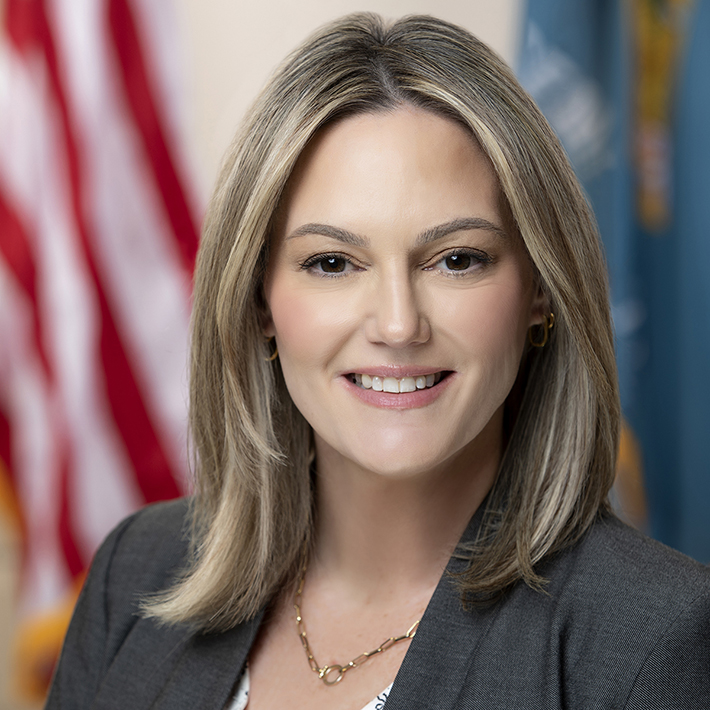
Rep. Cyndie Romer
Sponsored bills
This Act is the Delaware Libraries for All Act. It explicitly adds “public libraries” to the definition of “place of public accommodation” for purposes of Delaware’s Equal Accommodations Law. It also directs the Delaware Library Consortium to develop and adopt common policies concerning collection, development, and other topics in order to ensure equitable access and the right to read for all Delawareans.
This Act mandates that all individuals who have received a conditional offer of employment with DTI and any contractor or third party that requires access to DTI systems, facilities, or data, must undergo a state and federal criminal background check through the State Bureau of Identification. This Substitute bill clarifies that only individuals who have received a conditional offer of employment must submit to a background check, rather that all those individuals that have applied. It also removes the requirement that individuals submitting to background checks are responsible for the costs of those background checks.
This Act revises existing animal cruelty laws to include people who knowingly possess, own, buy, sell, transfer, or manufacture animal fighting paraphernalia with the intent to engage in or otherwise promote or facilitate such fighting as guilty of a class E felony. This Act defines “animal fighting paraphernalia” and creates a list of considerations a court may use when assessing whether an item or object qualifies as animal fighting paraphernalia.
In light of the Federal Drug Administration’s recent approval of over-the-counter non-emergency contraceptive pills, this bill expands the contraceptive coverage laws to include over-the-counter non-emergency contraceptive pills.
This Act creates a Voluntary Firearms Do-Not-Sell Registry in which an applicant may voluntarily enroll for the purpose of being prohibited from obtaining a firearm. An individual on the Registry may request removal from the Registry no sooner than 30 days after the individual is entered on the registry. Once an individual requests removal from the Registry, the individual must be removed from the Registry no sooner than 30 days after the removal request. A person who transfers a firearm to an individual in violation of this section is guilty of a class A misdemeanor for a first offense and a class G felony for a subsequent offense. An individual who makes a false statement or representation regarding their identity when requesting inclusion or removal from the Registry shall be guilty of a class A misdemeanor. House Substitute No. 1 for House Bill No. 342 differs from House Bill No. 342 as follows: (1) Defines the terms “firearm” and “transfer” to increase clarity and ensure consistency with other parts of the Code; (2) Clarifies that unlicensed persons are also prohibited from selling a firearm to an individual enrolled on the Registry; (3) Requires a licensed dealer to facilitate the Registry check on behalf of the unlicensed seller in the same way it completes a background check on behalf of the unlicensed seller under § 904A of Title 24; (4) Clarifies that a person, rather than an individual, may be liable for selling a firearm to an individual enrolled on the Registry; (5) Clarifies that a person must knowingly sell or transfer a firearm to an individual on the Registry to be in violation of this Act; and (6) Makes technical corrections to conform existing law to the standards of the Delaware Legislative Drafting Manual.
In many states acts of violence have been committed with the use of firearms on college and university campuses that have resulted in both injury and death to students and faculty. This Act adds post-secondary colleges and universities to the Safe School Zone criminal offense so that any person who knowingly possesses a firearm, as defined in Title 11, while in or on a college or university facility or campus may be charged with this additional offense. The same exceptions set forth in the statute will apply to a college or university.This Act also adds commissioned security guards to the categories of individuals who may possess a firearm while acting in their official capacity within a Safe School Zone. A person convicted under this section will be guilty of a Class E felony. This Act also makes a technical correction to conform existing law to the standards of the Delaware Legislative Drafting Manual.
This Act creates a civil penalty for any sale or display of ammunition that allows the ammunition to be accessible to a purchaser or transferee without the assistance of the vendor or an employee of the vendor. Ammunition in an enclosed display case, behind a counter or other customer access preventing device is not considered accessible for purposes of this section. This Act also requires that a deadly weapons dealer must include with their license application and renewal application a description of their theft and loss prevention policies and procedures as well as a report of all ammunition losses or theft within the prior year. Finally, the Act increases the maximum monetary penalty for violation of the provisions requiring a license to sell deadly weapons, sale to those under 21 or intoxicated persons, failing to keep required records, or failing to comply with the requirements for background checks between unlicensed persons. It takes effect 1 year after its enactment. This House Substitute No. 1 for House Bill No. 270 differs from the original in the following ways: It specifies that information related to theft and loss prevention policies and procedures is not subject to FOIA It changes the word “person” to “licensee” in sections 902 and 905. It specifies that the content of loss and prevention policies are not a basis for denial of a deadly weapons dealer license. It reduces all of the monetary penalties. It removes the shoplifting enhancement. It changes jurisdiction over the offense from JP Court to the Court of Common Pleas.
This Act ensures that educators hired after the effective date of this Act, who earned graduate degrees prior to becoming educators, receive credit on the salary schedule for those degrees regardless of the specific subject area of those degrees. Once an individual is employed as an educator, in order to receive credit for any graduate degrees earned after that time, such degree must be in the subject area in which the educator is employed.
This Act repeals the DELJIS Fund fee imposed on criminal defendants. The elimination of this fee was recommended by the Criminal Legal System Imposed Debt Study Group created by House Bill 244, as amended by House Amendment No 2, of the 151st General Assembly, in its December 7, 2023 report. Any outstanding balances owed for this fee shall be discharged upon the Act’s effective date. Per the Study Group’s recommendation, the Act will become effective upon the specific appropriation of General Fund monies to replace DELJIS’s full spending authority of the repealed fee.